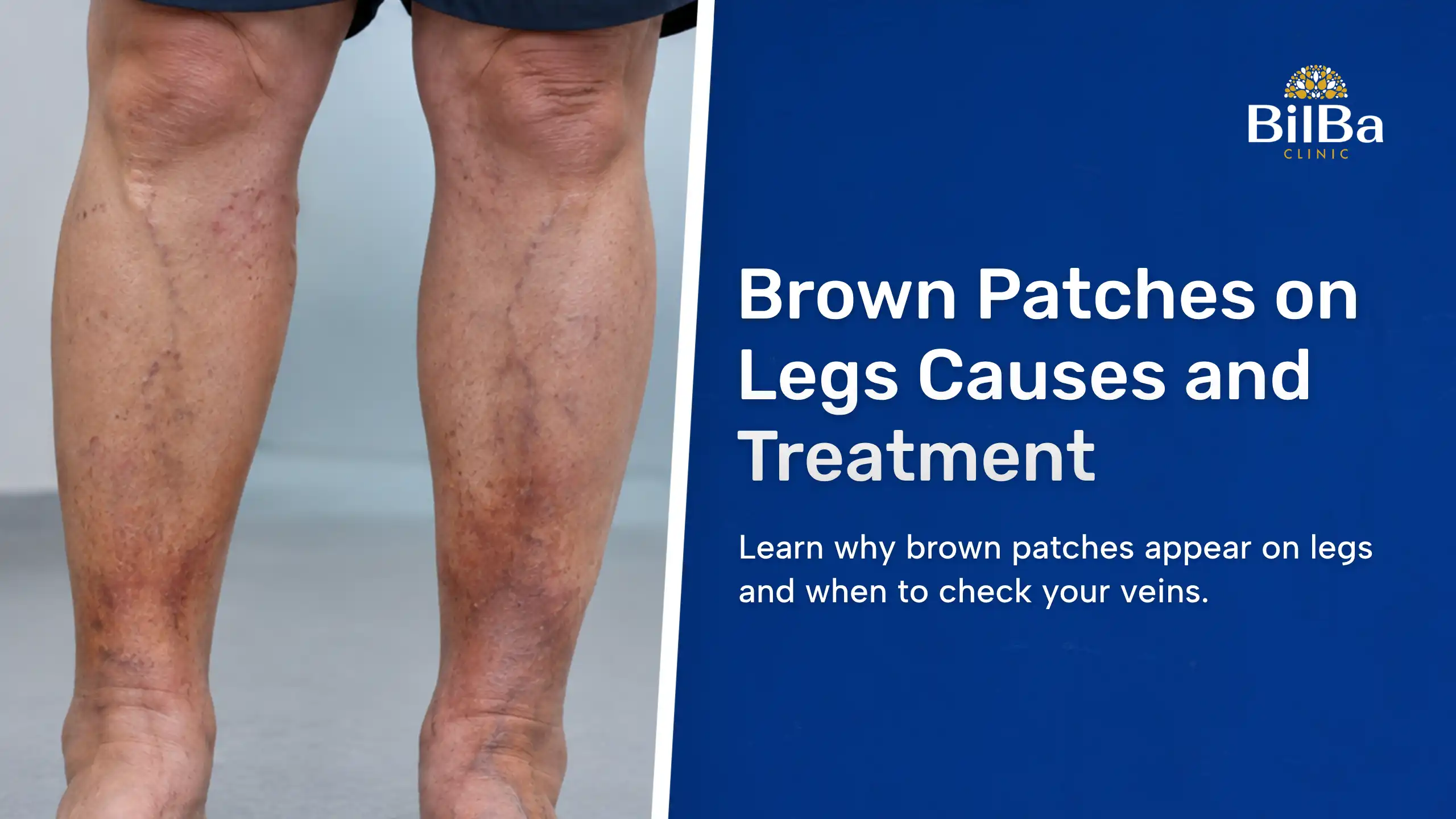
Brown patches on lower legs often start quietly. A patch of rust or tan appears near the ankle, spreads a little, and does not fade. In many people it is a sign that the veins in the leg have stopped working well and pressure is building in the skin. Other causes exist too, such as old injuries, healed rashes and sun damage, so the colour alone does not tell the whole story. An examination and a vein scan usually settle it. At Bilba Clinic, we look at the patch, check the veins beneath it and explain what we find, so you know whether it needs treatment or simply watching.
What Does a Brown Patch on Leg Skin Mean for Your Veins?
Near the ankle or shin, a brown patch on leg skin can mean the veins underneath are not returning blood well. When the one-way valves inside leg veins weaken, blood pools and pressure rises. Over time, blood leaks into the skin and leaves a brown stain behind. A scan confirms whether veins are the cause.
The colour comes from a pigment called haemosiderin, left behind by blood that has leaked into the skin. In one small study that examined skin samples, haemosiderin was the main pigment in vein-related darkening. Another pigment, melanin, tended to show up later in advanced disease. That is why the stain feels permanent: it sits in the skin and does not wipe or scrub away.
Vein-related colour change is a recognised reason to have the veins assessed by a specialist, because the patch is often the visible tip of a pressure problem below. The skin changes that come with vein problems can look dark brown, purple or grey on brown and Black skin, which makes them easier to miss. That is where a proper assessment at our clinic helps. We look at the whole leg, not just the patch, and we explain what the pattern means for you.
What Do Brown Spots on Lower Legs Mean When Veins Are Not the Cause?
Brown spots on the lower legs do not always mean a vein problem. Old bruises, healed rashes or injuries, and sun exposure can all leave brown marks behind. These tend to stay small and separate, with no swelling around them. A mark that looks different from the rest should still be examined.
Veins are a well-known cause, but they are not the only one. After a rash or injury settles, the skin can stay darker for a long time because it produces extra pigment while it heals. Spots from sun exposure usually sit on areas that see the most light. Patches from vein trouble more often cluster around the ankle and lower shin, with other changes nearby.
Telling these apart by eye is hard, even for people who look at legs every day. That is one reason we examine the skin and check the veins together instead of guessing from a photo.
What Causes Brown Spots on My Lower Legs?
What causes brown spots on my lower legs depends on the pattern. Failing vein valves are a leading explanation when the patches sit low on the leg with swelling or itching. Old bruises, healed rashes and sun damage explain many others. An examination and a vein scan sort out which applies to you.
Vein trouble becomes more likely with some risk factors. Being female, getting older and carrying extra weight raise the odds. So do pregnancy, long periods of standing or sitting, a family history of varicose veins and a past blood clot in the leg. Not everyone with these factors develops patches, and some people with none do. Women are affected more often than men. Pregnancy can put extra strain on the leg veins, so mention it when you come in if a patch appeared after one.
The link between veins and skin works through pressure. A healthy leg vein pushes blood upward against gravity, and valves stop it sliding back down. When a valve fails, blood pools, the vein stretches, and the skin around the ankle carries the extra load. The patch is the skin’s way of showing that load.
What Causes Brown Discoloration on Lower Legs After Years of Vein Pressure?
What causes brown discoloration on lower legs after years of vein pressure is a slow chain of events. Raised pressure pushes fluid and blood into the skin. The skin reacts with inflammation, and the leaked blood leaves a stain. Without treatment of the veins, the skin can become dry, itchy and hard, and sores can follow.
This is not a sudden change. A faint tan area can appear first and then deepen over months or years. As the process continues, the skin can develop an itchy, flaky rash over the affected veins. Some people go on to develop a sore that takes a long time to heal.
Veins that have stopped working do not mend themselves. That is the main reason the brown colour matters. It is an early signal that the pressure problem has reached the skin, while treating the veins can still protect it.
Which Dark Patches on Lower Legs Point to Vein Disease?
Vein disease is more likely when dark patches on lower legs sit low on the leg, usually near the ankle, and come with other signs of poor vein function. The patch alone is a clue. Together with swelling, itching or visible veins, the picture becomes much clearer. The signs to look for are:
- Swelling around the ankles that builds through the day and eases overnight.
- Itchy, dry or flaky skin over or near the patch, or skin that feels tight or hard.
- Twisted or bulging veins you can see or feel close by.
- A sore that has not healed after two weeks.
One of these alongside a brown patch makes a vein cause more likely. Two or more together make it more likely still. Swelling that builds through the day has several causes besides veins, and persistent swollen ankles are worth a proper look in their own right.
Each sign points back to the same mechanism. Pressure in the veins builds up, fluid collects in the lower leg, and the skin protests with colour change, dryness and itching. A vein assessment can show whether this is what is happening in your leg and how far it has gone.
Small Brown Spots on Lower Legs Are Usually a Different Story
Small brown spots on lower legs that sit apart from each other, with no swelling, itching or visible veins, are less likely to come from the veins. Sun exposure, old bruises and healed skin marks are common explanations. They still deserve a look if they are new, changing or different from your other marks.
A useful rule is to compare patch with spot. A patch is wider, tends to spread, and sits low on the leg. A spot is small and defined. Many people have both, which is why a general examination beats guessing.
When Dark Brown Spots on Lower Legs Need Checking Soon
Dark brown spots on lower legs need checking soon if they are new, growing, uneven in shape or mixed in colour. The same goes for spots that itch, hurt or bleed, or that look different from the rest. These changes are not always serious, but they should be examined promptly. Do not wait for a vein explanation.
Skin changes of this kind need a proper look, not a guess. If a spot has changed in size, shape or colour, book an assessment with us. The same applies to a new mark that has not faded after a few weeks. We will examine it and arrange the right next step.
Some signs need urgent attention instead of a booked visit. If a leg suddenly becomes swollen, painful, hot or red, or if a varicose vein is bleeding, seek urgent medical help straight away. Any sore still open after two weeks should also be looked at without delay, since slow-healing sores are one of the ways vein trouble shows itself.
How We Check Whether Veins Are Behind the Patches
We begin with a conversation and an examination of the leg. We ask when the patch appeared, whether the leg swells, and about past blood clots, leg sores, surgery, pregnancies and family history. Then we look at the skin, the veins and any sores. This tells us a lot before any scan.
The test that confirms a vein cause is a duplex ultrasound scan, often called a Doppler scan. A small probe sends sound waves into the leg and shows how blood moves through the veins and whether the valves hold. It is non-invasive and uses sound waves, not radiation. The result shows where blood leaks backwards, and how far the problem extends.
Our clinical team explains each step as it happens, so you know what is being checked and why. Not everyone needs a scan, and we will say plainly if one adds nothing in your case.
A little preparation makes the visit more useful. Wear loose clothing that lets us see the whole leg. Note when you first saw the patch, whether it has spread, and what makes your legs feel better or worse. If you have had a blood clot, a leg sore, vein surgery or a skin biopsy before, bring any letters or results. A photo taken a few weeks ago can show us how fast the colour is changing.
What Can Be Done About Vein Staining and the Veins Behind It?
Treating the veins aims to stop the staining getting worse and to protect the skin. We cannot promise that staining already in the skin will fade. The best results come from acting while the skin is still healthy. Your scan decides which option fits your veins. Options include:
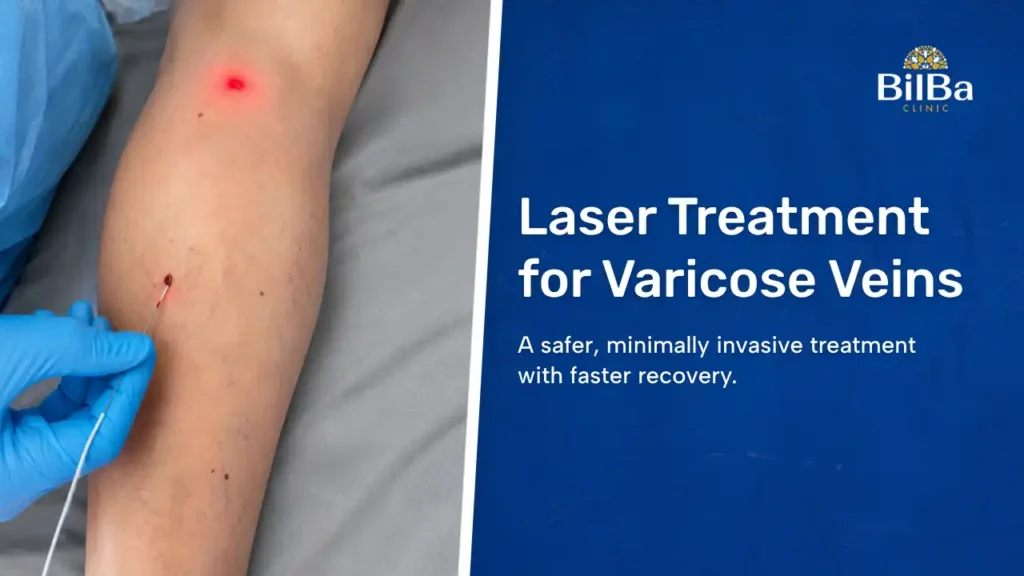
- Heat treatment, called endothermal ablation, which seals the faulty vein from inside. Many people are back to normal activities within a day or two.
- Ultrasound-guided foam injections, which close the vein with a medicated foam.
- Surgery to remove the vein, which suits some people and some vein patterns.
- Compression stockings, usually kept for people who cannot or prefer not to have a procedure, or used alongside treatment for swelling and skin changes.
Compression may not be safe if the blood supply to the leg is reduced, which is why we check that first. Some tightness or tingling after a procedure can last a few weeks, and we talk through what to expect before you decide.
Everyday habits matter alongside any procedure. Regular walking, moving your ankles when you sit, and raising your legs when you rest can ease symptoms. They do not remove faulty veins, so they work best as support for treatment, not as a replacement for it. Standing or sitting still for hours tends to make swelling worse, so short breaks to move help.
Skin care helps too. Daily moisturiser keeps the skin comfortable, and a short course of steroid ointment can calm itchy flares, though that is a prescription decision made after examination. If visible, twisted varicose veins are your main worry, the same treatment choices apply to them.
Vein treatment also lowers the chance of leg ulcers coming back, which matters if you have had one before. The aim is never to rush you. You will understand each option, its limits and its recovery before choosing.
Book a Vein Assessment at Bilba Clinic
Bilba Clinic is a CQC-registered private clinic in Fitzrovia, London, offering medical, aesthetic and wellbeing care from experienced clinicians. We are recognised by major insurers, including Bupa, Vitality and WPA, and we also welcome self-pay patients.
If a patch has been bothering you, a visit settles the question either way. You can book an assessment online or contact us first with a question. There is no pressure to decide anything on the day.
Costs vary depending on what is needed, and we would rather give you an accurate figure after an examination. Our pricing page shows current figures as a starting guide.
- Address: Bilba Clinic, 57 Great Titchfield Street, Fitzrovia, London W1W 7PN
- Phone: +44 (0) 7858 848 244
- Email: info@bilbaclinic.co.uk
Opening hours
- Monday to Friday: 10:00 to 18:00
- Saturday: 12:00 to 17:00
- Sunday: closed
Questions About Brown Patches on Lower Legs Answered
What Are Brown Spots on Lower Legs?
Brown spots on lower legs are areas of darker skin caused by extra pigment. Common causes include old bruises, healed rashes or injuries, sun exposure and leaked blood from weak leg veins. Where they sit and what surrounds them gives clues. An examination tells you which cause applies.
What Are the Brown Patches on My Legs?
The brown patches on your legs are usually staining from blood that has leaked into the skin because the veins below are not working well. They tend to appear around the ankle and lower shin, with swelling or itching nearby. A vein scan confirms the cause and how far it has gone.
Can Vein-Related Brown Patches on Legs Lead to Ulcers?
Vein-related brown patches can be an early sign of skin under strain, and sores that heal slowly can follow if the veins are left alone. Not everyone develops an ulcer. Seek an assessment soon for a sore that has not healed after two weeks, or for a patch with hard, itchy skin.
Do Brown Patches on Legs Fade After Vein Treatment?
Brown patches on legs do not always fade after vein treatment. Vein treatment aims to stop new staining and protect the skin, but we cannot promise that existing colour will lighten. Acting early gives skin the best chance. We explain what to expect before you decide on treatment.
How Does a Vein Scan Work?
A vein scan, called a duplex ultrasound or Doppler scan, uses sound waves from a small probe to show how blood moves through leg veins and whether the valves hold. It is non-invasive and uses sound waves, not radiation. It shows where blood flows backwards, which tells us if veins explain your brown patches.