Should you consider iron IV treatment. If a blood test has confirmed you’re low in iron, the answer is often yes. Iron IV, also called an IV iron infusion, delivers iron directly into your bloodstream. It corrects a real shortfall faster than tablets usually can. This guide covers what iron infusion IV therapy actually involves, the real evidence behind it, the side effects worth knowing, and what it costs here at Bilba Clinic. We’ll also walk through how many sessions most people need. And how this compares with taking iron tablets instead.
What Is Iron IV Treatment
Iron infusion IV therapy, sometimes called iron infusion therapy or IV iron therapy, replaces iron stores directly through a vein. This skips your gut entirely. Intravenous iron therapy skips digestion entirely. Your body absorbs close to all of it this way. This matters because oral iron tablets are only partly absorbed, and the rest can cause uncomfortable stomach side effects along the way. Research comparing the two routes consistently shows the IV route achieves close to complete absorption. Oral iron absorption varies widely and depends on what else you eat around the same time.
Is Anaemia Iron Deficiency, Understanding the Difference
Is anaemia iron deficiency. Not always, and this distinction matters before you book any treatment. Anaemia simply means you don’t have enough healthy red blood cells to carry oxygen properly. Treatment for iron deficiency anaemia, including iron infusion for anaemia specifically, addresses the most common cause of anaemia worldwide. But other types exist too, including anaemia caused by vitamin B12 or folate deficiency, or anaemia linked to chronic illness. Iron deficiency anaemia treatment only works if iron is actually the cause. A blood test confirms this before anything else happens. Getting the diagnosis right matters. Correcting iron levels won’t help if a different deficiency, like B12, is actually behind your symptoms. Some people even have more than one deficiency at once. This is another reason a proper blood panel matters more than guessing.
What Iron Levels Should Be
What iron levels should be depends on the specific marker your doctor checks. This is usually ferritin. Ferritin is the protein that stores iron in your body. It’s the most reliable single marker for iron deficiency. Ferritin levels low enough to confirm deficiency are what your clinician looks for before recommending treatment. Normal ferritin generally sits between 15 and 300 nanograms per millilitre in men. It’s slightly lower in women. How low is iron for anemia. A ferritin level under 30 is considered specific for iron deficiency. Levels under 15 are close to a definite diagnosis. Some guidelines use a threshold as high as 50 in people with ongoing inflammation. Inflammation can artificially raise ferritin readings. This is why your clinician looks at your full blood picture rather than a single number on its own.

Who Needs an Iron IV Infusion
Who needs an iron IV infusion isn’t everyone with mild tiredness. It’s generally recommended for people with confirmed iron deficiency who can’t tolerate oral iron. It also suits people who don’t absorb it well due to a gut condition, need levels corrected quickly, or have anaemia severe enough that tablets alone won’t catch up fast enough. Pregnant women with more severe anaemia sometimes fall into this group too. This always needs to be managed directly with your obstetric team, rather than booked independently. People recovering from surgery or heavy blood loss are also commonly referred for this treatment. So are those with chronic kidney disease or inflammatory bowel disease. Athletes with confirmed deficiency sometimes use it too. This should always be guided by testing rather than assumption. Iron demand can rise with heavy training, particularly in endurance sports. This is why testing rather than guessing matters here as much as anywhere else.
Signs You Might Be Iron Deficient
Before booking any treatment, it helps to recognise the signs that often point toward low iron in the first place. Common signs include:
- Ongoing tiredness or low energy that doesn’t improve with rest
- Pale skin, brittle nails, or unusual hair shedding
- Shortness of breath during activities that didn’t used to affect you
- Restless legs, headaches, or difficulty concentrating
None of these symptoms confirm iron deficiency on their own. They overlap with several other conditions, including thyroid problems and other types of anaemia. A blood test is the only reliable way to know for certain.
Iron IV Benefits
Iron IV benefits come down to speed and reliability. IV iron infusion benefits include close to complete absorption. The iron bypasses your digestive system entirely. Research comparing iron infusion to oral iron consistently shows faster increases in haemoglobin and ferritin levels. This is particularly true for people with higher iron needs or conditions that limit oral absorption, such as inflammatory bowel disease. Fewer people experience the stomach related side effects that make oral iron hard to stick with long term. This matters in practice. A treatment that’s easier to complete tends to actually correct the deficiency, rather than being abandoned halfway through.
Oral Iron vs IV Iron
Oral iron vs IV iron isn’t really a case of one being universally better. Is IV iron better than iron tablets for someone with mild, early stage deficiency. Not necessarily, since tablets are cheaper and still effective for many people. For people with a bigger deficiency, poor absorption, or intolerance to tablets, an IV iron infusion tends to correct the problem faster and with fewer side effects. Studies in people with inflammatory bowel disease and pregnancy anaemia have both shown IV iron correcting haemoglobin and ferritin levels more reliably than oral tablets. This holds true in both of these specific groups. Where does IV iron come from.
Modern IV iron formulations are made from iron bound to a carbohydrate shell. This controls how the iron is released into your body safely, rather than delivering raw iron directly. This shell is also why different formulations carry slightly different safety profiles. Your clinician takes this into account when choosing which one to use. Newer formulations tend to carry a lower reaction risk than older ones. This is part of why the treatment has become more widely used in recent years. Older formulations still have their place in certain clinical situations. But most modern clinics have moved toward the lower risk options as standard practice.
The Iron IV Infusion Procedure, What Happens
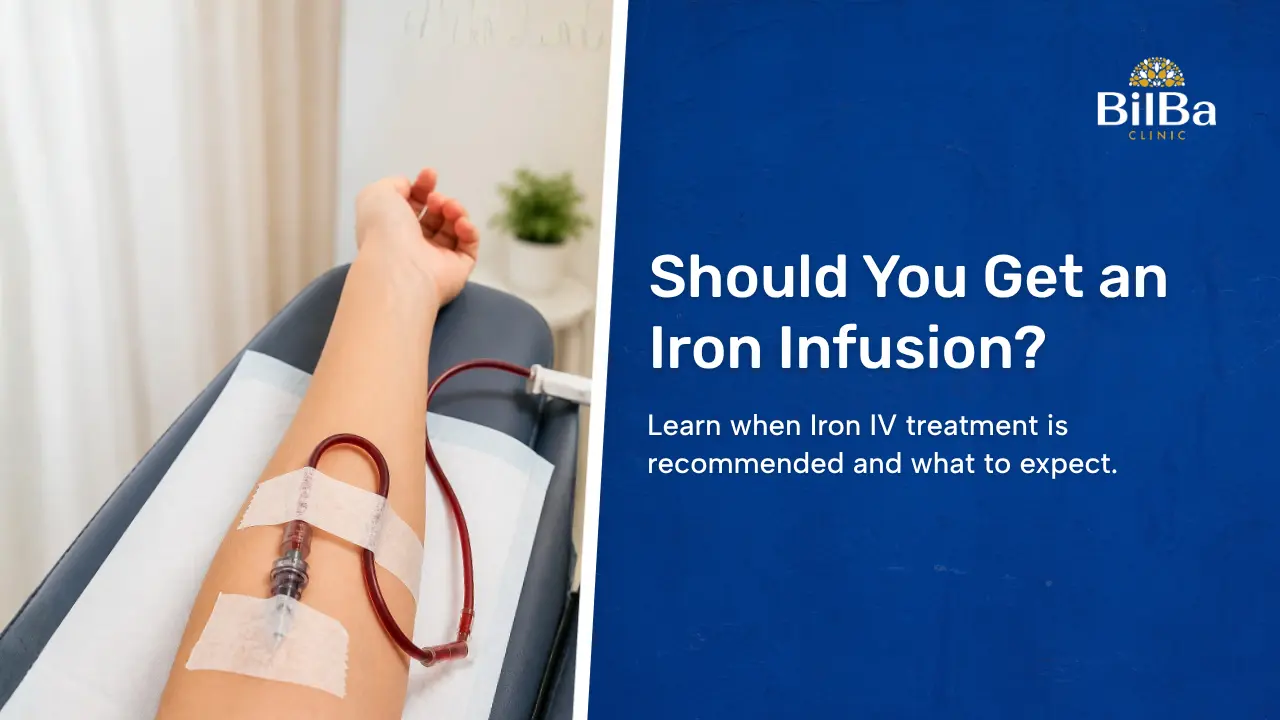
Iron IV infusion procedure steps are fairly simple. The exact process varies slightly by clinic and formulation used. What happens during an iron infusion typically follows this pattern:
- A consultation and blood test review to confirm the diagnosis and dose needed
- A cannula placed in your arm, followed by a slow, monitored infusion
- Close observation during the infusion, since reactions are most likely to happen early on
- A short rest period afterward before you’re free to leave
Iron IV drip appointments generally take between 15 minutes and a couple of hours. It depends on the formulation and total dose required. You’re free to bring something to read or work on during longer infusions. Most of the appointment is simply sitting comfortably while the drip runs. A member of our team checks in periodically throughout. You won’t be left unmonitored for the full session.

How Long Does an Iron IV Infusion Take
How long does an iron IV infusion take. Some newer formulations allow a full dose in a single visit lasting around 15 to 30 minutes. Others are given more slowly over an hour or more to reduce the chance of a reaction. How quickly does iron IV work in terms of feeling better. Symptoms like fatigue often start improving within one to six weeks. Your body needs time to use the extra iron to build new red blood cells. This is different from a blood transfusion. That works within hours because it delivers ready made red blood cells rather than raw material for your body to use.
How Many Iron Infusions Do You Need
How many iron infusion do you need depends on how low your levels are and which formulation is used. Some modern formulations can replace your entire iron deficit in a single session. Others are given in a series, commonly three to five smaller doses, until your levels are back in range. Our clinician calculates your total iron deficit based on your weight and blood results. This determines how many sessions you’ll actually need. How often can you have iron IV infusion, or how often can you get IV iron infusion for maintenance, is something your clinician will review. This is based on repeat blood tests rather than a fixed schedule.
Iron IV Reaction, Side Effects and Safety
Iron IV reaction rates are generally low. Can iron infusion cause side effects. Yes, though most are mild. Iron IV infusion side effects can include:
- Nausea, headache, or flushing during or shortly after the infusion
- Mild joint or muscle aches for a day or two afterward
- Can iron infusion make you tired, which some people notice briefly before their energy actually improves
- Can IV iron cause dark urine, a harmless and temporary effect with some formulations
- Can IV iron infusion cause diarrhea, which is actually far more linked to oral iron tablets than to the IV route
Is iron IV treatment safe overall. Serious allergic reactions are rare, occurring in a very small fraction of infusions. This risk varies by which formulation is used. This is exactly why the infusion is given slowly and monitored closely. This matters most during the first few minutes. Your clinician will also ask about any previous reactions to iron or other infusions before starting. This affects which formulation is chosen.
One common mix up is worth clearing up. Iron IV transfusion isn’t quite the right term, even though people often search for it that way. A transfusion replaces actual blood or red blood cells. It works within hours. An iron infusion delivers raw iron so your own body can build new red blood cells over the following weeks. They’re related but actually different treatments, used for different situations. Knowing the difference helps set the right expectations for how quickly you’ll actually feel better.
Iron IV Treatment Price at Bilba Clinic
Iron IV infusion price depends on your individual dose and how many sessions you need. At Bilba Clinic, our Iron IV Infusion starts from £349, available through our IV Drips service. Iron IV infusion cost elsewhere can vary depending on the clinic and formulation used. Check our current pricing page for exact figures rather than relying on prices you’ve seen elsewhere. If you haven’t had a recent blood test, our private GP services can arrange this before any treatment is booked. You’re never paying for a treatment you don’t actually need.

Book Your Iron IV Treatment in London
If you’re looking for iron IV treatment london based and easy to reach, we’re located in Fitzrovia. Iron IV infusion london patients can book a consultation without a long wait. As a private iron infusion clinic london option, we start with proper testing. We never assume you need treatment without checking first. Whether you’re searching for an iron deficiency clinic london wide, or simply want somewhere close by, you can book a consultation with us online, or get in touch first if you have questions. We’re always happy to talk through your blood results before you commit to anything. This way you know exactly what you’re booking and why.
Bilba Clinic
- Address: 57 Great Titchfield Street, Fitzrovia, London W1W 7PN
- Phone: +44 (0) 7858 848 244
- Email: info@bilbaclinic.co.uk
Opening Hours
- Monday – Friday: 10:00 – 18:00
- Saturday: 12:00 – 17:00
- Sunday: Closed
Your Iron IV Treatment Questions Answered
Is iron IV treatment safe?
For most people, yes. This is true when it’s given by a trained clinician after proper testing. Serious reactions are rare. The infusion is monitored closely, particularly in the first few minutes when any reaction is most likely.
Is IV iron better than iron tablets?
It depends on your situation. Tablets work well for mild deficiency. An IV infusion tends to work faster and cause fewer stomach related side effects. This matters more for a bigger deficiency or when tablets haven’t been tolerated well.
Can iron infusion make you tired?
Some people feel briefly tired or achy in the day or two after treatment. This usually settles quickly, and most people notice their energy improving over the following weeks as their levels recover.
What’s the difference between an iron infusion and a blood transfusion?
An iron infusion gives your body raw iron to build its own new red blood cells over the coming weeks. A blood transfusion delivers ready made red blood cells that work within hours. They’re used for different situations. One isn’t simply a stronger version of the other.
How do I know if I need an iron infusion or if tablets would work?
This comes down to your specific blood results and how well you tolerate oral iron. Mild deficiency often responds well to tablets. A bigger deficiency, poor absorption, or real intolerance to tablets are the main reasons people move toward an infusion instead.
How quickly does iron IV work?
Most people notice symptoms like fatigue improving within one to six weeks. This varies depending on how low your levels were beforehand and your general health.
Can IV iron infusion cause diarrhea?
This is uncommon with the IV route. Digestive side effects like diarrhea and constipation are far more associated with oral iron tablets. This is one reason people who don’t tolerate tablets well are often good candidates for an infusion instead.