
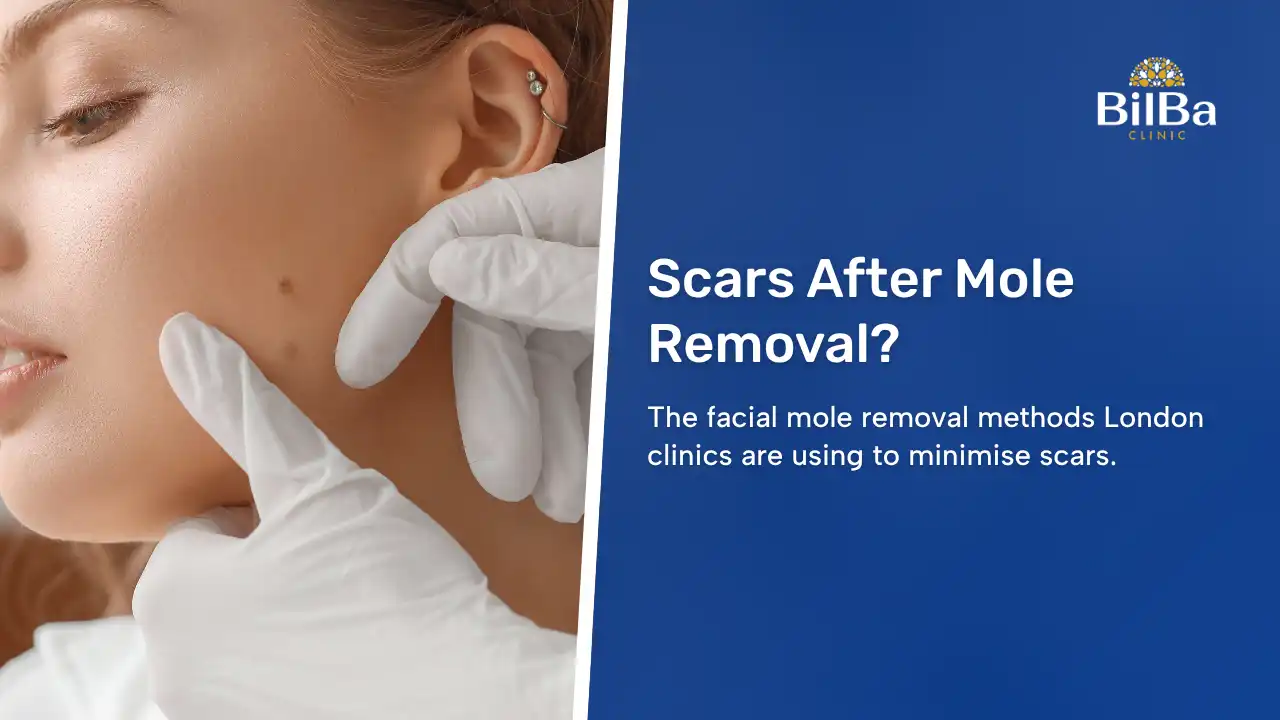
Moles on the face are common and, in most cases, entirely harmless. However, many patients choose to have them removed whether for cosmetic reasons, because they cause irritation, or because a mole has changed in appearance and requires clinical assessment. One of the most frequently asked questions we receive at Bilba Clinic is: can face mole removal be done without leaving a scar?
The short answer is yes, with the right clinical technique, the right mole removal clinic in London, and diligent aftercare, scarring can be significantly minimised. This guide covers everything you need to know before booking a procedure, from the methods available to what recovery looks like and how to choose the right clinic.
What Is a Mole and When Should It Be Removed?
A mole, medically known as a naevus, is a benign growth of pigment-producing cells called melanocytes. Most people develop moles during the first two decades of life. They vary in size, colour, and shape — flat or raised, brown or black, smooth or rough. Most moles are entirely harmless. However, there are two main reasons patients seek removal:
Medical reasons: If a mole changes in size, shape, or colour, bleeds, becomes itchy, or develops irregular borders, it should be assessed by a clinician without delay. These changes can sometimes indicate a risk of melanoma, which is the most serious form of skin cancer. In the UK, skin cancer is one of the most commonly diagnosed cancers, making regular mole monitoring essential.
Cosmetic reasons: Many patients choose face mole removal for personal confidence. Moles located on prominent facial areas around the nose, cheeks, forehead or lips are frequently removed for aesthetic purposes. Unlike the NHS, which generally only removes moles where there is a clinical concern, private mole removal clinics in London offer removal for cosmetic reasons following a thorough consultation.
Why Scarring Occurs After Mole Removal
Any procedure that breaks the skin carries a degree of scarring risk. However, the extent of scarring depends on several key factors:
- The size and depth of the mole: Deeper moles require more tissue to be removed, which affects how the skin heals
- The facial mole removal method used: Different techniques carry different risk profiles for scarring
- Aftercare compliance: How well the wound is managed post-procedure has a significant impact on the final cosmetic outcome
- Individual skin type: Some patients are more prone to keloid or hypertrophic scarring, particularly those with darker skin tones
At Bilba Clinic, our clinicians assess all of these factors during your initial consultation to determine the most suitable procedure of mole removal for your skin type and the specific characteristics of the lesion.
Facial Mole Removal Methods: Which Is Right for You?
Choosing the right method is central to achieving face mole removal without scarring. Leading mole removal clinics in London, including Bilba Clinic, offer several clinically proven techniques:
Surgical Excision
Surgical mole removal on the face involves the clinician removing the mole along with a small margin of surrounding tissue under local anaesthetic. The wound is closed with fine sutures carefully placed along natural skin tension lines, a technique specifically used in facial procedures to minimise visible scarring. This method is typically recommended for deeper or larger moles and for cases where the removed tissue needs to be sent to a laboratory for histological analysis.
Shave Excision
Shave excision is one of the most commonly used facial mole removal methods for raised or superficial moles. The mole is carefully shaved flush with the surface of the surrounding skin using a sterile surgical blade. This minimally invasive technique requires no deep incisions and no stitches, reducing recovery time and scar risk. It is a preferred approach for facial lesions where cosmetic outcome is the primary concern.
Curette and Cautery
This technique uses a small surgical instrument to scrape away the surface of the mole, followed by cauterisation to seal the area. It is typically used for superficial moles and results in a small, round healing area that fades over time.
Laser Mole Removal
Laser treatment is particularly suited to small, flat moles on the face. A targeted laser breaks down the pigment within the mole without the need for incisions or sutures. This makes it an attractive option for patients who are concerned about scarring, as there is no cutting involved. However, not all moles are suitable for laser removal. A consultation is required to confirm eligibility.
Skin Tag Removal in London: Is It Different from Mole Removal?
Skin tags are often confused with moles but are a distinct condition. They are small, soft growths made of collagen fibres and blood vessels that tend to hang from the skin on a thin stalk. Skin tags are entirely benign but can cause irritation if they catch on clothing or jewellery.
Skin tag removal in London is a quick, straightforward procedure. At Bilba Clinic, we treat skin tags alongside moles and other benign lesions as part of our minor skin surgery service. The method used for skin tag removal differs from mole removal, but the clinical setting, aftercare guidance, and commitment to minimising any marks on the skin remain the same.
If you are unsure whether you have a mole or a skin tag, a clinical consultation will confirm this and guide the most appropriate treatment.
The Procedure of Mole Removal: What to Expect Step by Step
Understanding the procedure of mole removal from consultation through to recovery can help patients feel informed and at ease before attending their appointment.
Step 1 — Consultation
All patients are required to attend a consultation before any mole removal procedure. The clinician will examine the mole, assess its size, depth, and characteristics, confirm suitability for removal, and recommend the most appropriate technique. At Bilba Clinic, consultations are available from £250 and same-day appointments can often be arranged.
Step 2 — Preparation
The treatment area is cleaned and a local anaesthetic is applied to numb the skin. The anaesthetic injection may sting briefly for approximately 30 seconds before the area becomes completely numb. Patients remain fully awake throughout the procedure.
Step 3 — Removal
Depending on the agreed method, the mole is either excised surgically, shaved, or treated with laser or cautery. The procedure is typically completed within 30 minutes.
Step 4 — Wound Care
Following removal, a dressing is applied to protect the wound. Where stitches are required, patients are typically asked to return within 7 to 10 days for removal.
Step 5 — Aftercare
Detailed aftercare instructions are provided before the patient leaves the clinic. Adhering to these guidelines is one of the most effective ways to reduce scar formation and support optimal healing.
Recovery and Aftercare: How to Minimise Scarring
Proper aftercare is essential to achieving face mole removal without scarring. The following guidance applies in most cases, though your clinician will provide instructions tailored to your specific procedure:
- Keep the wound clean and dry as directed in the first few days following treatment
- Avoid sun exposure on the treated area during healing. UV light can delay healing and cause discolouration
- Apply prescribed ointments such as silicone scar gel, which is clinically proven to reduce scar formation. Products such as Kelo-cote with UV protection are commonly recommended by London mole removal clinics
- Do not pick or disturb any scab that forms this is a natural part of the healing process
- Attend follow-up appointments so the clinician can monitor healing and intervene early if any concerns arise
Most patients experience some redness or a small pink mark where the mole was removed. This is entirely normal and typically fades over several weeks. On the face, re-pigmentation can occur relatively quickly due to UV exposure, which is why sun protection is strongly advised.
Choosing the Right Mole Removal Clinic in London
There are several private mole removal clinics in London offering face mole removal. When comparing options, patients should consider the following:
- Clinical qualifications: Ensure the procedure is carried out by a trained medical professional, not a beauty therapist
- CQC registration: Clinics regulated by the Care Quality Commission are held to nationally recognised standards of safety and care
- Range of techniques available: A clinic offering multiple facial mole removal methods can tailor treatment to your individual needs
- Histology: Reputable clinics send all removed moles for laboratory testing to rule out abnormal cells
- Aftercare provision: Clear post-procedure guidance and follow-up appointments are a sign of a thorough, patient-centred approach
Bilba Clinic is a CQC-registered private clinic based in Fitzrovia, central London. Our experienced medical professionals carry out minor skin surgery in a fully sterile clinical environment. We offer a transparent pricing structure, same-day consultations, and comprehensive aftercare guidance to support your recovery at every stage.
Book a Consultation at Bilba Clinic
If you are considering face mole removal and want expert guidance on the best approach for your skin, Bilba Clinic is here to help. Our experienced clinical team provides a full range of minor skin surgery procedures from mole and skin tag removal to excision of benign lesions and cysts in a safe, sterile, and professional environment in central London.
For a full breakdown of our minor skin surgery fees, visit our Pricing Page.
Clinic Address: 57 Great Titchfield Street, Fitzrovia, London W1W 7PN
Contact: +44 (0) 7858 848 244
Mail: info@bilbaclinic.co.uk
Frequently Asked Questions
Can a mole grow back after removal?
In some cases, particularly where shave excision is used, pigment cells in the deeper layers of the skin may remain and a degree of repigmentation can occur over time. Full surgical excision reduces this risk significantly.
Is face mole removal painful?
The local anaesthetic used during the procedure ensures minimal discomfort. Patients may feel mild tenderness in the treated area for a day or two following the procedure, which is easily managed with standard over-the-counter pain relief such as paracetamol.
How long does mole removal take to heal?
Most patients see significant improvement within two weeks. Complete healing and fading of any residual mark can take several weeks to a few months depending on the individual and the method used.
Does the NHS remove moles?
The NHS generally only removes moles where there is a clinical or medical reason to do so. Cosmetic mole removal is not routinely available on the NHS. Private mole removal clinics in London offer removal for both medical and cosmetic reasons.
Does the scar from mole removal hurt?
Some tenderness around the treated area is normal in the first few days after mole removal. The scar itself should not be persistently painful once the initial healing phase is complete. If you experience increasing pain, swelling, or warmth around the scar site, this may indicate an infection and you should contact your clinic promptly. At Bilba Clinic, we provide clear aftercare guidance and follow-up support to monitor your healing progress.
Is scarless mole removal on the face actually possible?
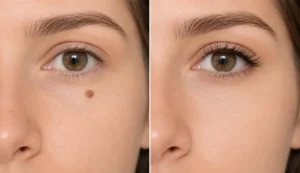
Completely scarless mole removal on the face is not guaranteed. Any procedure that breaks the skin carries some degree of healing response. However, with the right technique, such as shave excision or laser removal, and proper aftercare, scarring can be reduced to a barely visible mark that fades significantly over time. The skill of the clinician and the method chosen play a major role in the cosmetic outcome.
How do I know if my mole removal site has an infection?
Mole removal aftercare infection signs to watch for include increasing redness beyond the immediate wound area, swelling that worsens after the first 48 hours, yellow or green discharge, an unpleasant odour from the wound, and a fever. Mild redness and clear fluid in the first day or two is normal. If you notice any of the above symptoms, contact your clinic immediately rather than waiting for a scheduled follow-up.
How long is the mole removal recovery period?
The mole removal recovery period varies depending on the technique used and the size of the mole. In most cases, the wound surface heals within 1 to 2 weeks. Any stitches are usually removed within 7 to 10 days. Residual redness or a faint pink mark may remain for several weeks to a few months before it fully fades. Most patients return to normal daily activities within a few days of the procedure.
What are the mole removal recovery stages?
Recovery typically follows these stages:
- Days 1–3: The wound may appear red and slightly swollen. A scab begins to form. Keep the area clean and dry as instructed.
- Days 4–7: The scab develops further. Avoid picking or disturbing it as this increases scarring risk.
- Week 2: The scab naturally falls away, revealing new pink skin underneath. Stitches, if present, are removed around this time.
- Weeks 3–8: The pink mark begins to fade. Sun protection is essential during this stage to prevent discolouration.
- Months 2–6: The treated area continues to settle. Most patients see significant fading by this point, with the final result becoming clearer over time.
How long does shave mole removal take to heal?
Shave mole removal healing is generally quicker than surgical excision since no stitches are required. The area typically heals like a graze — a scab forms within the first few days and naturally falls away within 1 to 2 weeks. A small pink or pale mark is left behind, which fades progressively over the following weeks. On the face, healing can be faster due to the rich blood supply, though UV protection remains essential throughout recovery.