
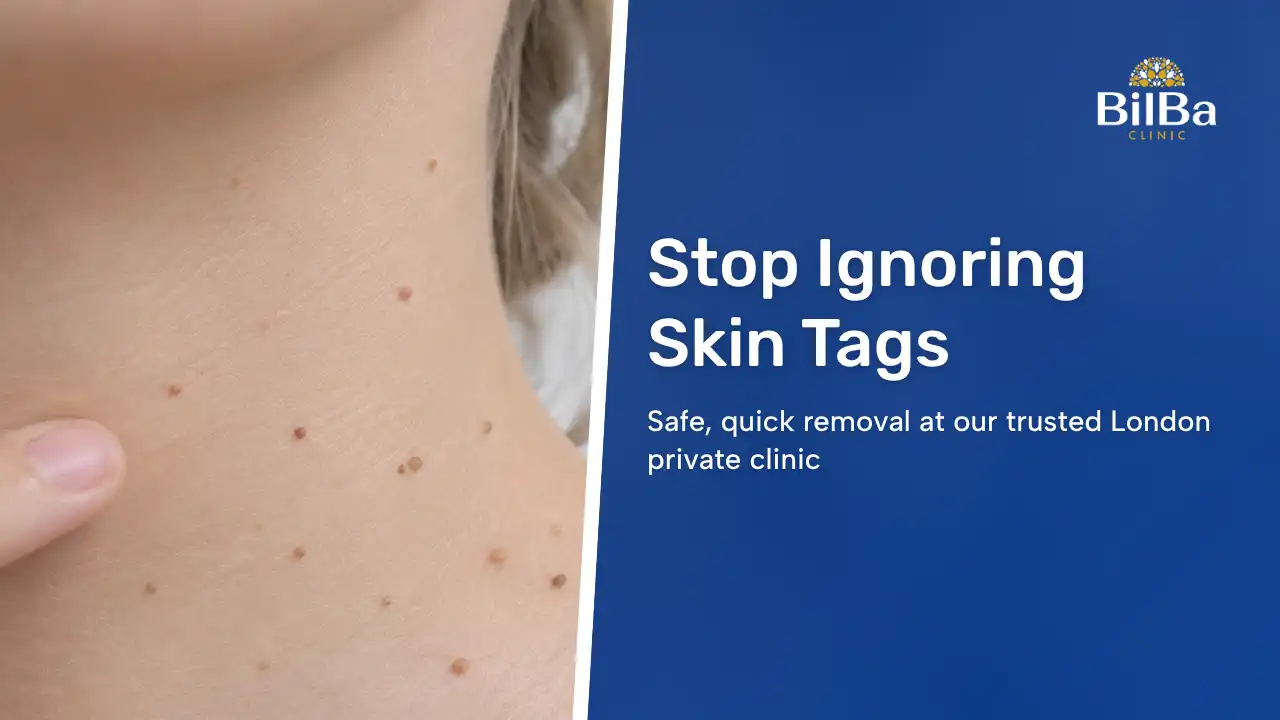
If you have noticed a small, soft piece of skin hanging from your neck, eyelid or underarm, you are not alone. Skin tags are one of the most common skin concerns we see at our London clinic and the good news is they are almost always harmless.
But we understand why they can feel worrying. Questions like “are skin tags dangerous?” or “could this be something more serious?” are completely normal to ask. Many of our patients come to us feeling unsure and leave feeling reassured and clear on what to do next.
In this guide, we explain everything you need to know about skin tags including what causes them, whether they need to be removed and how skin tag removal in London works at Bilba Clinic. Whether you are dealing with a skin tag on your neck, near your eyes or anywhere else on your body, we are here to help you understand your options clearly and safely. You can also visit our Minor Skin Surgery page to learn more about the procedures we offer for skin lumps and benign growths.
What Are Skin Tags and What Are They Made Of
Skin tags are small benign growths that form on the surface of the skin. They are made of loose collagen fibres, fat cells and small blood vessels surrounded by a thin layer of skin. This is why they tend to feel soft and squishy when touched.
They are medically known as acrochordons and are entirely non-cancerous in the vast majority of cases. They can vary in size from a few millimetres to around a centimetre and may be skin-coloured or slightly darker.
Understanding what skin tags are made of helps explain why they respond so well to professional removal. Because they have a small base of blood supply they can be treated quickly and cleanly without affecting the surrounding skin.
What Causes Skin Tags and Why You Might Be Getting Them
One of the most common questions we hear is “why am I getting skin tags all of a sudden?” The honest answer is that there is rarely one single cause. Skin tags tend to develop in areas where skin rubs against skin or clothing repeatedly over time.
The most common causes and contributing factors include:
Friction and skin rubbing
This is the primary reason skin tags form. Areas like the neck, armpits, groin and under the breasts are particularly prone because of constant movement and contact.
Hormonal changes
Pregnancy and hormonal fluctuations can trigger new skin tag growth. This is especially common during the second trimester of pregnancy. If you are experiencing other hormonal symptoms alongside skin changes, our Hormones and Menopause service may also be relevant to you.
Weight gain
Carrying extra weight increases the amount of skin-to-skin contact in various areas of the body which makes skin tag formation more likely. If weight management is something you are working on, you can explore our Weight Loss Management programme as a complementary step.
Insulin resistance and type 2 diabetes
Research suggests a link between insulin resistance and an increased tendency to develop skin tags. If you are suddenly developing multiple skin tags it may be worth speaking to a doctor about your metabolic health.
Age
Skin tags become more common as we get older. They are rarely seen in children but are very common in adults over 40.
Genetics
If your parents or close family members have had skin tags you may simply be more predisposed to developing them.
So what are skin tags a warning for? In most cases they are simply a sign of friction or ageing. However if you are developing a large number of skin tags in a short period of time it can occasionally signal an underlying condition such as insulin resistance or a hormonal imbalance. We always recommend speaking to a medical professional if this is the case and we can assess this quickly during a consultation at our clinic. You can also book a Private GP appointment with us if you would like a broader health review alongside your skin assessment.
Are Skin Tags Dangerous and Should You Be Worried
The straightforward answer is no. Skin tags are not dangerous in themselves. They are benign growths and do not turn into cancer. However we understand why many patients ask “are skin tags cancerous?” especially when a growth appears suddenly or starts to change in appearance.
It is important to know the difference between a typical skin tag and a growth that needs closer medical attention. You should seek professional assessment if your skin tag:
- Bleeds without any reason or with minimal contact
- Changes colour rapidly especially to dark brown or black
- Grows noticeably larger over a short period
- Feels painful or becomes tender to touch
- Has an irregular shape or uneven borders
These signs do not automatically mean something serious is wrong but they do warrant a proper clinical examination. At Bilba Clinic we can assess any skin growth carefully and give you a clear and honest picture of what you are dealing with. If you are unsure whether what you have is a skin tag or something else, we recommend booking a consultation with us sooner rather than later so we can guide you on the right next steps.
What Causes Skin Tags on Eyes and Why This Area Needs Extra Care
Skin tags around the eyes and eyelids are more delicate than those found elsewhere on the body. The skin in this area is thinner and more sensitive which means it requires a more precise and careful approach to removal.
What causes skin tags on eyes is largely the same as elsewhere including friction from glasses or goggles, rubbing the eyes frequently and natural ageing. However the proximity to the eye itself means that DIY removal methods are completely unsuitable and potentially dangerous in this area.
At our clinic we assess periocular skin tags carefully before recommending the most appropriate removal method. Patient safety and comfort are always our priority and we take extra precautions when treating this sensitive area. Our Oculoplastic Eye Surgery service may also be relevant if you have more complex concerns around the eye area that require specialist assessment.
If you have a skin tag near your eye that is affecting your vision, causing irritation or simply bothering you, we encourage you to book a consultation with us so we can guide you on the safest and most effective approach.
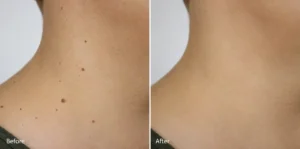
Skin Tag on Neck Removal and Why It Is One of the Most Common Treatments We Perform
The neck is one of the most common areas where skin tags develop. This is largely due to the constant movement of the neck, friction from shirt collars and the natural folds in the skin. Skin tags on the neck can range from tiny barely noticeable growths to larger more visible ones that affect how patients feel about their appearance.
Skin tag on neck removal is one of the most frequently requested minor procedures at our London clinic. Patients often tell us they have been living with neck skin tags for years before finally deciding to have them removed. Once they do they almost always wish they had done it sooner.
The removal process for neck skin tags is typically quick and involves minimal discomfort. Depending on the size and number of skin tags we will recommend the most appropriate removal method during your consultation. You can find out more about what to expect by visiting our Minor Skin Surgery page.
How Skin Tag Removal in London Works at Bilba Clinic
We offer safe and clinically guided skin tag removal at our London clinic in Fitzrovia. Our approach is always thorough starting with a proper assessment before any procedure takes place. We do not simply remove skin tags without first understanding your medical history and the nature of the growth.
Skin tag removal at Bilba Clinic is performed as a minor skin surgery procedure under local anaesthetic. The area is numbed to reduce discomfort and the procedure is typically quick and carried out as a day case. The exact removal method used will depend on the size, location and number of skin tags and will be discussed and agreed with you during your consultation. Our clinical team will always explain the process clearly before anything begins so you feel fully informed and comfortable throughout.
Following the procedure we provide clear aftercare guidance to support healing and reduce the risk of any complications. Most patients find recovery straightforward and return to their normal daily activities the same day or within 24 hours.
We also offer same day skin tag removal London appointments where clinically appropriate. This means that following your initial consultation if it is suitable to proceed on the same day we will do so. You can book directly without a GP referral.
Skin Tag Removal London Cost and What You Should Know
One of the most searched questions around this topic is how much does skin tag removal cost in the UK. The honest answer is that it varies depending on the number of skin tags, the removal method used and the clinic you choose.
At Bilba Clinic our skin tag removal is priced from £900 and our consultation starts from £250. We will always confirm costs clearly before any treatment begins with no hidden fees or surprise charges. You can view our full and transparent pricing on our Pricing page.
It is also worth knowing that skin tag removal is not routinely available on the NHS unless the skin tag is causing a significant medical problem. In most cases it is considered a cosmetic procedure. This is why many patients across London choose private clinics like ours for a faster, more comfortable and professionally managed experience.
Where can you get skin tags removed in the UK?
Private skin clinics regulated by the Care Quality Commission such as Bilba Clinic are the most reliable and safe option for skin tag removal. We are CQC registered and all our procedures are carried out by experienced clinical staff in a safe and fully equipped environment.
Are Skin Tag Patches Safe and Do They Actually Work
With so many over-the-counter products available it is understandable that patients ask whether skin tag patches are safe. The short answer is that while some patches may cause a skin tag to shrink over time they are not clinically proven to be as effective or as safe as professional removal.
Skin tag patches typically work by drying out the growth using ingredients such as salicylic acid. The risks include skin irritation, scarring and incomplete removal. They are also entirely unsuitable for use near the eyes, on the face or in sensitive areas.
We always advise patients to seek professional advice before attempting any home treatment especially if the growth is in a sensitive location or if there is any uncertainty about whether it is actually a skin tag. If you are not sure what you are dealing with, booking a consultation with our team is always the safest first step.
What Makes Skin Tags Grow Bigger and When to Take Action
Most skin tags stay small and stable for years. However some do grow larger over time particularly if they are in an area of high friction or if there are underlying health factors at play.
What makes skin tags grow is largely continued irritation, pressure or rubbing. In some cases hormonal changes or weight gain can also contribute to existing skin tags becoming larger.
If you notice a skin tag growing noticeably larger, changing colour or becoming uncomfortable we recommend having it assessed professionally. While it is unlikely to be anything serious it is always better to have a clinical opinion rather than leaving it unmonitored. Our Private GP Services are available if you would like a broader medical assessment alongside any skin concerns.

Ready to Have Your Skin Tag Removed? Here Is How We Can Help at Bilba Clinic
If you have been thinking about skin tag removal in London we want to make the process as simple and stress-free as possible for you. At Bilba Clinic we understand that even minor skin concerns can feel worrying and we are here to give you clear answers and the right treatment from the very first appointment.
Here is what you can expect when you come to us:
We start with a thorough consultation where we assess the skin tag carefully, review your medical history and explain your removal options honestly. We do not rush the process and we make sure you feel fully informed before anything takes place.
We then recommend the most appropriate removal method based on the size, location and nature of your skin tag. Whether it is a single skin tag on your neck or multiple tags in different areas we will create a treatment plan that works for you.
Our procedures are performed by experienced clinical staff in our CQC-regulated clinic in Fitzrovia, London. You can expect a clean professional environment, clear aftercare guidance and a team that genuinely cares about your comfort and results.
You can explore our Minor Skin Surgery page to learn more about the procedures we offer or visit our Pricing page to see our transparent treatment costs. If you have wider skin or health concerns our Private GP Services team is also here to help. Booking is straightforward and you do not need a GP referral to get started.
We are here when you are ready. Book your consultation today and let us help you feel comfortable and confident in your skin again.
Frequently Asked Questions About Skin Tag Removal in London
Are skin tags dangerous?
No. Skin tags are benign growths and are not dangerous in themselves. They do not turn into cancer. However if a skin tag bleeds, changes colour or grows rapidly it is worth having it assessed by a medical professional to rule out any other skin condition.
How much does skin tag removal cost in the UK?
The cost of skin tag removal in the UK varies depending on the clinic, the number of skin tags and the method used. At Bilba Clinic skin tag removal starts from £900 and consultations from £250. We offer transparent pricing with no hidden costs. Skin tag removal is not routinely available on the NHS so most patients opt for a private clinic for faster and more professional care. You can view our full costs on our Pricing page.
Where can I get skin tags removed in the UK?
You can get skin tags removed at a CQC-registered private skin clinic. Bilba Clinic in Fitzrovia, London offers professional skin tag removal carried out by experienced clinical staff in a safe and regulated environment. You do not need a GP referral to book.
Are skin tag patches safe?
Over-the-counter skin tag patches are not clinically proven and carry risks including skin irritation and scarring. They are not suitable for use near the eyes or on sensitive areas of the face. Professional removal at a regulated clinic is always the safer and more effective choice.
Is same day skin tag removal available in London?
Yes. At Bilba Clinic we offer same day skin tag removal in London where clinically appropriate. Following your initial consultation if it is suitable to proceed on the same day we will do so. You can book directly without a referral.
Why am I getting skin tags all of a sudden?
Sudden development of skin tags can be linked to weight gain, hormonal changes, pregnancy or insulin resistance. If you are developing a noticeable number of skin tags in a short period we recommend speaking to a doctor as it may indicate an underlying health condition worth investigating. Our Private GP Services team can carry out a full assessment if needed.
What makes skin tags grow bigger?
Skin tags can grow larger due to ongoing friction, hormonal changes or weight gain. If a skin tag is growing quickly, becoming painful or changing in appearance it is best to have it assessed professionally rather than leaving it unmonitored.
Does skin tag removal leave a scar?
Most professional skin tag removal methods leave minimal to no scarring especially when performed by an experienced clinician. The risk of scarring is significantly higher with DIY methods or over-the-counter patches. We always aim for the cleanest and most careful removal to protect the surrounding skin.
How long does it take to recover after skin tag removal?
Recovery is generally quick. Most patients return to their normal daily activities the same day or within 24 hours. The treated area may feel slightly tender or appear red for a few days. We provide full aftercare guidance following every procedure.
Can skin tags come back after removal?
A treated skin tag will not regrow in the same spot. However new skin tags can develop elsewhere on the body over time especially if the underlying causes such as friction or hormonal factors are still present. We can advise you on how to minimise the chances of new skin tags forming.