
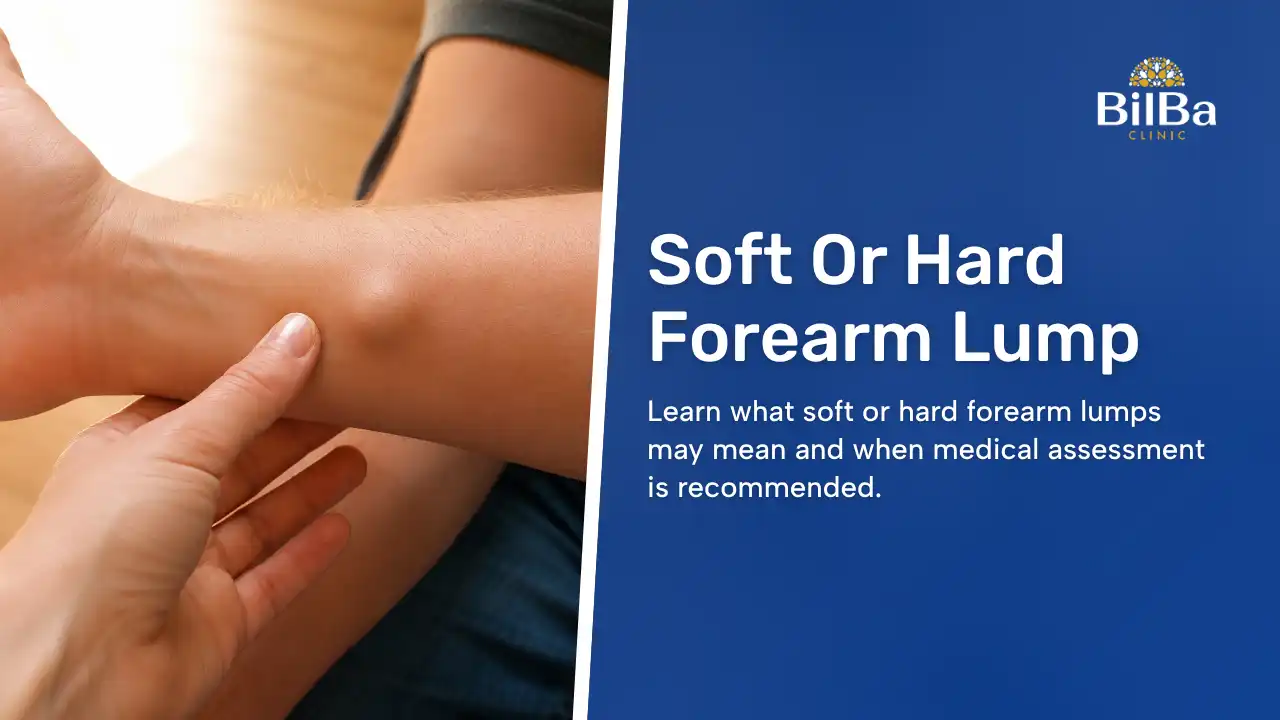
Finding a lump under skin on forearm can feel concerning, especially if it appears suddenly or starts changing in size or texture. Some lumps feel soft and movable, while others feel firm or hard beneath the skin. In many cases, these lumps are harmless, but some may need medical assessment to rule out underlying conditions.
At Bilba Clinic in London, we regularly assess patients worried about forearm lumps that have become painful, grown over time, or started affecting movement. Understanding what these lumps may mean can help you decide when it is sensible to seek medical advice.
What a Lump Under Skin on Forearm Can Mean
A lump under skin on forearm can develop for several reasons. Some are linked to fatty tissue, while others may develop from blocked glands, inflammation, fluid build-up, cysts, or soft tissue changes. The way the lump feels can sometimes provide clues about the possible cause, though proper medical examination is the only way to confirm a diagnosis.
Soft Lump Under Skin on Forearm: Characteristics and Causes
Understanding a Soft Lump on Forearm
A soft lump under skin on forearm is commonly linked to fatty growths such as a lipoma forearm. A soft lump on forearm typically appears as a benign (non-cancerous) fatty tumor made of adipose tissue that feels soft, rubbery, and painless beneath the skin. These soft lumps usually feel soft or rubbery and may move slightly when pressed.
Many soft lumps on forearm remain painless and grow slowly over years, though the exact cause remains unclear. Risk factors include family history, age (typically appearing between 40-60 years), obesity, and insufficient exercise. Some people may develop multiple soft lumps under skin on arm areas or other parts of the body, a condition sometimes referred to as lipomatosis.
Patients often worry about:
- A fat lump on forearm that feels movable and soft
- A soft lump that moves around under skin with slight pressure
- A painless soft lump under skin on forearm that remains stable for years
- Multiple soft lumps on forearm developing over time
Although soft lumps under skin on arm areas are often harmless, assessment is recommended if the lump grows, changes shape, becomes uncomfortable, or causes functional limitations.
Hard Lump Under Skin on Forearm: When to Be Concerned
Understanding a Hard Lump on Forearm
A hard lump under skin on forearm may feel more solid or fixed in place. Some people describe this as a knot on forearm under skin or a firm lump under skin on arm. A hard lump on forearm requires different diagnostic considerations than soft lumps.
Hard lumps on forearm can develop from various causes including scar tissue, inflammation, calcified tissue, ganglion cysts, epidermoid cysts, or other soft tissue masses. Most hard lumps are benign, but persistent or growing hard lumps should always be checked properly.
Interestingly, not all hard lumps are serious. For example, ganglion cysts (which are fluid-filled) can feel firm or rubbery depending on their composition and pressure. The consistency alone cannot determine the underlying cause without proper examination.
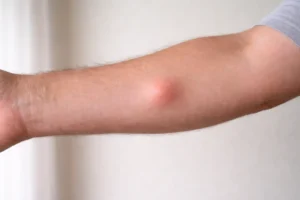
Common Causes Behind a Lump Under Skin on Arm
Several conditions may cause a lump under skin on arm. Most are harmless and need monitoring only, while others may need treatment.
Lipoma on Forearm: The Most Common Fatty Growth
A lipoma on forearm is one of the most common causes of a soft tissue lump forearm. Lipomas on forearm develop slowly beneath the skin and are made of fatty tissue. They typically remain less than 5 centimeters in size, though larger lipomas can occur. Most lipomas on forearm develop on the arms, shoulders, neck, and back.
Lipomas on forearm characteristics:
- Benign (non-cancerous) fatty growths
- Soft and movable under the skin
- Usually painless
- Grow slowly over years
- Most common in middle-aged adults (40-60 years)
- Can affect anyone, though family history increases risk
Patients often ask us:
Can you get a lipoma on your arm?
Yes, lipomas commonly develop on arms and forearms, making it one of the most frequent locations. The arm, shoulder, and upper back are prime sites for lipoma development.
Why does my lump feel soft and movable?
The fatty composition allows movement within the surrounding tissue, which is actually a reassuring sign of a benign lipoma.
Should I worry about multiple lipomas on forearm areas?
Having multiple lipomas on forearm locations is not uncommon and doesn’t increase cancer risk, though it may warrant genetic evaluation in rare family syndromes.
In most cases, lipomas on forearm are harmless and don’t require treatment unless they grow significantly, cause pain, restrict movement, or create cosmetic concerns. Surgical removal is the definitive treatment, with minimal excision extraction techniques reducing scarring.
Forearm Cyst: Ganglion and Other Fluid-Filled Lumps
A forearm cyst, particularly a ganglion cyst forearm, is a fluid-filled swelling that commonly develops near joints or tendons. These are the most common benign masses in the hand and wrist, occurring at a rate of approximately 3 per 10,000 people per year. They are non-cancerous and usually harmless.
Ganglion cyst forearm characteristics:
- Fluid-filled sacs attached to joints or tendons
- Most common on back of wrist, but can occur anywhere on forearm
- Can appear suddenly and change size unpredictably
- May shrink or disappear on their own without treatment
- Often feel firm or fluctuant (fluid-filled) depending on internal pressure
- Can become painful during movement, exercise, or if they compress nearby nerves, causing tingling or numbness in the hand or fingers
- Linked to joint irritation, repetitive strain, and previous injuries such as sprains or fractures
Types of forearm cyst:
- Ganglion cysts (most common – wrist and hand)
- Epidermoid cysts (skin cell-filled)
- Synovial cysts (joint-related)
If you notice a forearm cyst near wrist areas that feels smooth or rounded, this may be a ganglion cyst. Treatment ranges from observation (many resolve without intervention) to immobilization with a brace or splint, aspiration (fluid removal), or surgical excision. Non-surgical approaches are usually recommended first.
Epidermoid Cyst on Forearm: Blocked Skin Glands
An epidermoid cyst on forearm (commonly but incorrectly called a “sebaceous cyst”) develops when skin cells become trapped beneath the skin surface, forming a keratin-filled sac. This is different from a true sebaceous cyst, which is much rarer and involves oil glands.
Epidermoid cyst characteristics:
- Among the most common benign skin growths
- Can develop anywhere on the body, including the forearms
- Typically feel round and firm beneath the skin
- Often have a small central pore or blackhead-like opening
- Usually grow slowly and remain painless
- May become inflamed, red, or infected if ruptured or squeezed
- Can remain stable for years, though some gradually increase in size
- If an epidermoid cyst becomes painful, red, swollen, or begins draining, medical assessment is important to rule out infection or other complications
Treatment is not always necessary unless the cyst becomes infected, inflamed, cosmetically concerning, or symptomatic. Complete surgical excision (removing the entire cyst wall) is the most effective treatment, as simple drainage often leads to recurrence.
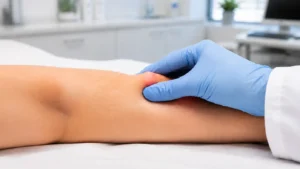
When a Lump Under Skin on Arm Becomes Painful
A lump under skin on arm painful enough to affect your daily routine should not be ignored. Pain does not always indicate a serious condition, but it may suggest inflammation, pressure on nearby nerves or blood vessels, infection, or other complications requiring assessment.
You should arrange medical assessment if you notice:
- Swelling under skin on arm that persists or worsens
- A growing lump under skin that increases in size
- Tenderness or warmth in the area
- Numbness, tingling, or radiating pain into the hand or fingers
- Restricted movement or functional limitations
- A sudden lump under skin that appears without obvious cause
- Signs of infection including redness, warmth, pus drainage, or fever
A tender lump that continues changing over time should also be assessed properly. At Bilba Clinic, we help you understand whether the lump appears harmless or whether further investigation may be sensible. Early assessment can often provide reassurance and help avoid unnecessary worry while ensuring nothing serious is overlooked.
Why Some Lumps Move Around Under the Skin
Many patients become worried when they notice a lump that moves around under skin. In many cases, movable lumps are linked to fatty tissue growths such as lipomas. A rubbery lump under skin that shifts slightly under pressure is often reassuring, as cancerous tumors typically feel fixed and don’t move freely.
However, the ability to move alone cannot confirm the cause. Ganglion cysts and some other benign conditions can also feel movable, while some fixed lumps may still be harmless. This is why proper examination is essential.
If the lump grows, becomes harder, starts causing discomfort, or restricts movement, we can guide you on the next steps and discuss whether imaging or treatment may help.
How We Diagnose a Skin Lump at Bilba Clinic
A proper skin lump diagnosis is important because many lumps can feel similar despite having different causes and implications.
When you visit us, we begin with a detailed assessment including:
- How long the lump has been present
- Whether it has changed in size, shape, or texture
- Any associated pain, swelling, or functional limitations
- Movement restriction or neurological symptoms
- Previous skin conditions, injuries, or trauma to the area
- Family history of skin conditions or genetic syndromes
We may recommend further investigation such as ultrasound imaging or, less commonly, MRI if the lump needs closer assessment to determine its nature, depth, or relationship to surrounding structures. Ultrasound is particularly effective for distinguishing between fatty lumps, fluid-filled cysts, and other soft tissue masses without radiation exposure.
Patients looking for a private GP for skin lump concerns often want quicker answers without long waiting times. We help you understand what the lump may represent and whether monitoring, imaging, or treatment is the best next step.
Our approach combines clinical expertise with appropriate imaging to provide accurate diagnosis while minimizing unnecessary procedures.
You can also explore our Private GP Services and Minor Skin Surgery for comprehensive evaluation and treatment options.
Forearm Lump Under Skin: Removal and Treatment Options
Not every forearm lump under skin needs treatment. Some harmless, stable lumps can simply be monitored over time without intervention.
However, treatment for a forearm lump under skin may be recommended if:
- The forearm lump under skin grows larger over time
- Movement becomes uncomfortable or restricted
- The lump becomes painful or develops symptoms
- There is uncertainty about diagnosis despite clinical assessment
- The lump compresses nearby nerves, causing neurological symptoms
- The appearance causes significant cosmetic concern
- Signs of infection or inflammation develop
Depending on the cause, treatment options for forearm lump under skin may include:
- Observation: Regular monitoring without intervention for asymptomatic, stable lumps
- Cyst aspiration: Needle drainage of fluid-filled cysts (though recurrence is common if the wall isn’t removed)
- Immobilization: Bracing or splinting for ganglion cysts to reduce joint movement and pressure
- Minor surgical excision: Removal of the lump under local anesthetic
- Minimal excision extraction: Advanced technique for lipomas that reduces scarring compared to traditional excision
Patients searching for lipoma removal London or cyst removal London treatment often want a clear diagnosis and straightforward treatment plan. We explain all suitable options carefully so you understand the benefits, limitations, recovery expectations, and potential risks.
Most procedures are performed under local anesthetic in our outpatient clinic setting, with patients returning home the same day.
Recovery After Minor Skin Surgery London Procedures
Recovery after minor skin surgery London procedures is usually manageable, although healing time depends on the size, depth, and location of the lump.
Expected recovery timeline:
- Most patients experience mild swelling or bruising for 1-2 weeks following treatment
- Complete wound healing typically occurs within 2-4 weeks, depending on closure method
- Strenuous activity and heavy lifting should be avoided for 1-2 weeks to prevent wound complications
Dressings and detailed wound care instructions are provided to help support healing and minimize scarring. We provide aftercare support and follow-up appointments to ensure proper healing and address any concerns.
Potential risks and complications (rare):
- Infection (minimized through proper wound care)
- Scarring (varies by individual and technique used)
- Bleeding or hematoma formation
- Recurrence of certain lumps (particularly ganglion cysts if the stalk isn’t removed)
- Nerve or blood vessel injury (extremely rare with careful surgical technique)
- Temporary swelling or numbness that usually resolves within weeks
We discuss these clearly before treatment so you know what to expect and can make informed decisions.
Red Flags: When Urgent Assessment is Needed
While most lumps on forearm are benign, certain characteristics warrant prompt medical evaluation to rule out rare serious conditions:
- Rapid growth over days to weeks
- Hard, fixed lump that doesn’t move with skin or underlying tissue
- Associated weight loss, fatigue, or night sweats
- Overlying skin changes (ulceration, discoloration, or texture change)
- Severe pain out of proportion to the lump size
- Neurological symptoms that worsen despite conservative management
If you notice any of these features, prompt professional assessment is advisable to ensure proper diagnosis and rule out malignancy or other serious conditions.

Private Lump Assessment in London at Bilba Clinic
If you have noticed a lump under skin on forearm, seeking early assessment may help provide reassurance and clarity. At Bilba Clinic, we regularly assess:
- Soft tissue lumps and general skin lesions
- Fluid-filled cysts and ganglions
- Lipomas and fatty growths
- Hard or painful lumps
- Swelling beneath the skin
- Lumps with uncertain diagnosis requiring imaging or specialist evaluation
We understand that many patients simply want to know whether the lump is harmless and what the next step should be. Our role is to guide you clearly, explain your options honestly, and help you feel informed about treatment decisions.
With same-day appointments available and experienced clinicians, we provide prompt assessment without long waiting times. Our clinic is CQC-registered, ensuring compliance with UK healthcare standards.
If treatment is appropriate, we can also discuss suitable removal options and recovery expectations during your appointment.
Book an Appointment With Us for Forearm Lump Assessment
If you are worried about a lump under skin on forearm, you do not need to keep guessing what it might be. We can assess the lump, explain possible causes, and guide you on the next steps clearly and honestly.
At Bilba Clinic, we focus on giving you:
- Reassurance where appropriate
- A clear diagnosis pathway
- Straightforward treatment advice
- Prompt appointments without lengthy waiting times
- Access to further investigation (ultrasound) if needed
- Professional, confidential care in a regulated clinic setting
Whether you have a small lump under skin on arm areas, a hard lump that has changed over time, or a soft lump that keeps growing, we can help you understand what this means and whether treatment may be beneficial.
You can book an appointment for:
If you would like a professional assessment, you can book an appointment with us through our Contact Us page or directly through our Booking Portal.
Contact details:
- Phone: +44 (0) 7858 848 244
- Email: info@bilbaclinic.co.uk
- Address: 57 Great Titchfield Street, Fitzrovia, London W1W 7PN
Frequently Asked Questions About Forearm Lumps
What causes a small lump under skin on arm areas?
Small lumps beneath the skin can develop from lipomas, cysts, swollen tissue, inflammation, or injury. Some remain harmless and stable, while others gradually increase in size. Size alone doesn’t determine whether a lump is serious appearance, growth rate, and associated symptoms are more important indicators.
Can a lump that moves around under skin be dangerous?
Many movable lumps are harmless fatty growths such as lipomas. The ability to move freely is often reassuring, as it suggests the lump is not fixed to underlying structures or skin, which is typical of benign lesions. However, any lump that becomes painful, grows rapidly, becomes harder, or develops concerning features should be assessed properly regardless of mobility.
Should I worry about a sudden lump under skin on forearm?
A sudden lump under skin on forearm may develop from inflammation, cyst formation, injury, infection, or fluid accumulation. While most sudden lumps are benign and often resolve spontaneously, assessment is recommended if the lump grows quickly, causes persistent symptoms, or doesn’t improve within a few weeks. Early assessment can provide reassurance and ensure nothing significant is overlooked.
What does a knot on forearm under skin mean?
A knot on forearm under skin can describe several conditions including cysts, scar tissue, lipomas, ganglion cysts, or other soft tissue lumps. The term “knot” typically suggests a firm or fixed lump, though examination helps identify the likely cause and appropriate management.
Can you get a lipoma on your arm?
Yes, lipomas commonly develop on the arms, shoulders, neck, and back. They are among the most frequent locations for lipoma development. These soft fatty lumps are usually harmless, though some may grow larger over time or cause concern due to appearance or discomfort.
What is a pea-sized lump under skin on arm?
A pea-sized lump under skin on arm (approximately 1 centimeter) is often the early stage of a growing cyst or lipoma. Such small lumps under skin on arm are typically asymptomatic and can remain stable indefinitely or gradually enlarge over months to years. Regular observation and professional assessment at annual check-ups is appropriate for small, stable lumps. Prompt evaluation is warranted if the pea-sized lump under skin on arm changes in size or symptoms develop.
Is it normal to have multiple lipomas on forearm?
Having multiple lipomas on forearm is not uncommon, particularly in individuals with family history or certain genetic conditions. Multiple lipomas on forearm don’t increase cancer risk and are benign, though they may warrant evaluation if they cause functional or cosmetic concerns. In rare cases of very numerous lipomas on forearm, genetic evaluation for familial lipomatosis may be appropriate.
What’s the difference between a soft lump under skin on forearm and hard lump under skin on forearm?
The difference between a soft lump under skin on forearm and a hard lump under skin on forearm can provide important diagnostic clues. A soft lump on forearm typically indicates fatty tissue (lipoma), while a hard lump under skin on forearm may suggest ganglion cyst, epidermoid cyst, or scar tissue. However, both types of lumps on forearm can be benign and require proper evaluation to determine the exact cause.
How do I know if my lump on forearm under skin is a lipoma?
A lump on forearm under skin that is likely a lipoma typically feels soft, rubbery, painless, and moves when you press it. Lipomas on forearm develop slowly and rarely cause symptoms. However, only proper medical examination can confirm that your lump on forearm under skin is indeed a lipoma and not another condition.