
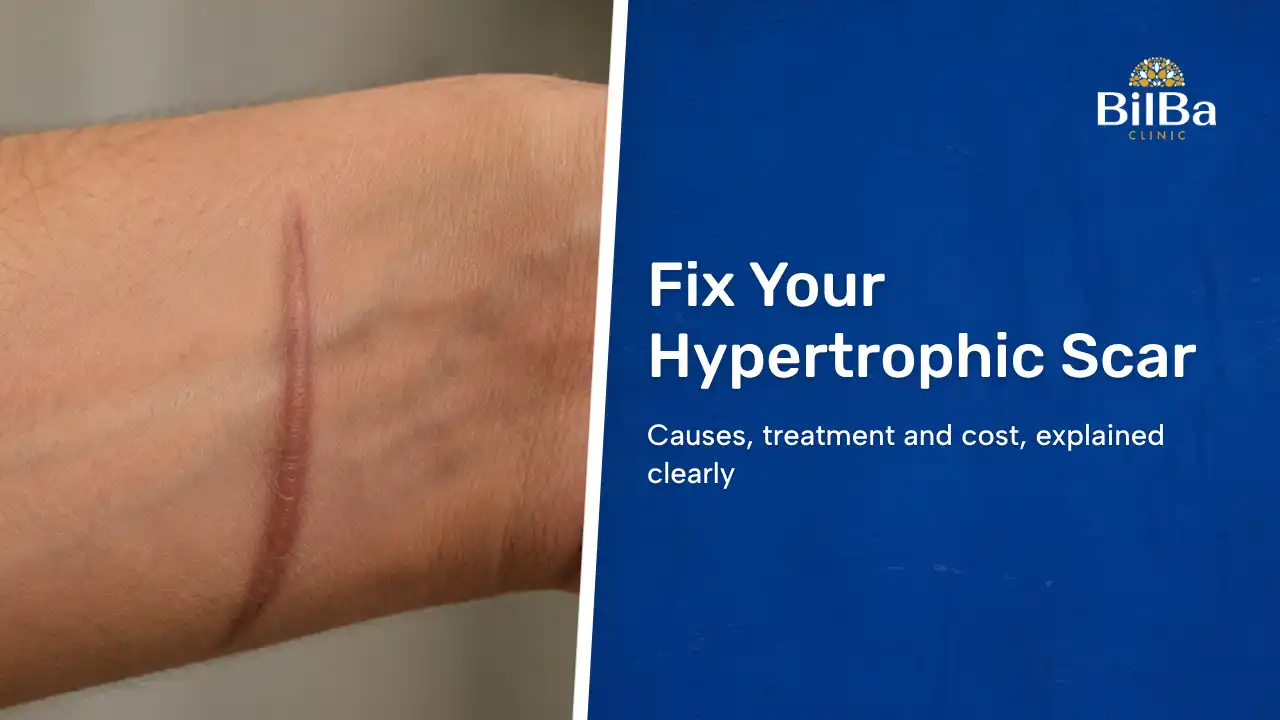
If you’re looking into hypertrophic scar reduction, chances are you’re staring at a scar that just won’t settle down. It’s raised, often red or pink, and it hasn’t faded the way you expected it to by now. That’s a common thing to go through, and you don’t need to just live with it. At Bilba Clinic, we see this regularly, and in this guide we’ll walk you through what hypertrophic scar reduction actually means, why some wounds heal this way, whether time alone will sort it out, and exactly how we treat it when it doesn’t.
What Is Hypertrophic Scar Reduction
Hypertrophic scar reduction simply means treating hypertrophic scar tissue so it sits flatter, softer, and less visible against the surrounding skin. Think of it as a scar flattening treatment rather than a way to erase the scar from history. Some patients search for ways to reduce hypertrophic scar height on their own, others come to us already looking for a proper hypertrophic scar reduction treatment, and a few simply call it hypertrophic scar minimisation or hypertrophic scar shrinking. Whatever term you use, at Bilba Clinic it means surgical excision, sometimes paired with steroid injections afterwards to stop it building back up.
What Makes a Scar Hypertrophic Rather Than Just a Normal Scar
Not every scar that looks a bit raised is a hypertrophic scar, and it helps to know what you’re actually dealing with before deciding what to do about it. A hypertrophic scar vs normal scar comparison comes down to two things, whether the raised tissue stays within the original wound’s edges, and whether it settles down as healing continues. A hypertrophic scar is thickened scar tissue that stays within the boundaries of the original wound, raised above the surrounding skin. In the early months it can look like a red raised scar, and it often feels firm to the touch. An itchy or painful scar is common too, especially in the months right after an injury, surgery, or piercing.
Why Some Wounds Heal This Way
Patients often ask us what cause hypertrophic scar tissue to form in the first place, and most of the time it comes down to tension on the wound while it healed. Skin over joints, the chest, shoulders, and areas that move a lot pulls at a healing wound constantly, and your body responds with collagen overgrowth to reinforce it. When that collagen builds up faster than it breaks down, or the fibres form in a disorganised way, you end up with tissue that sits proud of the surrounding skin. Infection, prolonged inflammation, or a wound left to heal without stitches are recognised wound healing complications that push things the same way.
Keloid vs Hypertrophic Scar, How to Tell Them Apart
People often use “keloid” and “hypertrophic scar” interchangeably, but they’re not quite the same thing. Both fall under the broader umbrella of abnormal scarring, though a hypertrophic scar stays contained within the original wound’s edges and can improve somewhat on its own over time. A keloid grows beyond the boundary of the original injury, sometimes years later, and rarely shrinks without treatment. Knowing which one you’re dealing with matters, because it affects how we approach treatment and how likely it is to come back afterwards.
Will a Hypertrophic Scar Go Away on Its Own
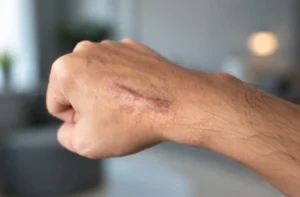
This is usually the first question anyone asks, and it’s a fair one. Will hypertrophic scars fade without any treatment at all. In some cases, yes, a hypertrophic scar does soften and flatten with time. In others, it plateaus and stays exactly as raised and visible as it was the day it formed. Plenty of people look up how to reduce a hypertrophic scar naturally before considering surgery, and gentle scar care can help mild cases while you wait and watch. There’s no way to promise which path yours will take without actually assessing it.
The Hypertrophic Scar Healing Stages You Can Expect
Hypertrophic scars typically start thickening within four to eight weeks after the original wound, reaching their most raised point around the three month mark. From there, the tissue enters a phase called scar maturation, or scar tissue remodelling, which can run anywhere from several months to around two years. During this stage the redness usually fades, the fibrous scar tissue softens, and the texture can improve. If your scar is still within that window, it’s worth giving it more time before assuming treatment is your only option.
When It’s Worth Getting a Professional Opinion
It’s reasonable to get your scar looked at properly, rather than waiting indefinitely, if you notice any of the following:
- It hasn’t changed much after a year or more
- It keeps growing rather than settling
- It causes ongoing pain, tightness, or itching
- It restricts how a nearby joint moves
Some scars simply don’t resolve without help, and there’s no benefit in leaving one to sit there getting more established.
How to Reduce a Hypertrophic Scar, Our Approach at Bilba Clinic
There’s a lot of generic hypertrophic scar treatment advice out there. When people search hypertrophic scar and treatment together, they’re often just looking for clarity, so here’s specifically what we do. In our experience, the best treatment for hypertrophic scar reduction combines surgical excision with a steroid protocol when the risk of recurrence is high. As a raised scar treatment, hypertrophic scar removal through excision is the most direct route we offer, since it physically takes away what’s there.
What Happens During the Excision Itself
If you’re wondering how to remove hypertrophic scar tissue surgically, here’s what’s involved. The removal of hypertrophic scar tissue is carried out under local anaesthetic, so you’re awake but the area is numbed throughout. We carefully cut away the raised, thickened tissue and close the wound with close attention to technique, since how a new wound is closed and cared for has a real bearing on how it heals. It’s a day procedure, and you’ll be able to go home the same day with clear aftercare guidance.
Corticosteroid Injection for Scars, Also Called Steroid Injection for Hypertrophic Scar Reduction
This bit often gets left out of simpler explanations. Excision alone doesn’t guarantee a scar won’t come back, particularly with keloids and some hypertrophic scars. Clinical studies looking at excision paired with a structured course of corticosteroid injections afterwards have shown a clear drop in recurrence compared with excision on its own, which is why we build the steroid protocol into the plan for higher risk cases. The injections work by calming the same overactive collagen response that caused the raised scar, given in stages over the weeks and months following surgery.
Who Tends to Need the Steroid Add-On
Not every patient needs this extra step, which is why our pricing lists it as an option rather than a fixed part of every procedure. You’re more likely to be offered it if your scar sits on the chest, shoulders, or ears, if you or a close family member have had keloids before, or if the scar has already come back once. We also see requests for hypertrophic scar reduction after C-section, since caesarean scars sit under a lot of tension, and hypertrophic scar reduction on keloid-prone skin needs a similarly cautious approach. We’ll talk through your specific risk during your consultation.
Can Hypertrophic Scars Be Removed Completely
We’d rather give you an honest answer here than an easy one. Are hypertrophic scars permanent. Not necessarily, but recurrence is a real possibility without the right care afterwards, which is why the steroid protocol matters for higher risk cases. So, can hypertrophic scar be removed for good. Excision removes the raised tissue that’s currently there, and for many patients the result is a flatter, less noticeable scar line. It isn’t accurate to promise the area will look exactly as it did before the original injury, and recurrence, while cut down by a proper steroid protocol, isn’t eliminated entirely. What we can tell you is that careful surgical technique and a steroid course planned around your case give you the best honest chance of a lasting improvement, and that’s the goal we work towards with every patient at Bilba Clinic.
Hypertrophic Scar Reduction Cost UK, What Affects the Price
Cost is often the deciding factor in whether someone books a consultation, so we’d rather be upfront about it. If you’ve been searching how much is scar removal surgery uk wide, the answer varies a lot by clinic, scar size, and technique. Excision of a keloid or hypertrophic scar starts from £1,500, with the steroid protocol added where it’s clinically appropriate. Simple scar revision surgery for smaller or less complex scars starts from £2,000. These figures depend on the size, location, and complexity of your scar, so they’re a starting point rather than a fixed quote. For the most current figures, it’s worth checking our pricing page directly before you book.
What Your Consultation Covers
Every treatment plan starts with a plastic surgery consultation, priced at £250, where we examine your scar, talk through your history, and explain what we think will actually help in your specific case, including whether the steroid protocol is worthwhile. You won’t need a referral from anywhere else to book this, and we’ll always explain the reasoning behind our recommendation rather than just quoting you a price.
Recovering After Treatment, What to Expect
Recovery varies from person to person and depends on the size and location of the scar being treated, but most patients can expect some swelling and tenderness in the days immediately after surgery, gradually easing over the following weeks. We’ll go through exactly what to expect for your specific procedure at your consultation.
Post-Surgical Scar Treatment, What to Do at Home
A few simple habits make a real difference to how the new scar settles:
- Keeping the wound clean and dry as advised
- Protecting the area from direct sun exposure
- Attending every follow-up appointment
- Spacing out steroid injections as planned, rather than rushing the schedule
We’ll stay involved throughout this process rather than sending you away after the surgery itself.
Hypertrophic Scar Reduction Before and After, What Changes You’ll Notice
Most patients notice the biggest visible change straight after the excision, since the raised tissue is physically gone, while the steroid protocol, where it’s used, works more gradually over the following months to stop new collagen building back up.
How Long Does Hypertrophic Scar Reduction Take
The excision itself is usually a single day procedure, though the full process, including any staged steroid injections, tends to run over several months. We’ll confirm a timeline specific to your scar at your consultation rather than giving a generic estimate.
Is Hypertrophic Scar Reduction the Right Next Step for You
If your scar has been stable and unchanged for a year or more, causes you discomfort, restricts movement near a joint, or simply affects your confidence more than you’re willing to accept, it’s reasonable to explore treatment rather than continuing to wait. Plenty of our patients come to Bilba Clinic with scars that seem small to other people but matter a great deal to them, and that’s reason enough on its own to book a consultation and hear what your options are.
Hypertrophic Scar Reduction London, Our Scar Revision Clinic Fitzrovia
If you’ve been comparing private scar treatment London options, transparency on pricing and technique is worth prioritising. We’re one of the clinics offering keloid scar excision London patients can book directly, without a referral. As a private clinic for hypertrophic scar reduction London patients can reach easily from anywhere in the city, we keep appointments flexible. If you’ve typed scar clinic near me and landed here, we’re based right in Fitzrovia, W1, a short walk from Oxford Circus.
Book Your Hypertrophic Scar Consultation With Us
You don’t need to keep wondering whether your scar will eventually sort itself out. If you’d like a clear, honest opinion on your specific case, we’re happy to talk you through it. You can book a consultation online at a time that works for you, no referral required, or get in touch first if you’d rather ask a few questions before committing to an appointment. Our surgical team will explain exactly what to expect before you decide on anything, and if you’re weighing this up against other excision procedures, our mole removal guide covers a similar surgical approach for a different type of scarring.
Your Hypertrophic Scar Reduction Questions Answered
What is the fastest way to reduce a hypertrophic scar?
Surgical excision physically removes the existing raised tissue in a single procedure, which tends to produce a faster visible change than non-surgical approaches alone. Pairing it with a steroid protocol where appropriate helps that improvement last.
Do hypertrophic scars go away on their own?
Some do soften and flatten during the natural remodelling phase, which can run up to around two years. Others plateau and stay raised indefinitely, which is when it’s worth having the scar assessed properly.
What’s the difference between a keloid and a hypertrophic scar?
A hypertrophic scar stays within the original wound’s borders, while a keloid grows beyond it and is more prone to returning after treatment, which usually means it needs a different approach.
Is hypertrophic scar reduction permanent?
The improvement from excision can last well, especially when paired with a steroid protocol, though we can’t promise the scar will never show any sign of returning.
Can hypertrophic scars be reduced completely?
In many cases the scar becomes far less noticeable, though complete, guaranteed erasure isn’t something we can honestly promise for every patient.
Is hypertrophic scar reduction painful?
The procedure itself is carried out under local anaesthetic, so you shouldn’t feel the excision as it happens, though some tenderness afterwards during healing is normal and manageable.
How long does a hypertrophic scar last?
Left untreated, an established hypertrophic scar can persist for years, though it may partially soften during the remodelling phase. If it hasn’t changed after twelve months or more, it’s unlikely to resolve fully on its own.