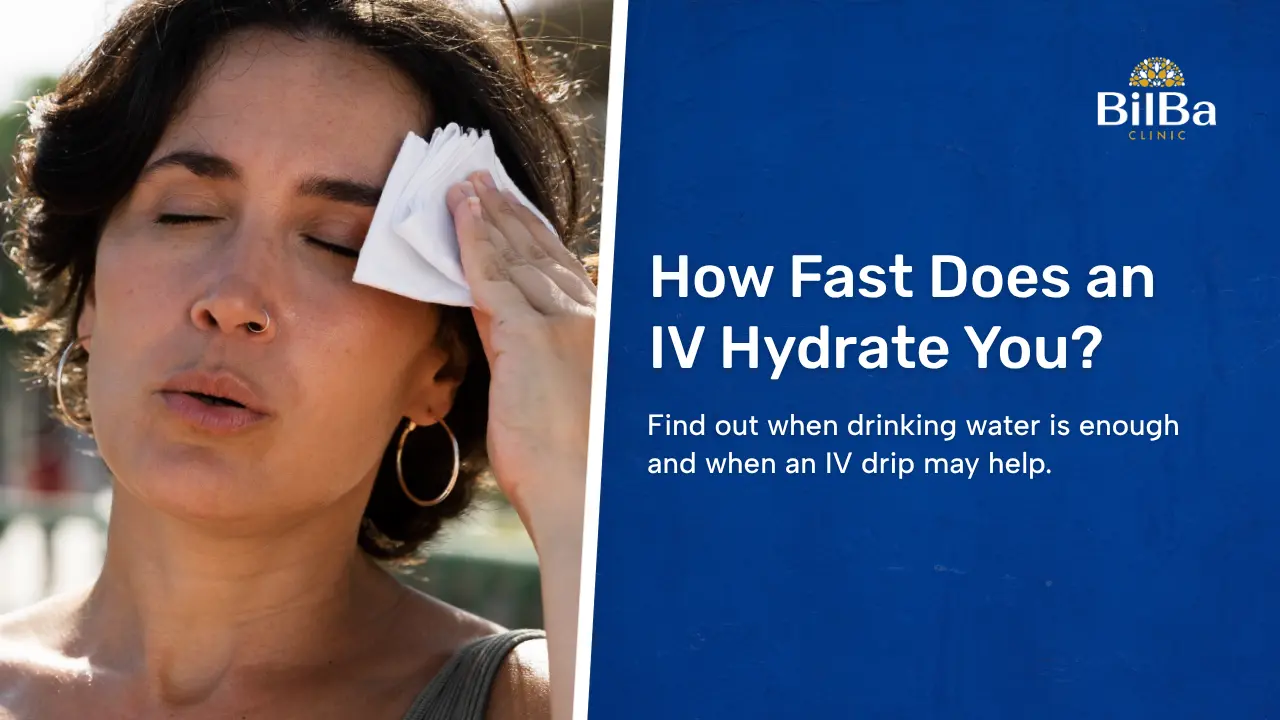
Feeling thirsty, tired or foggy after heat, a stomach bug or one too many drinks usually means mild dehydration, and for most people, drinking normally over the next few hours is enough to fix it. The limit is your gut itself. It can only process around 0.8 to 1 litre of fluid an hour at best, even less if you’re also being sick, so replacing several litres of lost fluid by mouth alone can take most of a day.
IV fluids for dehydration work differently. A drip delivers fluid, salts and minerals straight into your bloodstream, bypassing that hourly limit on absorption completely. That’s why an IV infusion can rehydrate you faster than water alone once you’re well behind on fluid, though it isn’t the right starting point for everyday, mild dehydration.
What Is IV Hydration Therapy
IV hydration therapy means having fluids delivered through a thin plastic tube called a cannula, inserted into a vein in your arm or hand. It’s also called an IV drip or IV infusion. A trained clinician places the cannula, then connects it to a bag of fluid that runs in slowly and steadily, usually over 30 minutes to an hour, while you’re seated and monitored.
Because the fluid enters your bloodstream directly, it isn’t limited by how quickly your stomach empties or your gut absorbs. That’s the main reason an IV drip for dehydration can catch you up faster than drinking, particularly if sickness or diarrhoea is stopping you keeping fluids down by mouth.

Signs You May Need IV Fluids for Dehydration
Mild dehydration usually responds well to water, weak squash or an oral rehydration solution from a pharmacy. You might need more support if you notice several signs of dehydration at once, or if they’re not improving after a day of drinking normally.
Common signs of dehydration include:
- feeling unusually thirsty or having a dry mouth and lips
- headaches, dizziness or feeling light-headed when you stand up
- dark yellow, strong-smelling urine, or needing the toilet less than usual
- skin that’s slow to spring back when gently pinched, a sign doctors call reduced skin turgor
- tiredness or a fast heartbeat that doesn’t settle with rest
If you’re also confused, very sleepy, or struggling to keep fluids down, this can point to more serious dehydration and needs urgent same-day advice from NHS 111 or a GP, rather than waiting for a clinic appointment.
How Is Dehydration Diagnosed
A GP or clinician usually starts by asking about your symptoms, how much fluid you’ve lost through sickness, sweating or diarrhoea, and any conditions like diabetes that raise your risk. They’ll often check your pulse, blood pressure and skin, and look at the colour of your urine.
For a clearer picture, a blood test called U&E, short for urea and electrolytes, checks your sodium, potassium, urea and creatinine levels. Urea tends to rise early in dehydration, often before other markers shift, which is why this test can pick up fluid loss even when your kidneys still look otherwise fine. Left untreated, ongoing fluid loss can disturb your sodium and potassium balance too, which is one reason a blood test is useful alongside a physical check. This is especially helpful if dehydration has gone on for more than a day or two, or if you’re not sure whether it’s dehydration or something else behind your symptoms. Our pathology services team can arrange U&E and related blood tests alongside a consultation.
What’s in an IV Drip for Dehydration
Most drips used for rehydration start with a bag of normal saline, a solution of 0.9% salt in water. It’s called isotonic saline because its salt concentration closely matches your blood plasma, so it doesn’t pull water into or out of your cells, it simply tops up the fluid around them. A saline IV drip is one of the simplest and most common ways to replace lost fluid quickly, and it’s the same base fluid used in NHS hospitals for routine rehydration.
Depending on what you need, the bag can also include electrolytes such as potassium and magnesium, on top of the sodium and chloride saline already provides, replacing what your body loses through sweating, sickness or diarrhoea. Some IV solutions for dehydration are built around fluid and salts alone, while others add B vitamins or a small amount of glucose for extra energy. Our clinician will choose a mix based on your symptoms and a short health check before you start.
IV Treatment of Dehydration Versus Drinking Water
Water is the right first step for most people who feel a bit dehydrated, and it’s cheaper and easier to reach than any clinic visit. Oral rehydration solutions from a pharmacy go a step further, adding the salts and sugars your body needs to absorb fluid properly, which is why oral rehydration is often recommended over IV fluids for mild cases.
IV treatment of dehydration becomes more useful when you can’t keep fluids down, when oral rehydration isn’t working fast enough, or when you need to get back to normal quickly for work, travel or an event. Is IV hydration better than drinking water? Not always. For mild, everyday dehydration, water and rest usually do the job. An IV drip is better suited to situations where drinking alone isn’t enough, isn’t practical, or hasn’t worked so far.
So can dehydration be treated without an IV? In most everyday cases, yes. The question is less about which method wins and more about which one matches how dehydrated you are and how well your body is tolerating fluids by mouth.
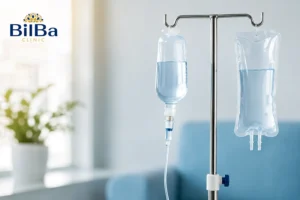
IV Fluids for Dehydration in Adults
For most healthy adults, IV fluids for dehydration in adults are a safe way to top up fluid and electrolyte levels after a stomach bug, heavy sweating, intense exercise or a heavy night out. A short consultation beforehand checks whether a drip is suitable, including your medical history and any medications, such as diuretics or blood pressure tablets, that affect how your body handles extra fluid.
This consultation step matters because it’s how your clinician rules out reasons a drip might not be right for you that day, rather than assuming every case of adult dehydration can be treated the same way.
IV Fluids for Dehydration in Elderly Patients
Dehydration is more common, and can become serious more quickly, in older adults. The NHS notes that babies, children and older adults face a higher risk of dehydration, partly because thirst signals become less reliable with age and partly because some health conditions and medications increase fluid loss.
Because of this, IV fluids for dehydration in elderly patients need a more careful approach than a standard walk-in drip. Giving fluid too quickly, or in too large a volume, raises the risk of fluid overload, where extra fluid builds up faster than the heart or kidneys can manage it, which is more likely in someone who already has heart failure or reduced kidney function. Clinical guidance for frail or older patients generally recommends smaller, slower infusions than a fit younger adult would receive. Before booking an IV drip for an elderly relative, we’d recommend a GP consultation first, so a clinician can check whether IV fluids are appropriate and, if so, plan the right amount and rate.
When to Get IV Fluids for Dehydration
When to get IV fluids for dehydration usually comes down to how you’re responding to drinking normally. If you’ve been trying to rehydrate with water or an oral solution for several hours without improvement, or your symptoms are getting worse rather than better, it may be time to consider a drip.
You might want to think about IV fluids sooner if you:
- can’t keep water or food down due to sickness
- have lost a lot of fluid quickly through sweating, heat or exercise
- need to feel better within a short window, for example before travel or a work commitment
- have tried oral rehydration and it isn’t keeping up with your fluid loss
This applies whether you need everyday support or an IV infusion for severe dehydration, though if you’re dealing with confusion or a rapid heartbeat, seek urgent medical care first rather than booking a wellness appointment. For anything less urgent, a short consultation helps our team match the best IV drip for dehydration to your particular symptoms, rather than a one-size-fits-all approach.
How Long Does an IV for Dehydration Take
A typical IV drip for dehydration takes between 30 and 60 minutes, though this depends on the type and amount of fluid you need. Your clinician will let you know the expected time during your consultation.
Once the infusion is finished, most people feel more alert and less thirsty fairly quickly, though how long an IV keeps you hydrated afterwards depends on how much fluid you continue to drink and lose through the day. A drip tops up your fluid levels there and then. It doesn’t replace the need to keep drinking normally afterwards.
How Fast and How Much Does an IV Hydrate You
How fast does an IV hydrate you? The fluid itself starts entering your bloodstream as soon as the drip begins, unlike drinking, where it can take 10 to 15 minutes just for the first mouthful to reach your bloodstream through digestion. Some people say they feel more alert before the bag has finished running, though that’s subjective and not something we’d promise as a guaranteed timeline, since how quickly you notice a difference depends on how dehydrated you were to start with.
How much does an IV hydrate you overall depends on the volume in the bag, which is usually around 500ml to 1 litre for a standard rehydration drip. That’s roughly two to four glasses of water, delivered within about an hour rather than the 75 minutes to two hours it typically takes your gut to fully absorb the same amount by mouth.
So how do IV fluids help with dehydration beyond just adding volume? Electrolytes like sodium and potassium help your cells hold onto that fluid rather than losing it again through urine, and they’re also needed for normal muscle and nerve function, which is part of why dehydration can leave you with headaches or muscle cramps until those levels are corrected.

Book Your Personalised IV Infusion at Bilba Clinic
If you think an IV drip could help you rehydrate, the Personalised IV Infusion at Bilba Clinic is built around what you need, whether that’s simple fluid and electrolyte replacement or added vitamins for extra support. Every appointment starts with a short consultation with one of our clinicians, so you’ll know exactly what’s in your drip and why, before it begins.
We’re based in Fitzrovia, central London, offering private IV fluids in London without long NHS waits, and same-day appointments are often available. Starting prices are listed on our pricing page, though your clinician will confirm the exact cost for your infusion during consultation, since this can vary depending on what’s added to your drip.
You can read more about our full range on the IV drips page, or find out more about us as a CQC-registered clinic offering complete care. When you’re ready, you can book online or get in touch with our team directly.
- Address: 57 Great Titchfield Street, Fitzrovia, London W1W 7PN
- Phone: +44 (0) 7858 848 244
- Email: info@bilbaclinic.co.uk
- Opening hours: Monday to Friday 10:00 to 18:00, Saturday 12:00 to 17:00, Sunday closed
Frequently Asked Questions
Do I Need IV Fluids or Just Water?
If you can comfortably drink and your symptoms are mild, water or an oral rehydration solution is usually enough, since your gut can process close to a litre an hour under normal conditions. A drip becomes more useful once you can’t keep fluids down, or you’ve been drinking steadily for several hours without feeling any better.
What Are the Signs You Need an IV Drip?
The signs themselves are covered above: thirst, headaches, dizziness, dark urine and tiredness that don’t ease with normal drinking. What tips it toward needing a drip rather than more water is time. If those signs haven’t improved after several hours of drinking normally, or you’re too unwell to keep fluids down, that’s when an IV becomes worth considering.
Can I Have an IV Drip If I’m on Medication?
Often, yes, but some medications need a closer look first. Blood thinners can increase bruising at the injection site, and diabetes medication may affect whether a drip containing glucose is suitable. Your clinician will check your current medications during consultation before deciding if a drip is right for you that day.
Are There Side Effects of IV Fluids for Dehydration?
Most people have no issues beyond mild bruising or a cool feeling at the injection site while the drip is running. Vein irritation, sometimes called phlebitis, or infection at the cannula site are uncommon but possible, which is why a trained clinician places and monitors the drip throughout your appointment.
How Often Can I Have IV Fluids for Dehydration?
This depends on why you’re dehydrated in the first place. An occasional drip after a specific event, such as a stomach bug or heavy exercise, is different from feeling dehydrated on a regular basis, which is worth investigating with a GP rather than treating repeatedly with IV fluids alone. Your clinician will discuss what’s appropriate for your situation rather than offering a fixed schedule.