
If you have searched for the causes of sciatica, you have probably already been told it is a slipped disc and left it there. For many people that answer is incomplete. Sciatica is a symptom, not a diagnosis, and the thing irritating your sciatic nerve is not always what you would expect. Some of the triggers we see most often at Bilba Clinic in London are the ones people overlook for weeks, quietly blaming a bad back or a long stretch at a desk. This guide explains what sciatica really is, the causes most people miss, how to tell an ordinary flare from a warning sign that needs urgent care, and what we can do to help you recover.
What Sciatica Actually Is and Why the Pain Runs Down Your Leg
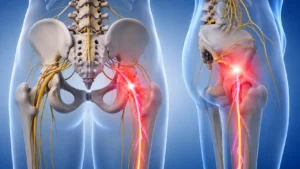
Sciatica is nerve pain that happens when something presses on or irritates the sciatic nerve, the long nerve that runs from your lower back through your buttock and down the back of each leg. It is not a condition in its own right. It is a sign that this nerve is being compressed or inflamed somewhere along its path, most often in the lower spine.
If you have wondered where is the sciatic nerve, it is the largest nerve in your body, and its route explains why the pain travels the way it does. The irritation usually starts near the lumbar spine, yet the pain, tingling or numbness is often felt far away in the buttock, leg or foot. This is why sciatica can feel confusing. The place that hurts is rarely the place where the problem actually sits.
According to the NHS, you may also have some back pain, but it is not usually as bad as the pain in your leg. That is a useful clue. A sore lower back on its own is often something other than sciatica, which is one reason so many people misjudge what is happening and delay getting the right help.
What Causes Sciatica
Sciatica happens when something presses or rubs on the sciatic nerve. The most common cause is a slipped disc, but it is far from the only one. Age related changes in the spine, narrowing of the spaces the nerves pass through, and everyday habits like how you sit and lift all play a part. Understanding which cause is behind your symptoms is what shapes the right treatment, because a flare driven by a tight muscle needs a very different approach from one driven by a worn disc.
The Common Causes Most People Expect
Most cases of sciatica trace back to a small group of well recognised triggers. The NHS lists the main causes as:
- A slipped disc, when a soft cushion of tissue between the spinal bones pushes out and presses on the nerve. This is the most common cause and becomes more likely as you get older.
- Spinal stenosis, a narrowing of the part of your spine where the nerves pass through.
- Spondylolisthesis, when one of the bones in your spine slips out of position.
- A back injury, such as a fall or an awkward lift.
These are the causes most people picture, and for good reason. A slipped disc alone accounts for a large share of sciatica, particularly in adults between their thirties and fifties. Spinal stenosis, by contrast, tends to affect older adults as the spine gradually narrows with age. But these familiar culprits are not the whole story, and this is where a lot of sciatica gets misread.
The Hidden Causes Most People Ignore
The overlooked causes of sciatica are often lifestyle related or sit outside the spine altogether. Prolonged sitting and poor desk posture load the lower back for hours at a time, which is why sciatica has become so common among people who work at a screen all day. Repeated bending or lifting with poor technique adds strain that builds quietly over months. Carrying extra weight increases pressure on the spine, and smoking is linked to a higher risk of sciatica because it reduces the blood supply to the discs and speeds up their wear.
Pregnancy is another cause people rarely connect to sciatica. As the baby grows, the extra weight and the natural shift in posture change how the lower spine and pelvis are loaded, which can irritate the nerve. This kind of sciatica usually eases after birth, but it can be genuinely painful while it lasts.
One cause we see missed again and again is the piriformis muscle deep in the buttock. When it tightens or spasms, it can press on the sciatic nerve directly, producing sciatica symptoms without any disc problem at all. Because a scan of the spine can look completely normal, people are often told nothing is wrong while the pain carries on. Recognising this pattern matters, because the treatment is straightforward once the real source is identified.
“The mistake I see most is people assuming sciatica always means a disc. Very often the trigger is somewhere else entirely, like a tight piriformis muscle or years of sitting badly. Finding the real source is what changes the outcome, not just chasing the pain around the leg.”
Omoniyi Ojapinwa, Sports and Musculoskeletal Physiotherapist, Bilba Clinic
If you suspect a joint nearer the pelvis is involved, our related guide on common sacroiliac dysfunction causes you might be missing is worth a read, as that joint can closely mimic sciatica and is another commonly missed source of the same kind of pain.
How to Tell Sciatica From Ordinary Back Pain
Sciatica has a fairly distinctive pattern, and knowing it helps you describe your symptoms accurately when you seek help. The NHS says the symptoms usually affect your bottom and the back of one leg, often reaching the foot and toes. Typical sciatica symptoms include:
- A sharp or burning pain that travels down the back of one leg
- Tingling, like pins and needles
- Numbness in the leg or foot
- Weakness in the affected leg
- Pain that feels worse when you move, sneeze or cough
Your symptoms may come on suddenly or build slowly over days. The key difference from a simple bad back is direction. Ordinary back pain tends to stay in the back, while sciatica shoots down the leg. As the NHS puts it, you probably do not have sciatica if you only have back pain. If your pain is confined to your lower back with no leg involvement, the cause is likely to be muscular or joint related rather than the sciatic nerve, and the treatment differs accordingly.
Can You Have Sciatica in Both Legs
Sciatica usually affects only one leg. Pain, numbness or weakness in both legs at the same time is not typical and can point to a more serious problem with the nerves at the base of the spine. If you have sciatica on both sides, or numbness and weakness in both legs that is severe or getting worse, treat it as an emergency rather than waiting to see if it settles.
This matters because a rare but serious condition called cauda equina syndrome can cause exactly this pattern. It occurs when the bundle of nerves at the bottom of the spinal cord is compressed, and it needs treatment in hospital as soon as possible to avoid lasting damage. It is uncommon, so there is no need to panic over one sore leg, but the two-sided pattern is the signal to act fast. We cover the specific warning signs in the next section so you know precisely what to watch for.
When Sciatica Is Harmless and When It Is Serious
Most sciatica is uncomfortable but not dangerous, and it settles with time and the right care. A smaller number of cases carry warning signs that mean you should not wait. Being able to tell the two apart is one of the most useful things you can take from this article.
Usually not an emergency, manage and monitor:
- Pain, tingling or numbness down one leg
- Symptoms that ease with gentle movement and time
- A flare that follows a known trigger, like heavy lifting or a long drive
Call 999 if you have any of these, as the NHS advises:
- Sciatica on both sides
- Weakness or numbness in both legs that is severe or getting worse
- Numbness around or under your genitals, or around your bottom
- Difficulty starting to pee, being unable to pee, or being unable to control when you pee
- Not noticing when you need to poo, or being unable to control it
These can be signs of a serious back problem that needs urgent hospital treatment. Do not drive yourself. Ask someone to take you or call an ambulance. Acting quickly on these red flags is far better than hoping they pass.
How Long Does Sciatica Last
Most sciatica improves on its own, though the timeline varies from person to person. The NHS says sciatica usually gets better within a few weeks to a few months, but it can sometimes last longer, and it can return if you have had it before. So a flare settling slowly is normal and not a reason to worry, but a flare that drags on well beyond this is worth having assessed.
To put rough numbers to recovery, an NHS musculoskeletal service reports that around half of people with sciatica have significantly improved within twelve weeks, and about three-quarters have recovered within a year. That is reassuring for most people. It also shows why a small group who are still struggling after several months benefit from more active treatment rather than continuing to wait it out. If you are in that group, slow progress is not a sign that nothing can be done. It usually means the cause needs a closer look.
Will Sciatica Go Away on Its Own
In many cases, yes. Sciatica often settles with time, gentle movement and simple self care, without any need for injections or surgery. The NHS advises carrying on with your normal activities as much as you can, starting gentle exercise as soon as possible, and using heat packs for comfort. It also notes that sitting or lying down for long periods tends to slow recovery rather than speed it up, even when moving feels uncomfortable at first.
That said, waiting is not the right answer for everyone. If your pain is not improving after a few weeks of self care, is getting worse, or is stopping you doing everyday things, that is the point to get professional help. Leaving persistent nerve pain unaddressed can make it harder to treat later and can affect your sleep, work and mood. This is where a proper assessment earns its place, because it tells you whether patience or treatment is the wiser choice for your particular case.
Does Sciatica Come and Go
Yes, sciatica can come and go, and symptoms often vary from day to day. Many people have a flare that settles, only for it to return later, especially if the underlying cause has not changed. Understanding what causes sciatica flare ups helps you reduce how often they happen and how bad they get.
Common flare triggers include long periods of sitting, heavy or awkward lifting, sudden increases in activity, and poor posture at a desk. The NHS suggests several ways to lower your chance of it coming back:
- Stay active and take regular exercise
- Use a safe technique when lifting heavy objects
- Keep a good posture when sitting and standing, including at a computer
- Lose weight if you are overweight
- Do not smoke, as smoking can increase your risk
Small, consistent changes here often do more for a recurring bad back and sciatica than any single treatment. If your flares are becoming more frequent or more intense, that is a useful signal that the root cause deserves attention rather than another round of painkillers.
How We Assess and Treat Sciatica at Bilba Clinic
Good treatment starts with an accurate diagnosis, because the right approach depends on what is actually irritating the nerve. At our CQC registered clinic in Fitzrovia, we assess where your symptoms are coming from and match the treatment to the cause rather than treating pain in isolation. A disc, a narrowed spinal canal and a tight piriformis muscle can all produce similar leg pain, yet each responds best to a different approach, which is why guessing from symptoms alone so often disappoints. For most people, care begins with conservative treatment and only steps up if it needs to.
Starting With Physiotherapy
For the majority of sciatica, physiotherapy is the sensible first step. Our physiotherapy service includes a detailed assessment, hands on treatment, and a structured rehabilitation plan to reduce pain and restore movement. We also offer shockwave therapy for chronic soft tissue problems. You do not need a GP referral to see us, same day appointments are often available, and sessions are £120 for 60 minutes or £80 for 30 minutes. For the latest prices, please see our pricing page.
It is worth being honest here. NHS physiotherapy for sciatica is free across the UK, so cost is a real consideration. The trade off is that NHS waiting times can be long, and for nerve pain that is disrupting your daily life, faster access to assessment and treatment can make a genuine difference to how quickly you recover and get back to normal.
Regenerative Medicine for Sciatica That Will Not Settle
When sciatica is chronic or has not responded to conservative care, our regenerative medicine service offers non surgical options aimed at the source of the pain. This is consultant led and begins with a diagnosis supported by imaging such as MRI, X-ray or ultrasound, so treatment targets the exact structure causing your symptoms. Options for sciatica and nerve pain include ultrasound or image guided spinal and nerve injections, such as transforaminal epidural, facet joint and medial branch block injections, PRP, a targeted piriformis injection where that muscle is the culprit, and radiofrequency treatment, which can give relief lasting from several months to over a year. An initial consultation is £300, and you can check current fees on our pricing page.
“Most sciatica never needs an injection, and I always say that first. But for the smaller group whose pain persists, precisely targeted treatment guided by imaging can restore function without surgery. The key is confirming the source before we treat, not guessing from symptoms alone.”
Dr Ralph Rogers, Consultant Regenerative Orthopaedics and Sports Medicine, Bilba Clinic

When to Seek Medical Advice for Sciatic
Knowing the causes of sciatica is useful, but knowing when to act on them matters more. See a GP or book an assessment if your pain has not improved after trying home treatment for a few weeks, if it is getting worse, or if it is stopping you doing your normal activities. You should also seek advice sooner if the pain is severe, if it keeps returning, or if numbness and weakness are spreading rather than settling.
Treat it as an emergency, using A and E or 999, if you develop any of the red flag symptoms described earlier, particularly problems with bladder or bowel control, numbness around the groin, or weakness in both legs. When in doubt, it is always safer to get checked. Our clinical team can assess your symptoms quickly and guide you toward the right next step, whether that is simple reassurance, a course of physiotherapy or a specialist opinion.
Frequently Asked Questions
What causes sciatica?
Sciatica is caused by pressure on or irritation of the sciatic nerve. The most common cause is a slipped disc, but spinal stenosis, spondylolisthesis and back injury are also frequent triggers. Overlooked causes include prolonged sitting, poor lifting technique, being overweight, smoking, pregnancy and a tight piriformis muscle in the buttock.
How long does sciatica last?
Most sciatica improves within a few weeks to a few months, though it can sometimes last longer and can return. An NHS musculoskeletal service reports that around half of people significantly improve within twelve weeks and about three-quarters recover within a year. Pain that drags on beyond this is worth having assessed.
Will sciatica go away on its own?
Often it does. Many cases settle with time, gentle movement and simple self care, without injections or surgery. Staying active generally helps recovery more than resting. If your symptoms are not improving after a few weeks, are getting worse, or are limiting daily life, it is time to seek professional help.
Can you have sciatica in both legs?
Sciatica usually affects only one leg. Pain, numbness or weakness in both legs at once is not typical and can signal a serious problem such as cauda equina syndrome. If this happens, especially with bladder or bowel changes or groin numbness, treat it as an emergency and go to A and E or call 999.
Does sciatica come and go?
Yes. Sciatica can flare and settle, and symptoms often vary day to day. Flare-ups are commonly triggered by long periods of sitting, heavy lifting, sudden activity or poor posture. Staying active, lifting safely, keeping good posture and not smoking all help reduce how often it returns.
Book a Sciatica Assessment at Bilba Clinic
If sciatica is affecting your day, you do not have to wait it out alone. Our team can assess what is driving your symptoms and put together a plan that fits you, from physiotherapy through to consultant led regenerative treatment for stubborn cases. To get started, you can book an appointment online, view our treatment pricing, or contact us with any questions.
Bilba Clinic, 57 Great Titchfield Street, Fitzrovia, London W1W 7PN.
Call +44 (0) 7858 848 244 or email info@bilbaclinic.co.uk.
Open Monday to Friday 10:00 to 18:00 and Saturday 12:00 to 17:00.