Can earwax cause headache? Headache is not one of the usual symptoms of earwax build-up. A blocked ear can mean wax, which brings muffled hearing, ringing and sometimes dizziness, but a sinus problem or an ear infection can make an ear feel just as blocked and may bring head pain with it. At Bilba Clinic we look inside the ear first and then tell you plainly what we see. This guide helps you work out which pattern fits you.
- Wax: hearing sounds muffled, the ear feels blocked or full, and one ear is frequently worse than the other.
- Sinus trouble: pain or pressure around the cheeks, eyes or forehead, usually with a blocked nose.
- Ear infection: earache with a fever, discharge, or itching in and around the ear.
Wax can sit alongside either of the other two, which is why a proper look inside the ear settles the question.
Can Earwax Cause Headache or Is Something Else Behind It?
Earwax on its own does not usually bring a headache. NHS guidance on earwax lists hearing loss, earache or a blocked feeling, ringing in the ears and dizziness, and headache is not among them. When a headache and wax appear together, the two may be a coincidence or share a different cause.
That may sound surprising if you have read otherwise. Plenty of people have a headache and wax at the same moment and assume one is feeding the other. The ear also sits close to the temple and the jaw, which makes it hard to tell where a discomfort starts. A full, pressured ear can feel like part of a wider head pain even when the two have separate causes.
We would rather tell you that honestly than promise a clear-out will cure a headache. What we can do is look into each ear, see whether wax is there and how much, and check for other signs that point somewhere else. If wax turns out to be the problem, removing it should help the ear symptoms. If your head pain has a different source, you will know that too, and you will not spend weeks treating the wrong thing.
What Earwax Buildup Actually Feels Like
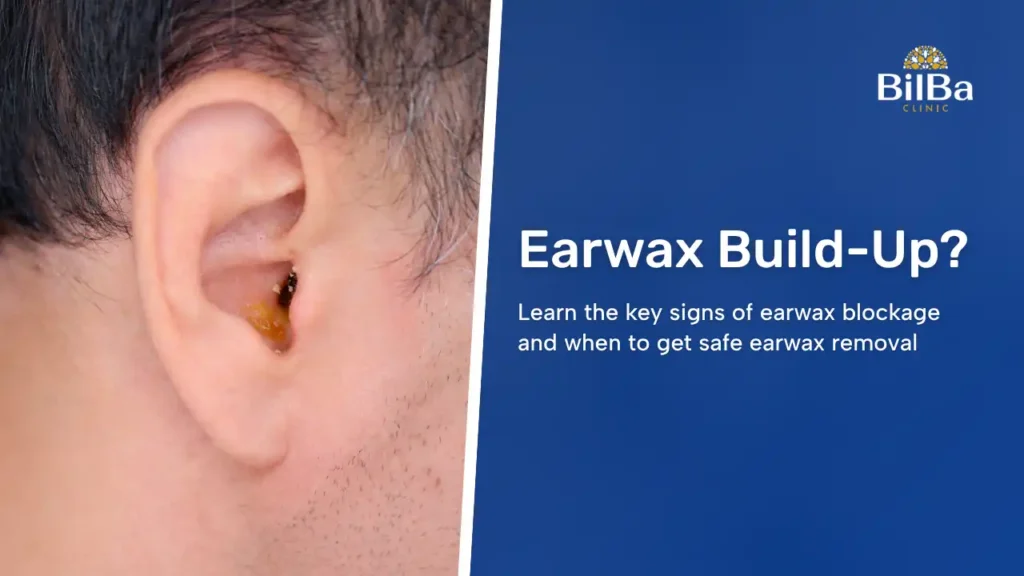
Earwax is made by glands in the ear canal and normally works its way out by itself. It becomes a problem when it stays put, hardens or gets pushed deeper. At that point you may notice hearing loss, earache or a feeling that your ear is blocked, ringing or buzzing known as tinnitus, and sometimes vertigo, which means feeling dizzy and sick.
Some ears build up wax more easily than others. A narrow or damaged ear canal, a lot of hair in the canal, a skin condition on the scalp or around the ear, and inflammation of the canal all make it more likely. Cotton buds add to the problem too, because they push wax further in rather than taking it out. If those symptoms sound familiar, our guide to the signs you need removal goes through them in more detail.
During an examination, our clinical team looks into each ear to see how much wax is present and whether anything else is going on. That check matters more than it sounds. A blocked feeling can come from wax, but it can also come from other problems in or around the ear, and the treatment is different for each.
Can Earwax Buildup Cause Headaches Through Ear Pressure?
Earwax buildup can make the ear feel full and under pressure, but that is not the same thing as a headache. The fullness sits in or around the ear, while a headache is felt across the head. Wax does not usually bring head pain with it, so a headache alongside a full ear may well have another source that is worth checking.
People often describe what they feel as an ear pressure headache, and the description is understandable. The ear, the temple and the side of the face share a small area, so a dull ache there is easy to read as one pain. The trouble is that two different problems can hide behind it.
A simple test can help while you wait for an appointment. Notice when the fullness comes and when the head pain comes, and whether they rise and fall together. If both ease once wax is cleared, wax was the likely reason for the fullness. If the head pain carries on after your ears are clear, something else is behind it, and we would rather say so than let you assume the matter is closed.
Can Earwax Cause Headaches and Dizziness Together?
Earwax can cause dizziness, because vertigo is one of the usual symptoms of build-up, whereas headache is not. When both appear together, wax may explain the dizziness while the headache has a separate cause. Both symptoms can come from other conditions, so we look at the ear first and then consider what else fits.
The dizziness that comes with wax tends to feel like vertigo, a dizzy and sick feeling. It tends to appear alongside the other ear symptoms, such as muffled hearing or ringing, rather than on its own. If you are dizzy but your hearing seems normal and your ears feel clear, wax becomes a less likely explanation.
Dizziness that is sudden, severe or paired with new hearing loss is a different matter, and we cover it in the urgent section below. Dizziness that keeps returning after wax has been cleared also deserves its own assessment. Clearing a blocked ear is a sensible first step, but it is only the first step if the problem does not go away.
Can a Blocked Ear Cause a Headache When It Is Not Wax?
A blocked ear can sit alongside a headache when the cause is a sinus infection or an ear infection rather than wax. Sinusitis includes headache and a feeling of pressure in the ears among its symptoms, so the two often arrive together. Wax is only one reason an ear feels blocked, and it is not the only one worth ruling out.
Sinusitis means inflammation of the sinuses, the air spaces behind the cheeks, eyes and forehead. It tends to cause pain, swelling and tenderness around those areas, along with headache and ear pressure. It usually clears up on its own within about four weeks, although some people need treatment if it drags on.
An ear infection looks different. It typically brings earache, a fever, trouble hearing, discharge from the ear and a feeling of pressure or fullness inside the ear. Most improve within about three days and some last up to a week. Itching or flaky skin in and around the ear can also point towards infection or irritation rather than simple wax.
Neither of these is something wax causes, yet each can make an ear feel just as blocked. That is the main reason we examine before we treat. If we find wax, we can remove it. If we see signs of infection, or the ears look clear, we will tell you and talk through what we think is behind your symptoms, so you are not left guessing.
Blocked Ear Headache Signs That Point Away From Wax
A blocked ear headache that points away from wax usually brings extra features with it. These are the signs that make us look beyond the ear canal:
- Pain, swelling or tenderness around the cheeks, eyes or forehead.
- A fever or feeling generally unwell.
- Discharge coming from the ear.
- Sharp earache rather than a dull, muffled feeling.
- Itching or flaky skin in and around the ear.
Wax tends to look different. It builds gradually, can affect one ear more than the other and mainly changes how well you hear. You may also have a history of cotton bud use, which pushes wax deeper and makes build-up more likely. There is normally no fever.
None of this is a diagnosis. Symptoms overlap, and a person can have wax and an infection at once, which makes a self-check unreliable. The only way to know what is going on is to look, and a short examination gives you a clear answer where guessing at home usually does not.

When Ear Symptoms and Headache Need an Urgent Review
Ask us for an urgent review if a headache comes with a fever, discharge from the ear, sudden hearing loss or severe dizziness. Those combinations are not typical of simple wax. They deserve a prompt examination rather than waiting to see whether they settle by themselves.
Seek emergency medical help straight away if you have a sudden, severe headache that feels unlike any you have had before, a stiff neck with fever, confusion, weakness in the face or a limb, or a headache after a head injury. These are not ear problems to be managed at home or booked in for later.
Two further situations call for a prompt appointment with us rather than a wait. One is symptoms that last beyond a few weeks, or keep returning after your ears have been cleared, because a problem that survives a clear-out needs its own assessment. The other is an ear that is painful, leaking or itchy, because that may point to infection rather than wax, and it changes how we would treat it.
Whatever you are feeling, please do not try to dig wax out yourself. Fingers, cotton buds and other objects push wax deeper and can hurt the ear canal. Leave it for a clinician who can see what they are doing, and keep a note of anything that changes in the meantime so we can take it into account when we examine you.
How Earwax Removal at Bilba Works and What It Costs
Earwax removal at Bilba starts with a look inside your ear and, if wax is the problem, a gentle clear-out using microsuction or irrigation. Prices start from £80 for one ear and £120 for both ears. These are a general guide, and our current pricing page has the latest figures.
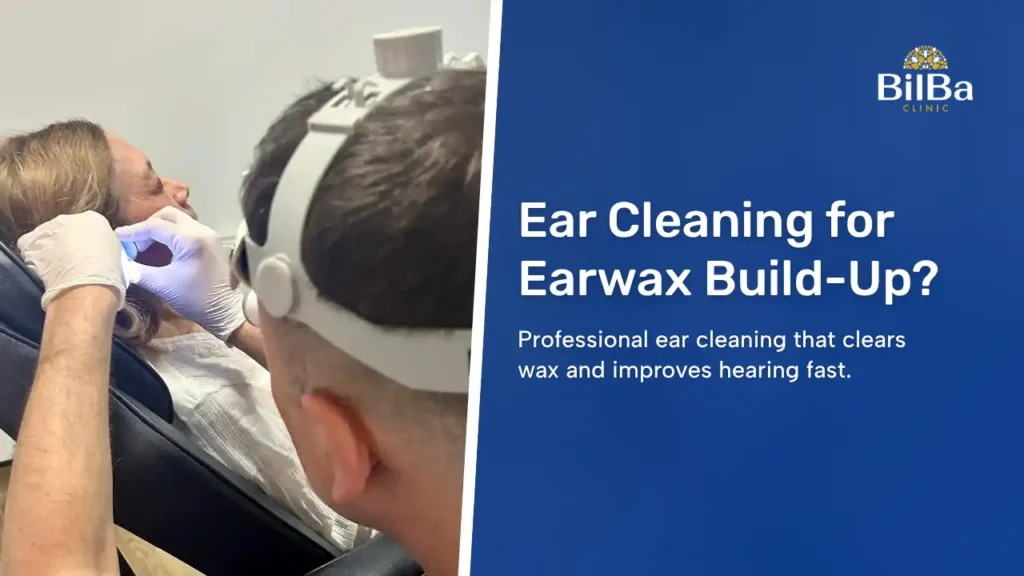
Our earwax removal service begins with a conversation about your symptoms, such as how long the blocked feeling has lasted, whether it affects one ear or both, and whether any pain, discharge or dizziness comes with it. We then examine the ear canal. If wax is blocking the canal, we remove it. Afterwards we check that the canal is clear and explain what we found, so you leave knowing whether wax was part of the picture.
You can read more about our clinic and the care we offer, but the key point for you is simple: we look first, and we tell you what we see.
Microsuction or Irrigation for a Blocked Ear
Microsuction uses a small suction device to draw wax out while the clinician watches the ear canal directly. Irrigation flushes the ear with warm water to loosen and wash out the wax. Both are established methods, and the choice between them depends on your ears and your history.
We decide which suits you only after examining the ear, because the right method depends on what the examination shows. Some ears are better suited to one approach than the other, and we explain our reasoning before we start.
Removal by someone without proper training can injure the ear canal or push wax in further, which is why we always recommend a qualified clinic. Our piece on why safe removal matters explains the risks in more detail.
What to Expect If a Headache Remains After Removal
If a headache continues after we clear your ears, wax was probably not the cause of it. Removal should ease muffled hearing and the blocked feeling, but a headache with another source will stay until that source is dealt with. Clearing the ear is still worthwhile, because it removes one possible cause.
We would rather say plainly that your ears now look healthy than leave you thinking a clear-out solved something it did not. We will tell you what the examination showed, including the state of the canal and the eardrum, so you know what has been ruled out and what has not. A clear ear is useful information in its own right, because it lets you and us stop pursuing wax and look at the other possibilities with more focus.
From there, a simple record helps. Note when the headaches start, how long they last, whether they come with a blocked nose, facial pain or a cold, and whether anything eases them. That pattern gives us much more to work with than a general complaint of head pain, and it helps us judge whether the ears, the sinuses or something else deserve closer attention. If the headaches carry on, book a follow-up with us and bring your notes, and we will talk through what to do next. The warning signs in the urgent section above still apply at any point.
Book an Earwax Check With Bilba Clinic in Fitzrovia

Bilba Clinic is a CQC-registered private clinic in Fitzrovia, London, offering medical, aesthetic and wellbeing care from experienced clinicians. We are recognised by major insurers including Bupa, Vitality and WPA, and we welcome self-pay patients.
An appointment covers a look inside your ears, a plain explanation of what we see and removal if it is needed. Costs vary with whether one or both ears need treatment, and we would rather give you an accurate figure after a proper look than a number on a web page. There is no pressure to book anything on the day. When you are ready, you can book online or contact us with any questions.
- Address: 57 Great Titchfield Street, Fitzrovia, London W1W 7PN
- Phone: +44 (0) 7858 848 244
- Email: info@bilbaclinic.co.uk
Opening hours
- Monday to Friday: 10:00 to 18:00
- Saturday: 12:00 to 17:00
- Sunday: closed
Frequently Asked Questions about Earwax and Headache
Can Hard Ear Wax Cause Headaches?
Hard ear wax does not usually cause headache. It can block the ear canal, muffle your hearing and leave the ear feeling full, and it may need softening before it can be removed. If a headache appears alongside it, the headache usually has another source. An examination shows whether the wax needs removing and what else could be involved.
Can Too Much Ear Wax Cause Headache?
Too much ear wax can cause muffled hearing, a blocked feeling, earache, ringing and dizziness, but head pain is not part of the usual picture. Large amounts tend to build up when wax cannot clear itself, commonly after cotton buds have pushed it deeper. If you have a headache and a lot of wax, we clear the wax first and then look at what else might explain the pain.
Can Waxy Ears Cause Headaches?
Waxy ears are ears that make or hold a lot of wax, and having them does not by itself cause headaches. They can make blocked ears and hearing changes more likely, which is uncomfortable in its own right. A check lets us see how quickly your wax returns and whether any headache pattern lines up with it, or runs separately.
How Do I Tell Whether a Headache Is Linked to My Ears?
Working out whether your ears are involved in a headache is hard to do at home. Muffled hearing, a blocked feeling and ringing suggest wax, while facial pain, fever or discharge suggest a sinus or ear infection. Head pain that carries on after wax is cleared points elsewhere. Only an examination shows what is in the ear.
Is It Safe to Clear Earwax at Home?
Do not use cotton buds or your fingers, because they push wax in and make the problem worse. Ear candles and ear vacuums have no evidence that they remove wax. Olive or almond oil, two or three drops three or four times a day for three to five days, helps soften it for some people. Avoid almond oil if you are allergic to almonds, and have a painful or leaking ear looked at before putting anything in it.
How Much Does Earwax Removal Cost at Bilba?
Removal starts from £80 for one ear and £120 for both ears, depending on what the examination shows. Our guide to private earwax cost explains what affects the price, and our pricing page lists the latest figures. We confirm the cost with you after looking at your ears and before we start any treatment.