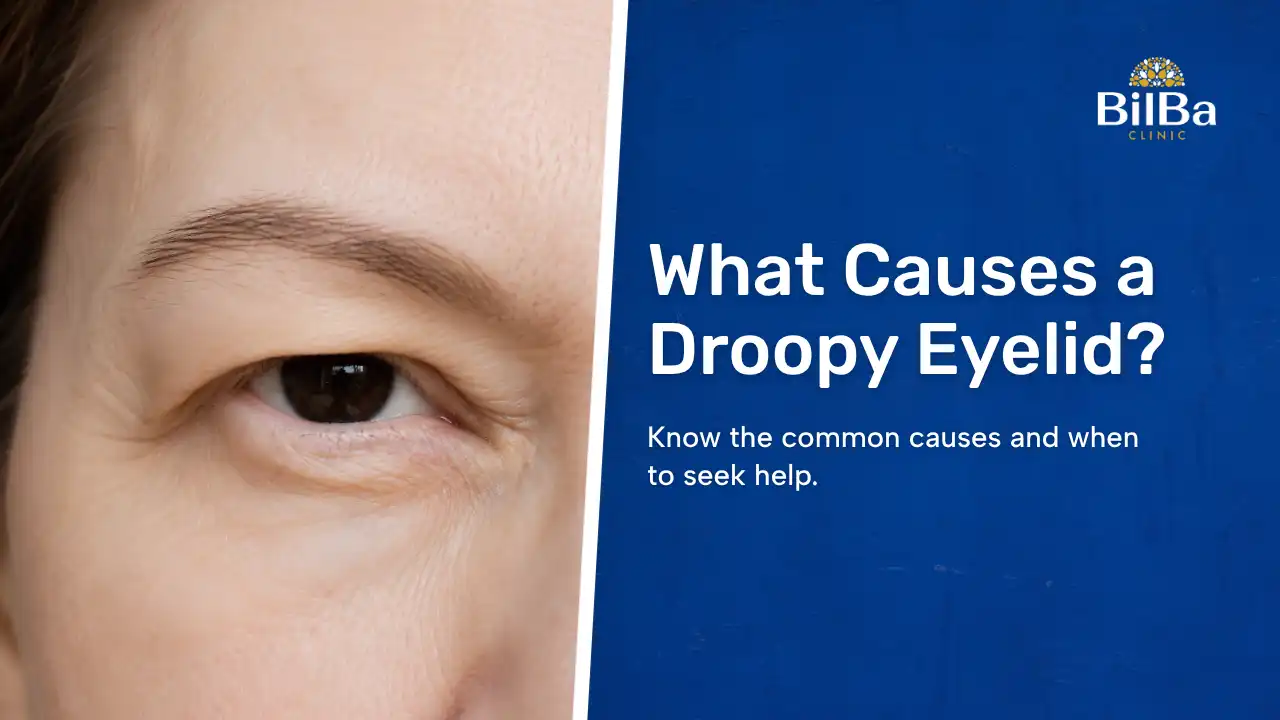
You catch your reflection in a shop window, or notice it in a photo someone has just sent you, and one eye looks different to the other. The eyelid on one side sits slightly lower, giving you a tired, uneven, or slightly older look than you feel. Your first instinct is probably to blame age, tiredness, or a bad angle in the photo. Most of the time, that instinct is right. Occasionally, it genuinely is not, and understanding the different causes of droopy eyelid is what helps you tell the difference.
A droopy eyelid, medically called ptosis, is something we see regularly at Bilba Clinic, and the honest truth is that the vast majority of cases are harmless and simply reflect natural changes in the skin and muscles around the eye over time. There is, however, a smaller but genuinely important group of cases where a droopy eyelid signals something that needs medical attention, sometimes urgently. This guide walks through what actually causes a droopy eyelid, how to tell the ordinary from the concerning, and what treatment actually looks like.
What Actually Causes a Droopy Eyelid
A drooping upper eyelid happens when the muscle responsible for lifting it, called the levator muscle, weakens, or the tendon connecting it to the eyelid stretches, causing the eyelid to sit lower than normal.
This can affect one eye or both, and can range from a barely noticeable difference to a drop significant enough to partially obstruct vision.
There are several distinct pathways that lead to this same visible outcome, and understanding which one applies to you genuinely matters for working out what, if anything, needs to be done about it. Age related ptosis is by far the most common cause, developing gradually as the levator muscle and its tendon naturally stretch and weaken over decades, a completely normal part of ageing that many people first notice in their 50s, 60s, or beyond. Congenital ptosis is present from birth, caused by the levator muscle not developing to its full strength, and is usually identified in childhood rather than appearing later in life.
Mechanical ptosis occurs when the weight of something else, such as a cyst, excess skin, or swelling, physically pulls the eyelid down. Neurogenic ptosis relates to a problem with the nerve signals controlling the eyelid muscle, which is where some of the more serious underlying causes we cover later in this guide come into play. Long-term contact lens wear is also a recognised cause of acquired ptosis in adults, as repeated manipulation of the upper eyelid gradually stretches the levator tendon over time.
- Age related drooping tends to develop very gradually over years, often noticed first in photographs rather than in the mirror day to day
- Drooping that appears suddenly, over days or even hours, is a fundamentally different pattern and warrants a different level of attention entirely
Why Is One of My Eyelids Drooping
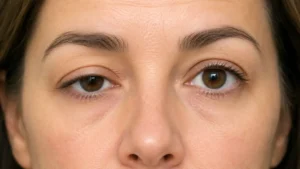
Asymmetric droopy eyelid, where one side is noticeably more affected than the other, is actually quite common and does not automatically indicate anything more serious than symmetric drooping, though it is worth understanding why this pattern happens.
The levator muscle and its tendon rarely age or weaken at exactly the same rate on both sides, so some degree of natural asymmetry in eyelid position is genuinely normal for many people, even without any underlying condition. That said, asymmetry that is new, that has developed relatively quickly, or that is accompanied by other changes to that same eye deserves closer attention than asymmetry that has been subtly present and stable for years. A useful distinction is whether the asymmetry has always been part of how your eyes look, in which case it is likely simply your natural anatomy, or whether it represents a genuine change from how your eyes used to look, which is the pattern more worth having assessed.
When a Droopy Eyelid Is Not Age Related
A droopy eyelid not age related is really the heart of what this guide is about, since the framing matters considerably for how you should respond.
A droopy eyelid that is not age related can stem from a range of causes including nerve problems, muscle conditions, eye trauma, previous eye surgery, or in rarer cases, a more serious underlying neurological issue, and these generally present differently to the slow, gradual pattern of age related ptosis.
The clearest signals that your droopy eyelid may not simply be age related include sudden onset rather than gradual development, occurring in someone under the age typically associated with age related changes, being accompanied by other symptoms such as double vision, pupil changes, or weakness elsewhere in the body, or fluctuating in severity throughout the day rather than remaining consistent.
What Disease Causes Droopy Eyelids
A number of specific medical conditions can cause ptosis, and being aware of them helps explain why a thorough assessment matters rather than assuming every case is simply cosmetic. Myasthenia gravis is an autoimmune condition affecting the connection between nerves and muscles, and it classically causes droopy eyelids that worsen through the day and improve with rest, often affecting both eyes to different degrees. A third nerve palsy, affecting one of the nerves controlling eye movement, can cause significant ptosis alongside other symptoms such as the eye being unable to move normally or the pupil becoming unusually large, and this can result from various underlying causes including, in some cases, an aneurysm, which is why this particular presentation is treated with real urgency in medical settings.
Horner syndrome, a condition affecting a specific nerve pathway, causes a milder droop alongside a smaller pupil and reduced sweating on one side of the face, and can occasionally indicate an underlying issue that needs investigation. Diabetes can also affect the nerves controlling eye and eyelid movement in some cases, causing a similar pattern to nerve palsy.
Can Stress Cause a Droopy Eyelid
This is a question we hear often, and the honest answer is nuanced.
Stress itself does not directly cause structural ptosis in the way ageing or nerve conditions do, but stress and fatigue can genuinely make an existing mild droop more noticeable, and in rare cases, severe physical or emotional stress has been associated with a temporary condition affecting eyelid muscle function.
What is more commonly happening when people notice their eyelids looking heavier or droopier during stressful periods is a combination of poor sleep, which reduces muscle tone and increases visible puffiness, and simply paying closer attention to their appearance during a period of heightened self-consciousness. If a droop appeared specifically during an intensely stressful period and has persisted or worsened since, this is still worth having properly assessed rather than assumed to be purely stress related, since it may be coincidental timing rather than true cause and effect.
Can an Eye Infection Cause a Droopy Eyelid
Yes, this is a genuine and fairly common cause of temporary drooping. Infections affecting the eyelid itself, such as a stye or cellulitis around the eye, cause swelling and inflammation that can mechanically weigh the eyelid down, producing a temporary droop that typically resolves once the infection is properly treated. This type of drooping is usually accompanied by other clear signs of infection, including redness, warmth, tenderness, and sometimes discharge, which generally makes it easier to distinguish from other causes. If you suspect an eye infection is behind sudden drooping, this needs proper treatment fairly promptly, both to resolve the droop and to prevent the infection spreading further.
Eyelid Drooping After Eye Surgery
Temporary ptosis after eye surgery, including cataract surgery and various other ophthalmic procedures, is a recognised and relatively common occurrence, usually caused by swelling, the effect of local anaesthetic, or minor stretching of the levator muscle during the procedure itself, and it typically resolves within a few weeks to a few months.
This particular pattern is worth understanding clearly if you have recently had eye surgery and notice drooping afterwards, since the natural worry is that something has gone wrong, when in most cases this is simply a temporary and expected part of the healing process. Genuine, persistent post-surgical ptosis that does not improve after several months is less common but does occur, and this is worth discussing with your surgical team or having independently assessed if it is affecting your vision or is not showing signs of gradual improvement over time.
Eyelid Drooping With Blurred Vision
This particular combination of symptoms deserves specific, direct attention, because it changes the level of urgency involved.
A droopy eyelid accompanied by blurred vision, double vision, or any other visual disturbance is a combination that should be assessed promptly, since it can indicate a nerve related cause rather than the more common, purely mechanical age related type of ptosis.
When eyelid drooping is purely mechanical, purely from stretched tissue with no nerve involvement, vision itself is generally unaffected unless the droop is severe enough to physically obstruct the visual field, which is a different and more straightforward issue related purely to how much the eyelid is covering the pupil. Blurred or double vision alongside drooping more often suggests the nerves or muscles controlling eye movement itself are involved, which is a genuinely different category of cause that warrants prompt medical assessment rather than being monitored at home.
- Gradual blurring that improves when you manually lift the drooping eyelid is more likely related to the eyelid simply obstructing part of your visual field
- Double vision, or blurring that persists regardless of eyelid position, is a more specific and concerning pattern that should be assessed promptly
When Should I Worry About a Droopy Eyelid
Pulling together everything covered so far, it helps to have a clear, practical summary of when a droopy eyelid moves from a cosmetic concern into something requiring prompt medical attention.
- Sudden onset, developing over hours or days rather than gradually over months or years
- Accompanied by double vision, blurred vision, or any change to how your pupil looks
- Associated with weakness, numbness, or drooping elsewhere on your face or body
- Fluctuating significantly through the day, particularly worsening with fatigue and improving with rest
- Following a head injury or occurring alongside a severe headache
- Present in a child or younger adult without any obvious explanation
If any of these apply, this is a situation that genuinely warrants prompt medical assessment, and depending on the specific combination of symptoms, may need urgent same-day attention rather than a routine appointment. For gradual, longstanding, isolated drooping without any of these accompanying features, a routine consultation to discuss your options is entirely appropriate.
Droopy Eyelid Fix Options Worth Understanding
Once the underlying cause has been properly identified, treatment options vary considerably depending on what is actually driving the droop.
How to Fix a Droopy Eyelid Without Surgery
For mild cases, particularly where the droop is subtle and not affecting vision, non-surgical options can offer meaningful improvement. Specialised eyelid tape or specific cosmetic adhesive strips can temporarily lift the eyelid for particular occasions, though this is a short-term cosmetic measure rather than a lasting solution. In select cases where the drooping relates to mild muscle laxity rather than significant structural stretching, certain aesthetic treatments may offer subtle improvement, though these are genuinely not suitable for every type or cause of ptosis, and this is precisely the kind of decision that benefits from a proper in-person assessment rather than guessing which category your particular case falls into. Prescription eye drops such as apraclonidine can temporarily lift the affected eyelid by 1 to 2mm while the ptosis resolves. Our treating clinician can advise whether this is appropriate for you.
For more significant or persistent drooping, particularly where it affects vision or has a clear structural cause, surgical correction, called ptosis repair or blepharoplasty depending on the specific technique needed, remains the most effective and reliable option. This involves tightening or reattaching the levator muscle to restore normal eyelid position, and can be performed alongside removal of excess skin where relevant.
Can Botox Cause Droopy Eyelid
This is a genuinely important question, and one we take seriously given that we offer both oculoplastic treatment and cosmetic anti-wrinkle injections ourselves.
Yes, Botox can occasionally cause temporary eyelid drooping, known as ptosis, if the product migrates from the intended injection site into the muscle responsible for lifting the eyelid, typically appearing within a few days of treatment and resolving on its own within a matter of weeks as the effect of the product wears off. This is a recognised, though uncommon, side effect of anti-wrinkle injections around the upper face, particularly the forehead and frown lines, and the risk is genuinely reduced with careful injection technique, appropriate product dosing, and thorough assessment of your individual facial anatomy beforehand. This is exactly why proper consultation and an experienced, medically qualified injector matter considerably when considering treatments like these, since correct technique meaningfully reduces this risk. You can read more about our approach to aesthetic treatments, which are always carried out following a proper clinical assessment.
If you have noticed drooping specifically after a recent Botox treatment, this is worth mentioning to whoever administered your treatment, since in some cases there are simple measures that can help manage the temporary droop while it resolves.

Getting a Proper Assessment of Your Droopy Eyelid in London
By now you likely have a fairly clear sense of which category your droop falls into. That is precisely where an assessment at Bilba Clinic begins.
If your eyelid matches any part of the checklist above, a sudden change, blurred or double vision, a pupil that looks different, weakness elsewhere on your face or body, or drooping that started after a head injury or a Botox treatment, please do not wait this one out. Call us on +44 (0) 7858 848 244 and tell us exactly what you have noticed. Where the symptoms warrant it, we will get you seen the same day rather than working you into a routine slot.
If your droop has been present for years, has developed slowly, or mostly shows up in photos rather than in the mirror, there is genuinely no rush. It is still worth having it properly looked at though, since the whole point of this guide has been that, across the full range of droopy eyelid causes, the ordinary and the concerning can look surprisingly similar from the outside. Our oculoplastic surgeons work specifically with the eyelids and the tissue surrounding them, so rather than leaving you guessing, an assessment will tell you plainly which of the causes covered in this guide actually applies in your case, whether that is a stretched tendon, natural asymmetry, a mechanical cause, or something else worth investigating further.
You can learn more about our clinical team before booking, get in touch through our contact page with any questions, or simply call us directly. Our team is available Monday to Friday from 10am to 6pm, and Saturday from 12pm to 5pm.
Bilba Clinic
57 Great Titchfield Street, Fitzrovia, London W1W 7PN
Call us on +44 (0) 7858 848 244
Email us at info@bilbaclinic.co.uk
Frequently Asked Questions
Why is one of my eyelids drooping?
Mild asymmetry is often completely normal, since the muscles controlling each eyelid rarely weaken at exactly the same rate. New or rapidly developing asymmetry, however, is worth having properly assessed.
Can Botox cause droopy eyelid?
Yes, occasionally, if the product spreads into the muscle that lifts the eyelid. This is uncommon, typically resolves within a few weeks, and is less likely with careful technique and proper assessment beforehand.
How to fix a droopy eyelid without surgery?
Mild cases may respond to temporary measures like eyelid tape, though genuine structural drooping generally requires surgical correction for a lasting result, best determined after a proper assessment.
When should I worry about a droopy eyelid?
When it appears suddenly, comes with blurred or double vision, affects other parts of your face or body, fluctuates through the day, or occurs in a child or younger adult without explanation.
Can stress cause a droopy eyelid?
Not directly in most cases, though fatigue and poor sleep can make an existing mild droop more noticeable. A droop appearing during a stressful period is still worth assessing rather than assumed to be purely stress related.