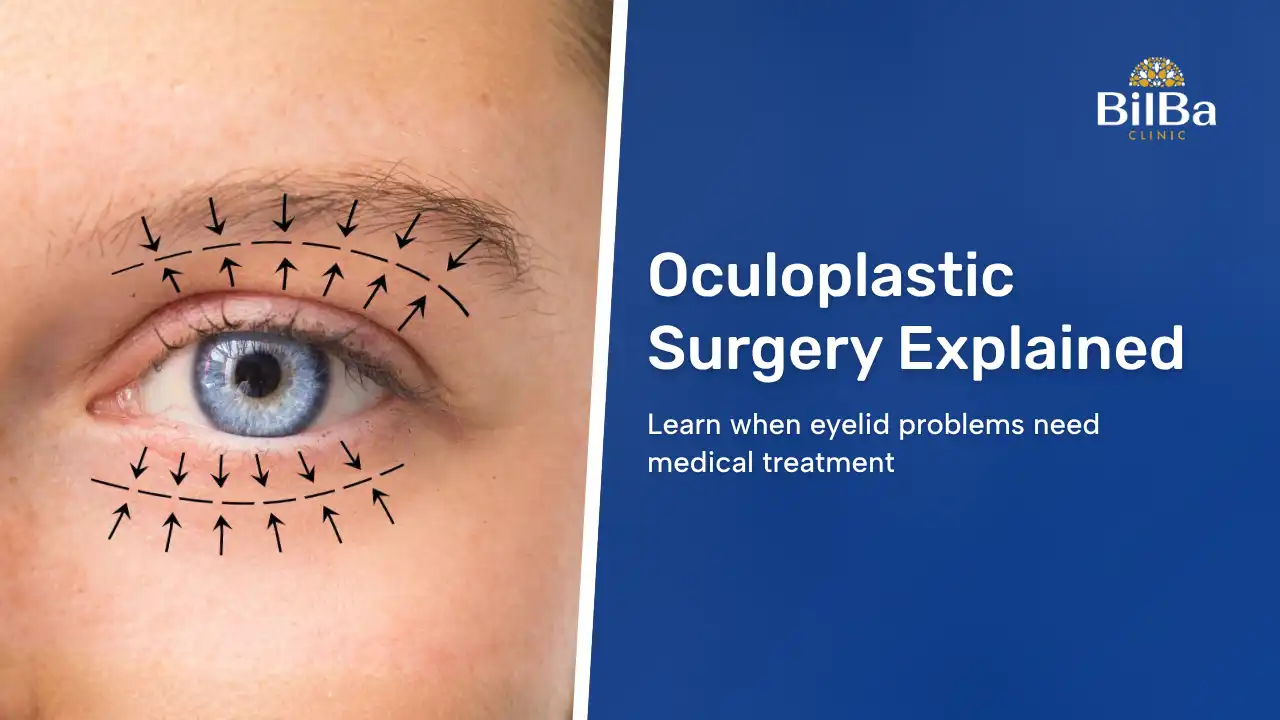
Changes around your eyes often develop slowly. Many people first notice heaviness in the eyelids, mild puffiness, or watering that comes and goes. Over time, these symptoms can begin to affect your vision, comfort, and daily routine.
You may find that:
- Your upper vision feels blocked when reading or driving
- Your eyes tire quickly during screen use
- You need to raise your eyebrows to see clearly
- Watering becomes constant and difficult to manage
These are not always cosmetic concerns. In many cases, they indicate a functional issue with the eyelids or tear system. When this starts to affect how you see or feel day to day, it is important to understand the cause. We can assess this quickly and explain what is happening in a clear and practical way.
What Oculoplastic Surgery and Oculoplastic Eye Surgery Involve
Oculoplastic surgery is a specialised area of ophthalmology that focuses on the eyelids, tear ducts, and surrounding structures of the eye. It combines medical and surgical care to restore normal function.
Definition for quick understanding:
Oculoplastic surgery refers to procedures that treat conditions affecting the eyelids, tear drainage system, and eye socket. It is used to improve vision, relieve discomfort, and correct structural problems around the eyes.
Unlike general cosmetic procedures, oculoplastic eye surgery is often recommended when there is a clear medical need. For example, when excess eyelid skin blocks vision or when tear ducts do not drain properly. In many cases, treatment improves both function and appearance, but the primary goal is always to restore normal eye function.
Common Conditions Treated with Oculoplastic Surgery
We often see patients when symptoms start to interfere with everyday tasks. Understanding the underlying condition helps guide the right treatment.
Droopy Eyelids and Eyelid Ptosis Treatment Options
Ptosis occurs when the muscle that lifts the eyelid weakens. This can cause the eyelid to sit lower than normal, sometimes covering part of the pupil. Common signs include:
- Reduced upper field of vision
- Needing to tilt your head back to see
- Forehead strain from lifting the brows
If left untreated, it can affect both vision and eye comfort. We assess the severity and explain whether ptosis surgery is appropriate.
Eyelid Surgery for Excess Skin and Under Eye Bags
Excess skin on the upper eyelid can fold over the eye and block vision. Under eye bags are often caused by fat shifting forward with age, along with skin laxity. This may lead to:
- A heavy or tired feeling around the eyes
- Difficulty applying makeup or keeping eyes open
- Visual obstruction in more advanced cases
Blepharoplasty, a form of eyelid surgery, removes or repositions this tissue to improve both function and comfort.
Watery Eyes and Tear Duct Blockage Treatment
Constant watering is often caused by a blockage in the tear drainage system. This prevents tears from draining properly into the nose. Symptoms may include:
- Persistent tearing
- Sticky discharge
- Recurrent eye infections
If simple treatments do not help, surgical intervention may be needed to restore proper drainage.
Eyelid Lumps and Localised Growths
Lumps such as chalazion or cysts can develop due to blocked glands. While some resolve on their own, others persist and may become uncomfortable. We assess whether:
- The lump is benign
- It requires removal
- Further investigation is needed
This ensures safe and appropriate management.
Thyroid Eye Disease and Its Effect on the Eyes
Thyroid eye disease, also known as Graves’ orbitopathy, is an autoimmune condition associated with thyroid dysfunction. It causes inflammation and swelling of the tissues behind and around the eye.
Common effects include:
- Bulging or prominent eyes
- Eyelid retraction, making the eyes appear wide or staring
- Double vision
- Dryness, irritation, and light sensitivity
- In severe cases, pressure on the optic nerve affecting vision
Oculoplastic surgeons play an important role in managing the eye-related effects of this condition. Depending on severity, treatment may include eyelid repositioning to improve closure, or orbital decompression to relieve pressure behind the eye. Management is often coordinated with an endocrinologist. If you have been diagnosed with a thyroid condition and are experiencing changes around your eyes, we can assess whether oculoplastic treatment is appropriate for you.
Entropion and Ectropion: Eyelids That Turn Inward or Outward
Entropion occurs when the eyelid turns inward, causing the eyelashes to rub directly against the surface of the eye. This leads to persistent irritation, redness, and in some cases, damage to the cornea.
Ectropion is the opposite condition, where the eyelid turns outward and away from the eye. This exposes the inner surface of the eyelid and can result in dryness, excessive tearing, and discomfort.
Both conditions are more common with age as the eyelid tissues become lax. They can also occur following facial nerve weakness or as a result of scarring.
Symptoms that may indicate either condition include:
- A persistent gritty or scratchy sensation in the eye
- Redness and inflammation around the eyelid
- Watering or dryness that does not settle with drops
- Visible turning of the eyelid margin
If left untreated, both entropion and ectropion can lead to corneal damage and affect long-term vision. Surgical correction repositions the eyelid to its normal position and protects the eye from further harm. We assess each case individually and advise on whether intervention is needed.

Types of Oculoplastic Surgery Used in Treatment
Treatment is always based on your diagnosis and how much your symptoms affect daily life.
Blepharoplasty for Excess Skin and Vision Obstruction
This procedure removes excess skin, muscle, or fat from the eyelids. It is often performed under local anaesthetic. Upper blepharoplasty typically takes around 45 minutes per session. When both upper and lower eyelids are treated together, the procedure may take up to 90 minutes.
It is recommended when:
- Vision is affected by eyelid skin
- There is significant heaviness
- Conservative treatments have not helped
Ptosis Surgery to Correct Drooping Eyelids
Ptosis surgery involves tightening or repositioning the muscle responsible for lifting the eyelid. The specific technique used depends on the severity of the droop and how well the lifting muscle is functioning. In cases where the muscle has good function, levator advancement is the standard approach. Where muscle function is significantly reduced, an alternative technique using the brow muscle may be required. The goal in all cases is to restore a clear and comfortable line of sight.
The goal is not just cosmetic improvement but restoring a clear line of sight.
Oculoplastic Eyelid Surgery for Functional and Cosmetic Concerns
Some patients present with both functional and aesthetic concerns. In these cases, treatment is carefully planned to address both safely. We always prioritise function first, then consider cosmetic improvement where appropriate.
Tear Duct Surgery to Restore Natural Drainage
Procedures such as dacryocystorhinostomy create a new drainage pathway for tears. This helps resolve persistent watering. It is usually recommended when:
- Blockage is confirmed
- Symptoms are ongoing
- Non-surgical treatment has failed
Who Is a Suitable Candidate for Oculoplastic Surgery
Oculoplastic surgery is appropriate for a wide range of patients, but a thorough assessment is always needed before any procedure is recommended. In general, suitable candidates are:
- Adults in good overall health with no uncontrolled systemic conditions
- Non-smokers, or those willing to stop smoking ahead of surgery, as smoking affects healing
- People with realistic expectations about outcomes
- Those whose symptoms are caused by a structural or functional problem, not solely lifestyle factors
Some conditions such as severe dry eye, uncontrolled diabetes, or certain clotting disorders may affect whether surgery is appropriate or require additional assessment beforehand. The best way to determine suitability is through a proper clinical consultation. We assess each patient individually and will always tell you clearly whether surgery is the right option for your specific situation.
When to See an Oculoplastic Surgeon for Eyelid and Vision Problems
Knowing when to seek help can prevent symptoms from worsening. You should consider a consultation if:
- Your vision is affected by eyelid position
- You experience ongoing discomfort or irritation
- Eye watering is persistent
- Lumps or swelling do not resolve
We help you understand whether your symptoms are mild or require treatment. This clarity is often the most important first step.
What to Expect Before During and After Oculoplastic Surgery
A clear understanding of the process helps you feel prepared and confident.
Consultation with a Private Oculoplastic Surgeon
We begin with a detailed assessment of your symptoms, medical history, and eye function. You can book directly with us without a GP referral. We explain:
- What is causing your symptoms
- Whether surgery is needed
- What outcomes you can expect
Procedure Day and Anaesthesia Options
The type of anaesthetic used depends on the procedure being performed. Upper eyelid surgery and most ptosis corrections are typically carried out under local anaesthetic, meaning you remain awake but comfortable throughout. Lower eyelid surgery or more involved procedures may require sedation or general anaesthetic to ensure safety and comfort. Tear duct surgery and orbital procedures are also more commonly performed under general anaesthetic. The most appropriate approach for you will always be discussed and confirmed before your procedure.
Recovery Timeline and Aftercare
Recovery is usually straightforward, but it varies depending on the procedure. Typical recovery includes:
- Mild swelling and bruising for 5 to 10 days
- Return to desk work and light daily activities within 1 to 2 weeks
- Strenuous exercise and heavy lifting should be avoided for at least 4 to 6 weeks
- Gradual improvement in appearance continues over several weeks as swelling fully settles
We provide clear aftercare instructions and follow-up to monitor healing.
Benefits of Oculoplastic Surgery for Vision and Comfort
The main aim of oculoplastic surgery is to restore function and improve quality of life. Patients often report:
- A clearer and wider field of vision
- Reduced eye strain
- Less irritation and watering
- Improved comfort during daily activities
These outcomes can make a noticeable difference in day-to-day life.
Risks and Limitations of Oculoplastic Surgery You Should Know
It is important to have a balanced understanding before proceeding. As with any surgical procedure, it is important to be aware of potential risks before proceeding. These include:
- Temporary swelling, bruising, and tightness around the eyes
- Minor asymmetry during the healing period, which usually improves over time
- Dry eye symptoms, which may temporarily worsen after eyelid surgery due to changes in how the eyelid sits and blinks
- Difficulty fully closing the eye (lagophthalmos), which can occur in the early recovery period and is monitored carefully
- Infection, which is uncommon but possible with any surgical procedure
- Scarring, which is generally minimal and placed within natural eyelid creases to minimise visibility
- In rare cases, changes in vision or the need for further adjustment
The risk of serious complications is low when surgery is performed by a trained oculoplastic specialist. We discuss all of this openly during your consultation so you can make a fully informed decision with confidence.
Oculoplastic Surgery Cost and What Affects Pricing
Costs vary depending on the procedure and complexity. Factors include:
- Type of surgery
- Duration of the procedure
- Level of follow-up care
We explain costs clearly during your consultation so there are no unexpected surprises.
Finding Oculoplastic Surgery in London That Feels Right for You
If you are looking for oculoplastic surgery in London, access and clarity matter. You want:
- A clear diagnosis
- Honest advice
- A straightforward path to treatment
We focus on making this process simple so you can move forward without uncertainty.

Oculoplastic Surgery Cost and What Affects Pricing
The cost of oculoplastic surgery varies depending on the type of procedure, its complexity and your individual clinical needs. To get an idea of our pricing before booking, visit our pricing page for a full breakdown of what is included. Alternatively, you are welcome to contact us directly and we will be happy to answer any questions you have about cost before you commit to anything.
Get Clear Answers and the Right Treatment at Bilba Clinic
If you are dealing with symptoms affecting your vision or eyelids, the most important step is understanding what is causing them. When you come to Bilba Clinic:
- We assess your symptoms in detail
- We explain what is happening in simple terms
- We guide you on the most appropriate treatment
You do not need to guess or wait. We help you get clarity quickly and decide on the right next step. If needed, we can support your care through our private GP consultation and arrange blood tests and diagnostics to give a complete picture of your health.
Book Your Oculoplastic Surgery Consultation
If your symptoms are affecting your vision or comfort, it is worth getting them assessed. We are here to help you:
- Understand your condition
- Get a clear diagnosis
- Explore suitable treatment options
You can book an appointment with us directly. We guide you through each step so you feel confident about your care.
Common Questions About Oculoplastic Surgery Patients Often Ask
Are Oculoplastic Surgeons Preferred for Eyelid Surgery?
Yes. Oculoplastic surgeons specialise in the structures around the eyes. This allows for careful treatment that protects both function and appearance.
What Is the Most Common Oculoplastic Surgery?
The most common procedure is blepharoplasty. It removes excess eyelid skin or fat and can improve vision when it is obstructed.
What Is Oculoplastic Eye Surgery?
Oculoplastic eye surgery and oculoplastic eyelid surgery refer to procedures that treat the eyelids, tear ducts, and surrounding structures around the eye. These procedures are used to restore normal function, relieve discomfort, and correct structural problems. The terms are often used interchangeably, and the right procedure for you will always depend on your specific diagnosis and symptoms.
What Is Blepharoplasty Eyelid Surgery?
Blepharoplasty is a surgical procedure that removes excess tissue from the eyelids. It helps improve vision and reduce heaviness around the eyes.
How to Get Rid of Eye Bags?
Mild cases may improve with lifestyle changes. Persistent or severe cases may require treatment such as lower eyelid surgery. We can assess your condition and guide you on the most suitable approach.
How Long Do the Results of Oculoplastic Surgery Last?
For most procedures, the results are long lasting. Blepharoplasty and ptosis surgery typically provide permanent structural correction, though the natural ageing process continues over time. Most patients do not require repeat surgery for many years. The longevity of results depends on the procedure performed, your age at the time of surgery, and individual factors such as skin quality and lifestyle. We discuss realistic expectations with you during your consultation.
Will There Be Visible Scarring After Oculoplastic Eyelid Surgery?
Scarring is a natural part of the healing process, but oculoplastic surgeons are specifically trained to place incisions within the natural creases and contours of the eyelid. This means any scarring is typically well hidden and fades significantly over the weeks and months following surgery. Most patients find that once healing is complete, scarring is minimal and not visible in normal day-to-day situations. We will discuss what to expect in terms of healing and appearance during your consultation.