
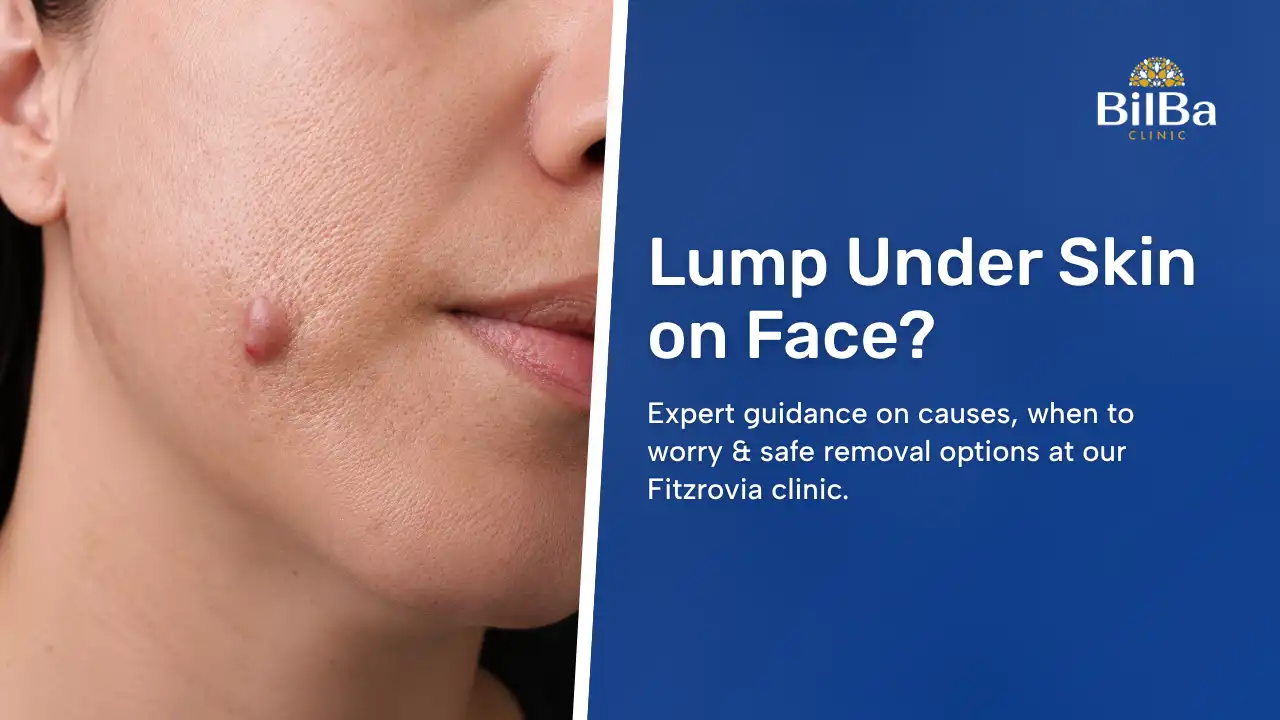
Finding a lump under skin on face can be unsettling. You might notice it while washing your face, catching it in the mirror, or feeling a tender area while applying moisturiser. Most facial lumps are completely harmless, yet knowing what they are and when they require professional attention brings genuine peace of mind. At Bilba Clinic, our clinical team provides clear, evidence-based guidance and discreet removal options tailored to your comfort and lifestyle.
What Actually Causes a Lump Under Skin on Face
Your skin is made up of oil glands, hair follicles, fat tissue, and connective fibres. When any of these structures become blocked, inflamed, or overactive, they can form visible or palpable growths. Understanding the underlying cause helps determine whether observation is enough or whether intervention makes sense.
Understanding Common Benign Growths
The most frequent culprits include epidermoid cysts, sebaceous cysts, lipomas, and milia. Epidermoid cysts form when skin cells multiply beneath the surface, creating a slow-growing sac filled with keratin. Lipomas are soft, fatty tumours that develop between the skin and muscle layer. Milia occur when tiny pockets of keratin become trapped just beneath the skin. Each behaves differently, which is why a clinical assessment matters before deciding on any course of action. You can read more about our private minor skin surgery approach on our main treatment page.
When Lumps Under Skin on Face Are Not Spots
It is easy to mistake a deeper growth for a stubborn pimple, but lumps under skin on face not spots typically lack a central pore, do not respond to topical acne treatments, and persist well beyond the normal healing window of a typical blemish. Pushing or picking at these deeper formations often leads to inflammation, infection, or unnecessary scarring. A professional evaluation provides accurate identification and prevents avoidable complications.
Important: Never squeeze, pick or attempt to drain a facial lump yourself. This can push bacteria deeper, cause scarring, or spread infection.
Spotting the Difference Between Facial Bumps
Facial lumps present in many ways. Size, texture, colour, and tenderness all offer clues about what you are dealing with. Recognising these characteristics helps you communicate clearly with your clinician and understand what to expect during assessment.
Small Lump Under Skin on Face or Cheek
A small lump under skin on face often feels like a smooth, mobile pea beneath the surface. When located near the cheekbone or jawline, it may be described as a small lump under skin on cheek. These are frequently benign cysts or minor lipomas that cause no functional issues but may become noticeable over time.
Hard Painless Lump Under Skin on Face Versus Painful Ones
Texture and sensation provide important diagnostic hints. A hard painless lump under skin on face is commonly a mature cyst or a fibrous nodule that has settled without inflammation. In contrast, a hard lump under skin on face painful usually indicates active inflammation, possible infection, or pressure on surrounding nerve endings. A sore lump under skin on face or a knot on cheek under skin often responds well to medical assessment, as targeted treatment can address the underlying cause rather than just the surface symptoms.
Red or Sore Bumps That Need Attention
Colour changes matter. A red lump under skin on face or a hard red bump under skin on face frequently signals increased blood flow due to irritation or mild infection. These formations may feel warm to the touch and should be monitored closely. If you notice rapid colour changes or persistent discomfort, booking a private GP consultation ensures prompt clinical review without unnecessary delay.
When to Worry About a Lump Under Skin on Face
Most facial growths are harmless, but certain signs warrant prompt medical evaluation. Use this checklist to gauge whether professional assessment is advisable:
- The lump grows noticeably over a few weeks
- It changes shape, becomes irregular, or feels fixed to deeper tissue
- The surface breaks down, bleeds, or produces discharge
- You experience persistent pain, warmth, or swelling around the area
- A previously stable lump suddenly changes in texture or size
- The lump has been present for more than 2 weeks without improvement.
If you are unsure when to worry about a lump under skin on face, erring on the side of caution is always sensible. A trained clinician can distinguish between benign formations and those requiring further investigation, often during a single visit.
How Doctors Diagnose Facial Growths Safely
Diagnosis relies on a careful combination of visual inspection, gentle palpation, and clinical history. Your doctor will ask about onset, changes over time, any associated symptoms, and your personal or family medical background.
The Consultation Process Explained
During your appointment, our clinician will examine the area in good lighting, assess mobility and depth, and note any overlying skin changes. They will explain their findings in plain language, outline your options, and answer any questions before recommending a course of action. Transparency is central to our approach at Bilba Clinic, which is why we prioritise unhurried consultations where your concerns are fully heard.
Do You Always Need Imaging
Imaging is rarely necessary for straightforward facial lumps. Most diagnoses are made clinically. If a growth sits deep near important structures or shows atypical features, your clinician may recommend a high-frequency ultrasound scan to visualise the internal structure before proceeding. This step ensures precision and safety.
How to Remove Bumps Under Skin on Face Safely
Treatment depends entirely on the type, size, and location of the growth. Self-management is generally discouraged, but professional removal is typically quick, well-tolerated, and highly effective.
Treatment Pathways for Different Growths
Superficial cysts or trapped keratin may be managed with careful extraction using sterile instruments. Deeper or larger growths usually require a minor surgical procedure under local anaesthetic. The goal is complete removal of the sac or tissue to reduce the chance of recurrence while preserving surrounding healthy skin.
Hard Lump Under Skin Cysts on Face and Lipomas
A hard lump under skin cysts on face typically requires careful dissection to ensure the entire cyst wall is removed. Leaving fragments behind can lead to regrowth. Lipomas on the face are gently teased out from their fatty tissue pocket, often leaving a barely visible closure line. For a lump on chin under skin or a lump under skin on face by ear, clinicians adjust their technique to avoid facial nerves and maintain natural contours. You can explore our full minor skin surgery page to see how these procedures are structured.
White or Little Bumps Under Skin on Face
A white bump under skin on face or clusters of little bumps under skin on face are commonly milia or closed comedones. While harmless, they rarely resolve without gentle professional extraction or targeted topical therapy. Attempting to squeeze them often pushes debris deeper, causing inflammation and potential pigment changes.
What Happens During a Lump on Face Removal Procedure
Understanding the steps involved helps reduce anxiety and sets realistic expectations. Every procedure at Bilba Clinic is performed by a GMC-registered clinician in a CQC-registered environment.
Before and During the Treatment
You will receive local anaesthetic via a fine needle to ensure the treatment area is comfortably numb. Once the skin is adequately prepared, the clinician makes a precise, small incision, carefully separates the growth from surrounding tissue, and removes it in full. The wound is then closed with fine sutures or sterile adhesive, followed by a light dressing. You remain awake throughout, and our clinician checks your comfort at every stage.
How Long Does Cyst Removal Take
Most straightforward facial cyst or lipoma removals take between twenty and forty minutes. Larger or more complex formations may require slightly longer, but day-case treatment remains the standard. You will receive clear aftercare instructions and a follow-up appointment before leaving the clinic.
Recovery and Aftercare Following Facial Surgery
Healing on the face is generally swift due to excellent blood supply. Following aftercare guidance closely supports clean closure and minimises visible scarring. If our clinician sends the removed tissue for laboratory analysis (a routine precaution), results are typically available within 7–10 working days and will be discussed with you directly.
What to Expect in the First Week
Mild swelling, tenderness, and slight bruising are normal during the initial forty-eight hours. Keeping the area clean and dry, avoiding strenuous facial movements, and sleeping with your head slightly elevated all support comfortable recovery. Sutures are typically removed within five to seven days, depending on location and tension.
Managing Discomfort and Minimising Scarring
Over-the-counter pain relief is usually sufficient for any residual soreness. Once the wound has fully closed, our clinician may recommend a medical-grade silicone gel or gentle scar massage to encourage even healing. Sun protection is essential, as newly healed skin is highly sensitive to UV exposure.
Deciding Whether Removal Is Right for You
Not every facial growth requires intervention. The decision depends on medical need, personal comfort, and lifestyle impact.
Medical Reasons Versus Personal Preference
Removal becomes medically advisable when a lump causes recurrent inflammation, interferes with glasses or shaving, or shows atypical features. Many patients choose intervention simply for comfort or cosmetic reassurance. Both reasons are entirely valid, and our clinician will support whichever path aligns with your goals.
Should You Remove It Early or Wait
Early removal often means a smaller incision, quicker healing, and lower risk of secondary infection. Waiting until a cyst becomes inflamed or infected can complicate the procedure and extend recovery time. Discussing your hard lump under skin on face treatment options early allows you to plan at a time that suits your schedule.
Why Patients Choose Bilba Clinic for Facial Care
Our Fitzrovia clinic was founded on the principle that private healthcare should feel personal, transparent, and clinically rigorous. We combine medical expertise with a calm, unhurried environment so you always leave feeling informed and supported.
What Makes Private Skin Surgery London Different
Choosing private skin surgery London means accessing dedicated consultation time, experienced clinicians, and streamlined pathways without the pressure of rushed appointments. Our clinic maintains strict CQC standards, uses high-quality sterile equipment, and provides personalised aftercare that extends beyond the treatment room.
Expert Skin Lump Removal Fitzrovia Services
Patients seeking skin lump removal Fitzrovia appreciate our central location, discreet consultation rooms, and consistent clinical standards. We specialise in facial and minor body procedures, ensuring that technique, anatomy knowledge, and aesthetic awareness align with each patient’s needs. Our health screening and diagnostic services also provide comprehensive baseline assessments when broader health monitoring is beneficial.
Booking Your Private Minor Skin Surgery London Appointment
Scheduling is straightforward. You can book online through our secure portal, call our reception team, or email us directly. We offer flexible appointment times, clear pricing transparency, and accept major private medical insurers including Bupa, Vitality, and WPA. Selecting private minor skin surgery London with our team ensures you receive evidence-based care in a trusted, patient-focused environment.
Frequently Asked Questions About Facial Lumps
Are facial lumps usually cancerous?
The vast majority are benign cysts, lipomas, or harmless keratin build-ups. A clinical examination is the only reliable way to confirm the nature of the growth and rule out atypical features.
Will the procedure leave a visible mark?
Any incision creates a scar, but facial procedures use precise techniques and fine closure methods to keep marks as discreet as possible. Proper aftercare and sun protection significantly improve long-term appearance.
Can I claim the treatment on private insurance?
Many insurers cover facial lump removal when it causes symptoms, recurrent infection, or diagnostic uncertainty. We provide detailed clinical notes and invoices to support your claim, and our reception team can guide you through the pre-authorisation process.
Is numbing uncomfortable?
Local anaesthetic involves a brief pinching sensation, similar to a dental injection. Once the area is numb, you should feel pressure but no sharp pain during the procedure itself.
How soon can I return to work?
Most patients resume normal activities within twenty-four hours, though we recommend avoiding heavy exercise, swimming, or makeup on the treated area for five to seven days while initial healing takes place.
If you have noticed a persistent or changing facial growth and want clear answers, our clinical team is ready to help. You can book a consultation online today, call us directly, or visit our Fitzrovia clinic for a thorough, unhurried assessment. Every step is designed with your comfort, safety, and confidence in mind.