How long does sclerotherapy last? For the veins we treat, the result is long lasting, but you will not see it all at once. Treated veins start to close within days, fine veins fade over several weeks, and larger veins can take a few months to settle. New veins can still appear later, because the causes behind them stay the same. At Bilba Clinic, we meet people at every stage, from worrying about the first bruise to checking a faint line months on. This guide explains what to expect and when.
Three things shape your timeline the most:
- Vein size, since fine surface veins usually clear faster than larger blue or purple veins
- Type of treatment, with liquid sclerosant often used for fine veins and foam for larger ones
- Number of sessions, because some veins take several visits
How Long Does Sclerotherapy Last After the Veins Close?
Sclerotherapy results last for the veins that have been treated and closed. Once a vein has closed, the body gradually absorbs it, and in most cases it stays closed. This does not stop new veins forming elsewhere, and some larger treated veins may not stay closed. So the treated vein is usually dealt with, while your legs keep changing over time.
Fine surface veins, often called thread veins or spider veins, are the most common reason people come to us. They sit close to the skin and are usually harmless, so treatment is mostly about appearance. In a small number of people they sit on top of a deeper vein problem, which is why our clinical team checks the circulation in your legs before planning treatment. Treating only the surface veins while a deeper problem carries on can make a result less lasting.
Why New Veins Can Still Appear
Sclerotherapy treats the veins you have today. It cannot change what caused them, such as family history, hormonal changes, long hours on your feet, extra weight or age. Because those factors stay, new thread veins can form over the years, even after an excellent result. Larger veins treated with foam can also recur, and some people need a top-up session. If your veins are larger and raised, our article on foam sclerotherapy for varicose veins explains how that treatment differs. Staying active and protecting your legs from strong sun can help slow new veins, although neither stops them completely.
How Long Does Sclerotherapy Take to Work Before You See Results?
Sclerotherapy starts to close a treated vein within days, but the visible change is gradual. Fine red veins often fade within a few weeks, while larger blue or purple veins fade more slowly. Your sclerotherapy results keep improving as the body clears the closed vein, so judging the outcome after one week is too early.
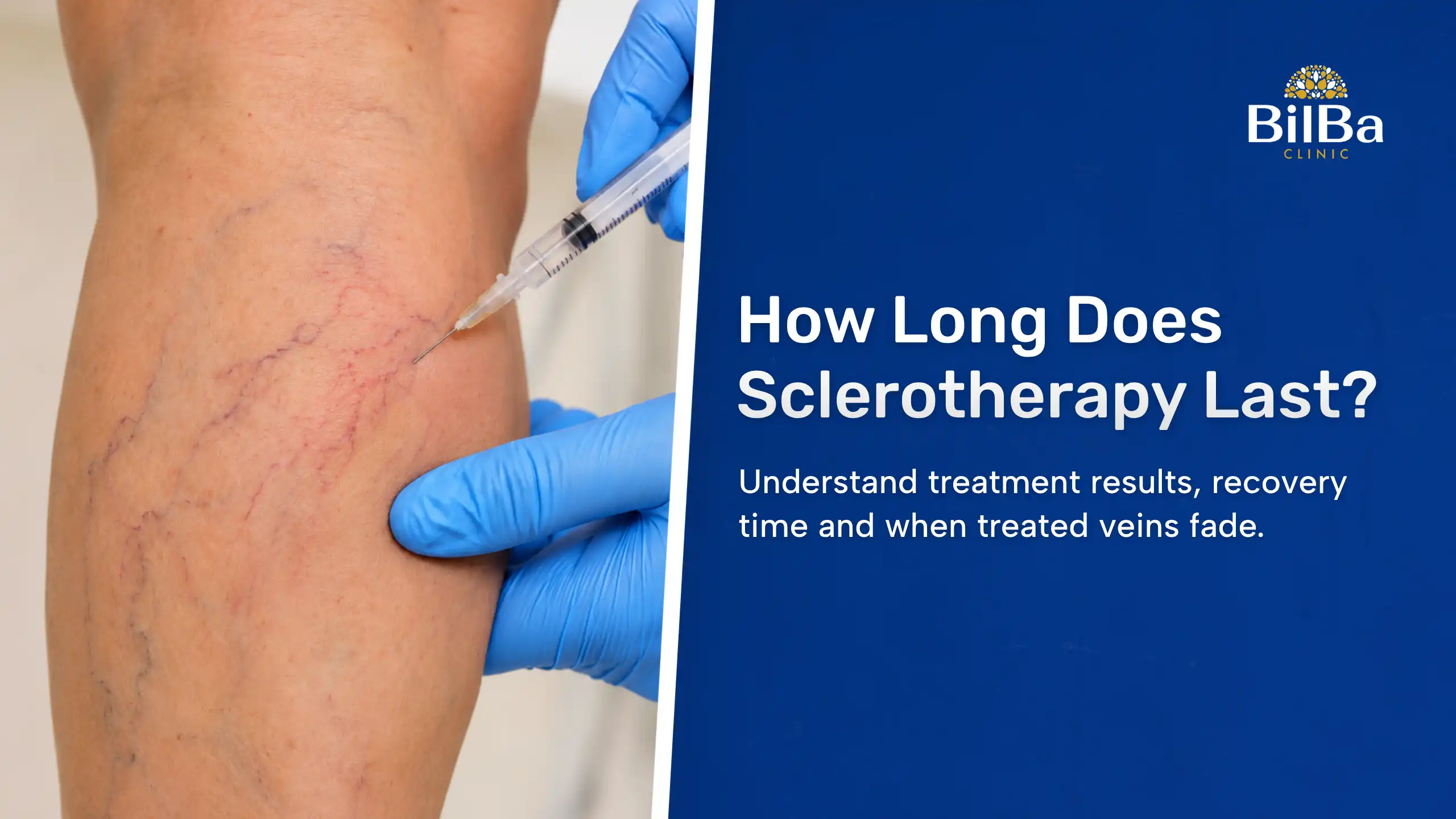
A solution called a sclerosant is injected through a very fine needle. Liquid is commonly used for fine surface veins, while foam, made by mixing the sclerosant with air, is used for larger veins because it touches more of the vein wall. Either way, the solution irritates the lining of the vein, the walls stick together and blood stops flowing through that vein. Blood then takes other routes through healthier veins, and the closed vein slowly disappears. A session typically takes 30 to 45 minutes, and we often plan several sessions with time between each. That means you may be watching the effect of one session while we plan the next.
Why Treated Veins Can Look Darker or Lumpy First
Around the end of week one, many people contact us worried because a vein looks worse than before. This is common. The closed vein holds a small amount of trapped blood, so it can look darker, feel firm or sit like a thin cord under the skin. Larger injected veins can stay lumpy and hard for several months before they clear, while bruising and redness usually fade over two to four weeks. Tell us if a lump turns hot, red and very painful, because that can mean the vein is inflamed and we may want to look at it.
Sclerotherapy Recovery Time in the First Days and Weeks
Sclerotherapy recovery time is short for most people. Most walk out of the clinic, return to daily activities straight away and go back to work the next day. The longer part is healing, which carries on quietly for weeks while the treated veins fade. Compression, regular walking and a few simple precautions do most of the work.
Compression stockings after sclerotherapy are worn continuously for the first 48 to 72 hours, then during the day for up to two weeks. They support the treated veins and help them close. Foam treatment of larger varicose veins is done under local anaesthetic and you go home the same day, as set out in this NHS varicose vein advice page.
Here is a typical timeline for sclerotherapy aftercare, although your own instructions may differ:
- First days: keep the dressing and stocking on and dry, and walk for 20 to 30 minutes, twice a day
- Days 3 to 14: keep moving, avoid standing still for long periods and put your legs up when you sit
- Weeks 1 to 2: gentle exercise is comfortable for most people, and we tell you when it is safe to return to harder workouts
- Weeks 2 to 12: bruising fades, firmness eases and the treated veins gradually fade
If your treatment is for thread veins on the legs, our spider vein recovery guide covers that case in more depth. At our clinic you leave with written aftercare for the veins treated, since a fine surface vein and a large varicose vein heal on different timelines.
How Long Does Sclerotherapy Take to Heal Fully?
Full healing after sclerotherapy usually takes several weeks for fine veins and a few months for larger ones. You will feel back to normal much sooner, often within a day or two, because the closed veins are absorbed slowly and most changes show on the surface.
Think of healing in three stages. In the first fortnight, you mainly notice bruising, redness and a little irritation along the treated veins. From the third week to around the third month, lumps soften and the colour of the treated veins fades. After that comes the slow part, when faint pale brown staining, if you have any, gradually lightens. Sclerotherapy aftercare across all three stages is mostly steady walking, wearing your stockings and not rushing back to heavy exercise. If both legs need foam treatment, we often treat one leg at a time, so the second leg starts healing later than the first.
How Long Does Pain Last After Sclerotherapy?
Pain after sclerotherapy is usually mild and short lived. Most people feel a pinch or sting during the injections, then some tightness or surface irritation over the first few days. Soreness from bruising can last up to a couple of weeks. A hard, painful lump, or pain that keeps getting worse instead of easing, needs checking.
Walking helps more than resting, and simple pain relief or an antihistamine can calm surface irritation. Ask us which is suitable for you, especially if you take regular medication. Occasionally a treated vein becomes a firm, tender lump, known as thrombophlebitis. It is a recognised risk among sclerotherapy side effects, and we can treat it, so have it checked rather than waiting it out.
Is Sclerotherapy Right for Your Veins?
Sclerotherapy works best on thread veins, the small feeder veins beneath them and small varicose veins. Larger varicose veins may need foam under ultrasound guidance, or another procedure such as laser ablation, and we explain the options after scanning your legs. It is not the right choice for everyone. Treatment is generally not advised during pregnancy or breastfeeding. A history of deep vein thrombosis, blood-thinning medication or a known allergy to sclerosants needs a proper conversation first. Our sclerotherapy service page explains the treatment, and if you also have aching, swelling or heaviness, a vascular assessment looks for a cause deeper in the leg.
Booking a Sclerotherapy Assessment at Our Fitzrovia Clinic
Bilba Clinic is a CQC-registered private clinic in Fitzrovia, London, offering medical, aesthetic and wellbeing care from experienced clinicians. We are recognised by major insurers, including Bupa, Vitality, WPA and AXA, and we also welcome self-pay patients.
If you are thinking about sclerotherapy in London, the first step is a short assessment. We look at your veins, check how well blood is moving through your legs where needed, and explain which treatment suits you and how long each stage should take. You will not be rushed into anything. You do not need a referral, and same-day appointments are available.
Cost varies with the number of veins and sessions involved, so we would rather give you an accurate figure after a proper look. Our current prices page gives a starting guide, with sclerotherapy from £499 per session. When you are ready, you can book an appointment online or contact us with questions first.
- Address: 57 Great Titchfield Street, Fitzrovia, London W1W 7PN
- Phone: +44 (0) 7858 848 244
- Email: info@bilbaclinic.co.uk
Opening hours:
- Monday to Friday: 10:00 to 18:00
- Saturday: 12:00 to 17:00
- Sunday: closed
Sclerotherapy Questions We Hear Most Often
Does Sclerotherapy Leave Scars on the Skin?
Sclerotherapy does not usually leave a true scar on the skin. The word scarring in medical guidance describes the inside of the vein closing, not a mark on your leg. What some people do see is sclerotherapy staining, a pale brown mark where larger veins were treated, which usually fades over months and is sometimes permanent. Rarely, a small ulcer forms at an injection site, so ask us for an urgent review if you notice one.
Can Veins Come Back After Sclerotherapy?
Yes, though it depends on what you mean by come back. Veins that have closed and faded usually do not return, but new veins can develop nearby over the years, and larger treated veins can occasionally re-open. We can top up treatment if that happens, and we talk through how likely it is for your veins at your assessment.
How Many Sclerotherapy Sessions Will I Need?
Many people need more than one session. For thread veins we usually plan between two and four visits, spaced several weeks apart, while larger veins may need foam treatment and a follow-up visit. The number depends on how many veins you have, how big they are and how your body responds, so we confirm a plan after examining your legs.
When Can I Exercise, Drive or Fly After Sclerotherapy?
You can walk straight away, and walking is encouraged. Most people can drive the next day if the stocking does not restrict leg movement. Light exercise is usually fine within days, while harder workouts and flights need more care. We give you dates that match the veins treated, because the safe wait is longer after foam treatment of larger veins.
When Should I Ask for an Urgent Review After Sclerotherapy?
Ask us for an urgent review if one leg becomes suddenly swollen, you notice red streaking along the leg, a small ulcer forms at an injection site, or a lump becomes hot and very painful. Signs of an allergic reaction, such as swelling of the face or difficulty breathing, are an emergency, so seek emergency medical help straight away.