
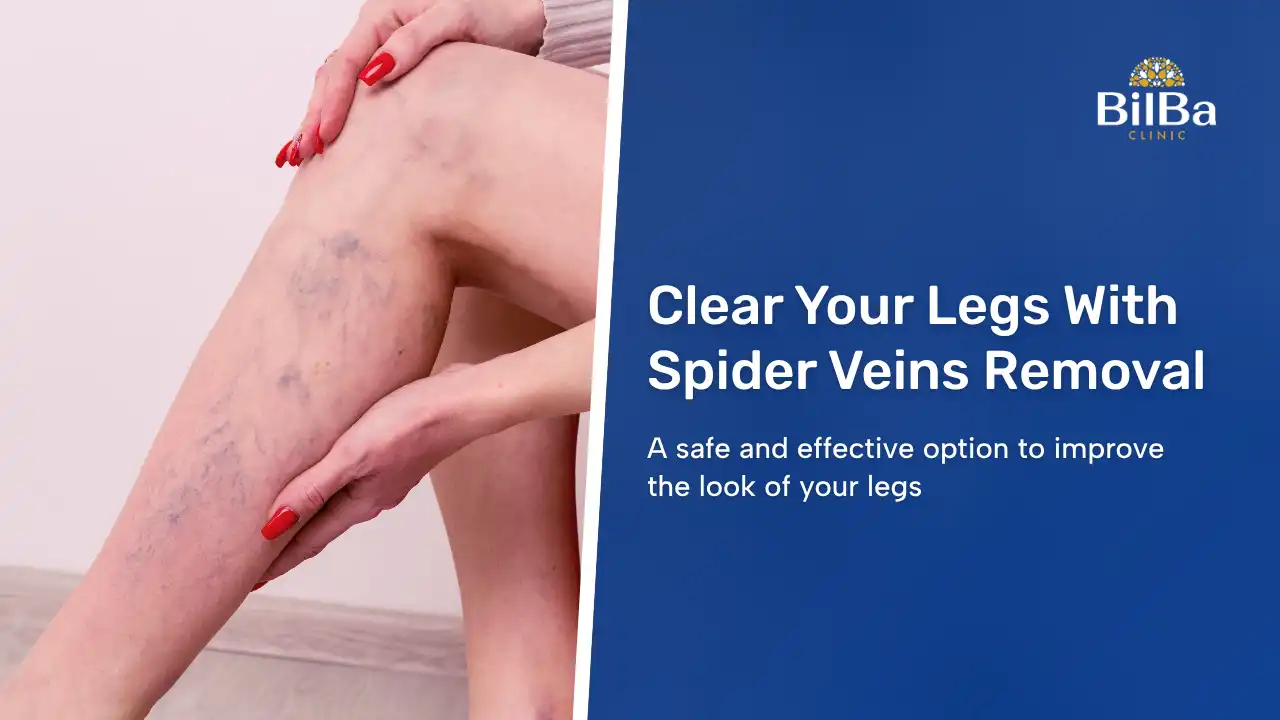
You may have noticed fine red or blue veins appearing on your legs. For many people, this starts slowly and becomes more visible over time. While often harmless, these veins can affect how your legs look and feel.
If you are thinking about spider veins removal, it is important to understand your options and whether treatment like sclerotherapy is right for you. We see this concern often, and in most cases, we can guide you quickly towards the right next step.
What Spider Veins Really Are and Why They Show on Legs
Spider veins are small blood vessels that sit close to the surface of your skin. They often appear as thin lines or web-like patterns in red, blue, or purple shades. They are most common on the legs because pressure builds up in the lower body veins. Over time, small valves inside the veins weaken, allowing blood to pool and become visible through the skin.
Quick definition for clarity
Spider veins are small, visible surface veins caused by weakened vein walls and increased pressure, most often seen on the legs.
Why Spider Veins Develop on Legs Over Time
Common Causes Linked to Spider Veins
Several everyday factors can lead to spider veins:
- Family history of vein problems
- Hormonal changes such as pregnancy or menopause
- Long periods of standing or sitting
- Ageing and reduced skin strength
- Weight gain or reduced movement
These causes often combine, which is why spider veins can appear even without a clear single reason.
Typical Symptoms of Spider Veins
Most people notice changes in appearance first, but some mild symptoms can also occur:
- Thin visible veins on the legs
- A feeling of heaviness or tiredness
- Mild itching around the area
- Occasional discomfort after standing
These signs are usually mild, but they can still affect your confidence and comfort.
When Spider Veins May Need Medical Attention
Spider veins are often harmless, but certain changes should not be ignored. If your veins are becoming more noticeable quickly or are linked with discomfort, it is worth getting checked. We can assess this quickly and help you understand whether your veins are purely cosmetic or linked to a deeper issue. Early advice often makes treatment simpler and more effective.
How We Check Spider Veins in a Clinical Setting
When you visit us, we begin with a careful assessment of your legs. We look at the veins, ask about your symptoms, and review your medical history. If needed, we may arrange an ultrasound scan to check deeper veins. This helps us confirm whether spider veins removal is the right approach for you.
Quick answer for patients
Spider veins are usually diagnosed through examination, and sometimes ultrasound is used to check deeper circulation.
Spider Veins Removal With Sclerotherapy
Spider veins removal is most commonly performed using sclerotherapy. This is a well-established, non-surgical treatment for thread veins on the legs. We inject a medical solution into the affected veins. This causes the veins to close and gradually fade. Over time, your body naturally absorbs them.
What Happens During Sclerotherapy Treatment
We use a very fine needle to deliver precise injections into the affected veins. A solution called a sclerosant, such as polidocanol, is injected into the veins to help them fade.This causes the veins to scar and gradually improve in appearance. Depending on how many veins are present, more than one session may be needed to achieve the desired result. The solution is prepared in a syringe. The patient’s leg is cleaned with an alcohol swab, and a very fine needle is used to inject the solution into the veins. As the solution is injected, the spider veins begin to disappear.
The procedure itself is straightforward and carried out in a clinical setting, allowing you to return to normal activities soon after. After the injections, the treated areas are covered with cotton pads and tape, then wrapped with an ace bandage to reduce bruising. Bruising and discomfort are minimal.
Why Sclerotherapy Is Commonly Recommended
We often recommend sclerotherapy because it is a minimally invasive treatment that works well for small surface veins. It is widely used in clinical practice and has shown consistent results when performed appropriately. For many patients, it remains one of the most effective options for improving the appearance of spider veins on the legs.
Is Spider Veins Removal With Sclerotherapy Right for You
Not everyone needs treatment, and suitability varies from person to person.
Who May Benefit Most From Treatment
- You have visible thread veins on your legs
- You feel concerned about their appearance
- You are in generally good health
When Sclerotherapy May Not Be Suitable
- During pregnancy
- If deeper vein conditions are present
- For larger varicose veins
We guide you through this decision and explain what is best for your specific case.
Benefits and Limitations of Spider Veins Removal
Sclerotherapy can improve how your legs look and help reduce visible veins. It is a non-surgical option with minimal downtime.Patients can return to normal activities immediately. The bandage should be worn for about 24 hours. No activity restrictions are required after the procedure. However, results develop gradually and may require more than one session. New veins can also appear over time. We always explain both the benefits and limits clearly so you know what to expect. Patients experience minimal discomfort because a very fine needle is used. The process is repeated across all affected veins.
Does Sclerotherapy Feel Uncomfortable and Are There Risks?
Most people experience only mild discomfort during treatment. We use very fine needles, and the process is quick. Some temporary effects can occur, such as mild bruising, slight swelling, or temporary skin colour changes. These usually settle within a short period, and we monitor your response closely while guiding you through the aftercare.
What Recovery Looks Like After Spider Veins Removal
Recovery after spider veins removal is usually simple. You can return to normal daily activities on the same day. We may advise wearing compression stockings and staying active with light walking. This supports circulation and healing. Results become visible gradually over the following weeks.
Warning Signs You Should Not Ignore
Although spider veins are often harmless, some symptoms need attention:
- Ongoing leg pain or swelling
- Skin irritation or changes around veins
- Rapid increase in visible veins
- Persistent heaviness in the legs
If you notice any of these, we recommend getting checked so we can rule out deeper vein issues.
When Should You See a GP for Spider Veins
You may consider seeing a GP if you are unsure about your symptoms or if your veins are changing in appearance. This is helpful if you have pain, swelling, or are unsure whether the veins are spider veins or varicose veins. In many cases, you can book directly with us without a referral. We assess your symptoms, explain what they mean, and guide you on the next steps. This is especially important if you are considering treatment and want a clear, safe plan before proceeding.
Spider Veins Removal in London
If you are searching for spider veins removal in London, choosing the right clinical setting matters. Bilba Clinic focus on proper assessment before treatment. This ensures that sclerotherapy is suitable and that your care is safe and effective. If you are researching treatment for spider veins cost, it is important to know that pricing can vary based on the number of veins and sessions needed. We assess your condition first and provide a clear, personalised cost plan so you know exactly what to expect.
Book Your Assessment for Spider Veins Removal
If you are concerned about spider veins, we are here to help you take the next step with clarity and confidence. We offer fast access to experienced clinicians who can assess your legs, explain what is happening, and guide you towards the most suitable treatment. Whether you need reassurance or are ready for spider veins removal, we make the process simple and clear.
You can book an appointment with us directly without waiting for a referral. During your visit, we help you understand your condition and talk you through your options, including whether sclerotherapy is right for you. If treatment is suitable, we guide you through each step so you feel informed and comfortable throughout. If you have questions or want to discuss your symptoms, we are here to help. You can reach out through our contact page and we will guide you on the next steps.
Frequently Asked Questions About Spider Veins Removal
How do doctors treat spider veins?
We usually treat spider veins using sclerotherapy, where a medical solution is injected into the veins to help them close and fade. In some cases, laser treatment may also be considered depending on the type and location of the veins.
How to treat spider veins?
Spider veins can be treated with non-surgical methods such as sclerotherapy or laser therapy. The right option depends on your symptoms, vein size, and overall health, which we assess during your consultation.
How to remove spider veins on legs?
The most common way to remove spider veins on the legs is through sclerotherapy. We inject a solution into the veins, which causes them to close and gradually disappear over time.
What is the Sclerotherapy price in the UK?
The cost of sclerotherapy in the UK varies depending on how many veins need treatment and how many sessions are required. We provide a clear treatment plan and pricing after assessing your condition.
Does sclerotherapy for spider veins hurt?
Sclerotherapy usually causes only mild discomfort. We use very fine needles, and most patients describe the sensation as brief and manageable during the procedure.
Sclerotherapy to remove spider veins?
Sclerotherapy is a widely used treatment to remove spider veins. It works by injecting a solution into the veins, causing them to close and fade as your body naturally absorbs them.
How to get rid of spider veins without surgery?
You can get rid of spider veins without surgery using treatments like sclerotherapy or laser therapy. These are minimally invasive options that improve the appearance of veins without the need for surgical procedures.