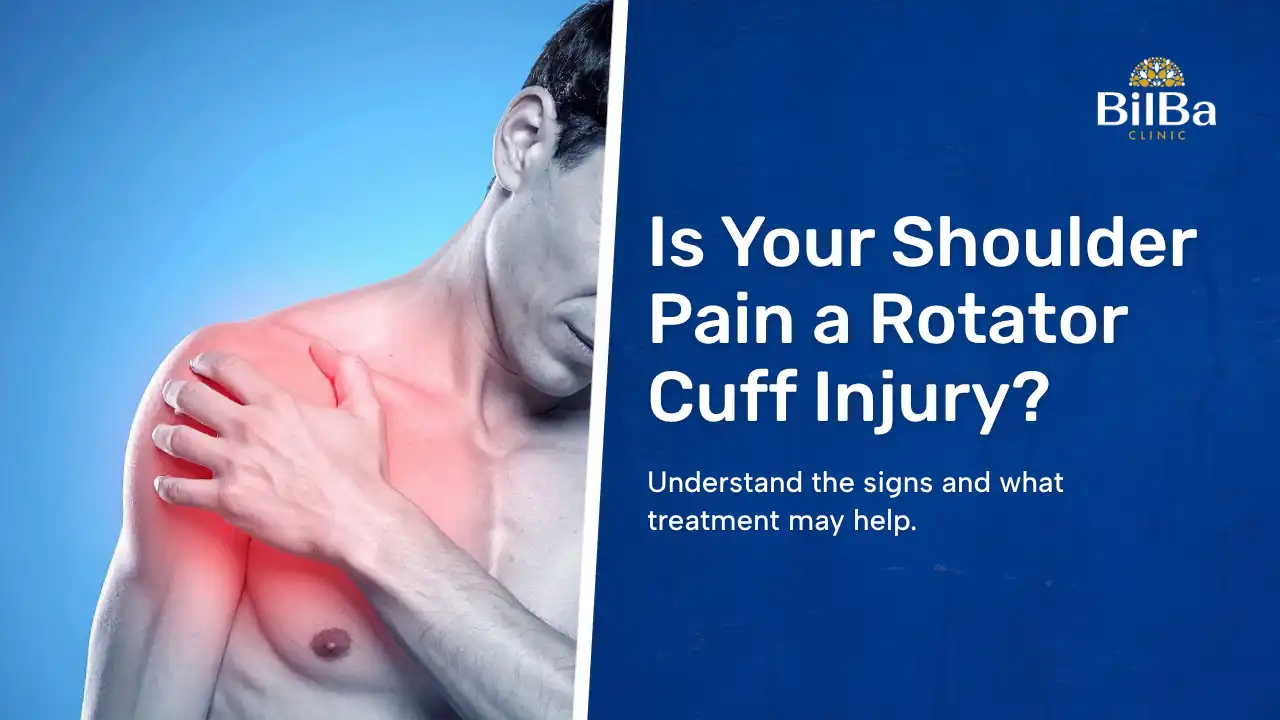
Shoulder pain that won’t settle down often comes back to the same four muscles, the rotator cuff. Whether you’ve felt a sudden pull during a workout or a nagging ache has crept in over months, rotator cuff injuries and treatment go hand in hand, the type of injury you have determines what actually helps. This guide walks through what the rotator cuff does, the different ways it can go wrong, how it’s diagnosed properly, and what treatment actually looks like at each stage. None of this replaces a proper examination, but it should make sense of what you’re dealing with before you book one.
What Is a Rotator Cuff Injury
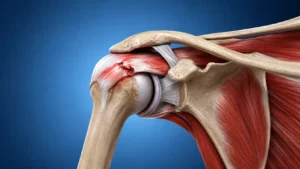
The rotator cuff isn’t one single structure, it’s a group of four muscles and their tendons that wrap around the shoulder joint and hold the top of your arm bone snugly in its socket. Without them working properly, your arm would be far less stable every time you lift, reach or rotate it.
- Supraspinatus: sits on top of the shoulder, starts the first part of lifting your arm out to the side
- Infraspinatus and teres minor: sit at the back, mainly responsible for rotating your arm outward
- Subscapularis: sits at the front, mainly responsible for rotating your arm inward
Together, these four rotator cuff muscles keep the ball of the shoulder joint centred against the socket. When one or more of them is damaged, that stability suffers, which is why even a small rotator cuff problem can make everyday movements like reaching for a shelf or putting on a coat feel unexpectedly difficult.
Types of Rotator Cuff Injuries
Rotator cuff injuries types fall into a few different categories, and the label matters because it changes what treatment actually works.
Tear, Strain, Impingement and Tendinopathy Compared
A rotator cuff strain usually starts with a stretched or mildly torn set of muscle fibres, often from overuse or one sudden awkward movement, rather than a full structural failure. A tear is more serious than a strain, this is where the tendon fibres actually separate, partly or fully, from the bone they attach to. Shoulder impingement syndrome is different again, here the tendon isn’t torn at all, it’s being pinched or compressed, usually as it passes under a bony ridge called the acromion during overhead movement. Rotator cuff tendinopathy describes a tendon that’s become worn and thickened over time through repeated overload, more of a gradual wear pattern than a single sudden injury.
It’s easy to confuse a rotator cuff problem with frozen shoulder, since both cause pain and reduced movement. Frozen shoulder vs rotator cuff tear comes down to how the shoulder moves when someone else moves it for you, in frozen shoulder the joint capsule itself has tightened, so movement stays restricted no matter who is doing the moving. With a rotator cuff tear, a doctor moving your arm passively can often achieve a much fuller range than you can manage on your own.
Why the Rotator Cuff Gets Injured
Why is the rotator cuff prone to injury more than most other muscle groups? Partly it’s blood supply, the tendons have naturally reduced blood flow in certain areas, which makes them slower to repair after everyday wear. Partly it’s mechanics, the rotator cuff works during almost any arm movement above shoulder height, so it accumulates load in a way most other muscles don’t.
A rotator cuff injury from push ups is a common gym complaint, particularly when the elbows flare out wide or the chest drops too low, both of which push extra strain through the front of the shoulder. A rotator cuff injury gym pattern also shows up with overhead pressing, heavy bench pressing, and pull-ups, especially when these are done with more weight than the shoulder can currently control. Gym-based shoulder problems are common enough that studies of regular gym users have found the majority report some degree of shoulder pain at some point, which says more about how demanding these movements are on the shoulder than about anything unusual in any one person’s technique. If the pain sits more at the point where the tendon attaches to the bone rather than deeper in the joint itself, it’s worth reading our guide on tendon pain near your joints, since that’s a related but distinct pattern.
What Rotator Cuff Pain Feels Like and Where It Shows Up
What do rotator cuff injuries feel like day to day? Most people describe a deep ache rather than a sharp pain, sitting somewhere between a dull throb and a persistent tenderness that flares up with certain movements. Rotator cuff injury location of pain is typically the outer or front part of the shoulder, sometimes spreading partway down the upper arm, though rarely past the elbow. Where does a torn rotator cuff hurt most noticeably? Usually when lifting the arm away from the body or reaching overhead, and often when lying on the affected side.
Rotator cuff injury symptoms generally include weakness when lifting or rotating the arm, a catching or clicking sensation during certain movements, and reduced range of motion that gets more noticeable over weeks rather than appearing overnight. Rotator cuff tear symptoms specifically tend to include a moment you can point to, a fall, a wrench, a sudden load, after which the shoulder never quite felt the same, whereas strains and tendinopathy usually build up more gradually.

Sleeping with a Rotator Cuff Injury
Sleeping with rotator cuff injury pain is one of the more frustrating parts of the whole experience, and there’s a real physical reason it gets worse at night rather than it just feeling that way. Blood flow to the shoulder drops during rest, inflammatory proteins tend to rise while you sleep, and lying down changes the pressure within the joint depending on which position you’re in. Side sleeping on the affected shoulder makes this worse by adding direct pressure on top of all of that. Sleeping on your back with a small pillow supporting the affected arm, or on the unaffected side with a pillow hugged against your chest, tends to ease the pressure enough to make a real difference to how the night goes.
How Rotator Cuff Injuries Are Diagnosed
Rotator cuff injuries test methods usually start with a hands-on examination rather than a scan. A doctor or physiotherapist will typically move your arm through a series of positions, checking things like whether lifting your arm sideways against resistance causes pain or weakness, or whether pushing your arm into a specific rotated position reproduces your symptoms. No single one of these tests confirms a diagnosis on its own, but combined, they give a fairly reliable picture of whether the problem is more likely to be a tear, impingement, or something else.
Will an X-ray Show a Rotator Cuff Tear
Will rotator cuff injury show on x ray? Not directly. An X-ray is good at showing bone, so it can rule out a fracture or show bony changes that come with long-standing wear, but the rotator cuff tendons themselves are soft tissue, which doesn’t show up clearly on a standard X-ray. To actually see whether a tendon is torn, thickened or inflamed, an ultrasound scan or an MRI is needed instead, ultrasound tends to be quicker and just as accurate for full tears, while MRI is often better for smaller partial tears or when surgery is being planned.
Treatment Options for a Rotator Cuff Injury in London
Rotator cuff tear treatment and rotator cuff pain treatment both usually start in the same place, physiotherapy focused on gradually restoring strength and movement, alongside simple pain relief where needed. This is the first choice for most tears, not a fallback while waiting for something stronger, since a well-run programme of physiotherapy for rotator cuff injury produces outcomes that are often comparable to surgery, particularly for partial tears.
Torn rotator cuff treatment without surgery works for a large number of people, and how to treat a rotator cuff tear without surgery generally comes down to three things done consistently, targeted exercises, activity changes while healing, and patience, since tendons are slower to heal than muscle. PRP injection for rotator cuff tear is something we can offer as part of our regenerative medicine service, though it’s worth being upfront that the evidence for PRP in rotator cuff problems is still developing rather than settled, professional guidance bodies don’t currently recommend it as a routine first step, so it’s usually discussed as one option among several rather than a stand-alone fix.
Treating a Rotator Cuff Strain
Rotator cuff strain treatment tends to be the simplest of the group, rest from the aggravating movement for a short period, gentle mobility work to stop the shoulder stiffening up, and a gradual return to normal activity over two to four weeks as the fibres settle down.
Treating Rotator Cuff Impingement
Rotator cuff impingement treatment focuses on reducing the pinching itself, usually through exercises that improve how the shoulder blade moves and sits, since poor shoulder blade positioning is a common reason the tendon keeps getting compressed in the first place. Anti-inflammatory medication or, occasionally, a steroid injection can calm things down enough to make that exercise work more comfortable in the early stages.
Treating a Partial Rotator Cuff Tear
Partial rotator cuff tear treatment generally follows the same conservative-first approach as a full tear, physiotherapy, activity adjustment, and time, and research on smaller partial tears shows conservative care performing comparably to surgery in many cases. Surgery is kept in reserve for tears that don’t improve after a genuine course of physiotherapy, or where the tear is large enough that it’s unlikely to respond to exercise alone.
Recovery Time for a Rotator Cuff Injury
Rotator cuff injuries recovery time varies a lot depending on what’s actually been injured. A mild strain often settles within two to four weeks. A partial tear treated conservatively tends to take six to twelve weeks before it feels noticeably better. A full tear, whether treated with physiotherapy alone or after surgery, is a longer road, often four to six months, and sometimes up to a year for the most severe, surgically repaired tears.
How long does a rotator cuff injury take to heal in the end depends heavily on how early treatment started and how consistently it was followed, which is exactly why getting an accurate diagnosis early matters more than it might seem. Can a rotator cuff tear heal on its own? Tendon tissue doesn’t regrow the way skin does, so a true tear won’t close up by itself, though many people still regain good function without surgery once the surrounding muscles are strengthened to compensate.
If you’re looking for a short list of rotator cuff tear exercises to avoid while things settle down, these three come up most often in physiotherapy advice:
- Overhead presses and shoulder presses, which load the tendon in its most compressed position
- Heavy or deep bench pressing, especially with elbows flared wide
- Pull-ups and dips, both of which place heavy load through an already irritated tendon
None of these are permanently off-limits, they’re simply best avoided until a physiotherapist has confirmed your shoulder can control the load safely again.
What Happens If a Rotator Cuff Injury Goes Untreated
What happens if a rotator cuff tear goes untreated isn’t usually nothing. Research following partial tears over time has found that a real proportion, close to 40% in some studies, get larger within two years if left alone, and a small tear is a great deal easier to treat than a large one. Left long enough, a large tear can also lead to a condition called cuff tear arthropathy, where the bones of the joint begin to rub against each other because the torn tendon can no longer hold everything properly in place. It can happen indirectly too, avoiding movement because of pain sometimes causes the shoulder capsule to stiffen into frozen shoulder, adding a second problem on top of the original one.

Rotator Cuff Treatment at Bilba Clinic
If your shoulder pain has been dragging on, or you’re just not sure whether what you’re dealing with is a strain, a tear, or something else entirely, an examination with our medical services team is the quickest way to get a clear answer rather than guessing from a list of symptoms online. Our our team includes a sports and musculoskeletal physiotherapist who can assess the shoulder properly, arrange an ultrasound scan if needed, and build a treatment plan around what’s actually going on rather than a generic exercise sheet.
If you’ve been searching for rotator cuff treatment london, a shoulder specialist london, or a sports injury clinic london, our Fitzrovia clinic brings assessment, physiotherapy and regenerative treatments like PRP together in one place, which is usually what people mean when they’re looking for a private rotator cuff treatment london option rather than being passed between several different providers. Current pricing for consultations and physiotherapy sessions is available on our site, and we’re happy to talk through costs before you commit to anything. Book a consultation to get started, or contact us if you’d rather ask a few questions first.
- Address: 57 Great Titchfield Street, Fitzrovia, London W1W 7PN
- Phone: +44 (0) 7858 848 244
- Email: info@bilbaclinic.co.uk
Opening hours: Monday to Friday 10:00 to 18:00, Saturday 12:00 to 17:00, Sunday closed
Frequently Asked Questions
Is a Rotator Cuff Injury Common?
Yes, is rotator cuff injury common is one of the more reassuring questions to ask, because the answer is a clear yes. Studies suggest rotator cuff problems affect somewhere between 7% and 22% of adults over 40, rising to well over half of adults over 80, and gym-based studies have found the majority of regular gym-goers report shoulder pain at some point. Why are rotator cuff injuries common largely comes down to how much everyday and exercise-related load passes through a relatively small group of tendons, and how limited their blood supply is compared to larger muscles nearby.
Does Cold Weather Affect Rotator Cuff Injuries?
The evidence here is still mixed. Some studies link colder temperatures and changes in air pressure to increased joint pain, while others find no clear connection at all. It’s more likely that reduced activity during colder months, rather than the temperature itself, plays a part in symptoms feeling worse, so it’s worth treating this as a possible contributing factor rather than a proven cause.
What Is the Best Treatment for a Rotator Cuff Tear?
There isn’t one single best treatment that fits everyone, it depends on the type and size of the tear, your age, and how active you need your shoulder to be. For most partial tears, physiotherapy-led conservative treatment is the recommended starting point, with surgery considered later if things don’t improve. Shoulder pain guidance from the NHS reflects this same conservative-first approach for the majority of cases.
How Do You Know If You Have a Rotator Cuff Injury?
The clearest signs are pain around the outer or front shoulder that’s worse with overhead movement, weakness when lifting the arm, and pain that disturbs sleep, particularly on the affected side. None of these alone confirm a rotator cuff problem, since other shoulder conditions can look similar, which is exactly why a physical examination, and sometimes an ultrasound scan, gives a far more reliable answer than symptoms alone.
Is Surgery Always Needed for a Rotator Cuff Tear?
No. Most partial tears and many full tears respond well to physiotherapy-led treatment without ever needing an operation. Surgery tends to be reserved for tears that don’t improve after a genuine course of conservative treatment, tears that are large or getting larger, or cases where someone needs their shoulder at full strength for work or sport and conservative treatment hasn’t gotten them there.