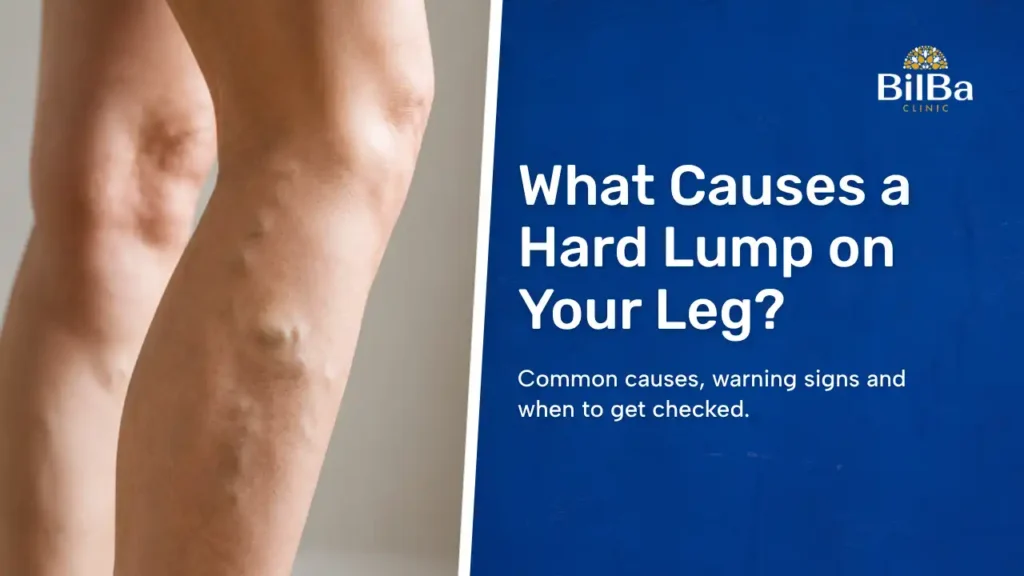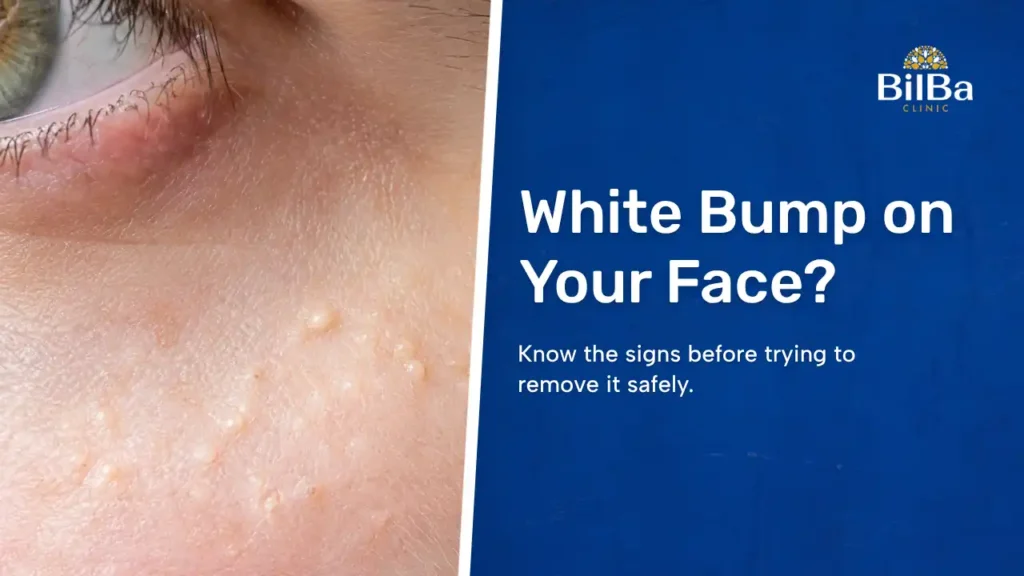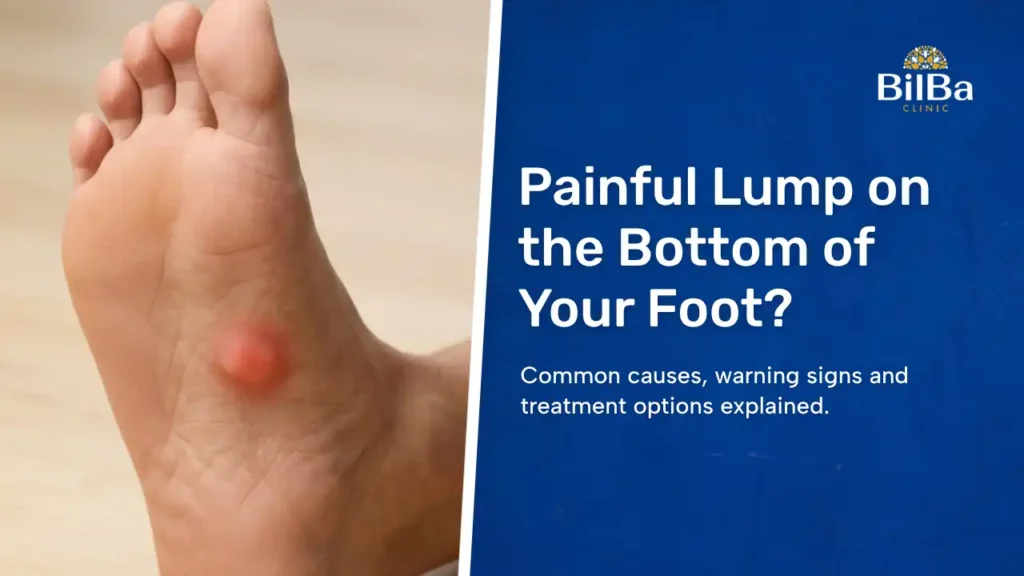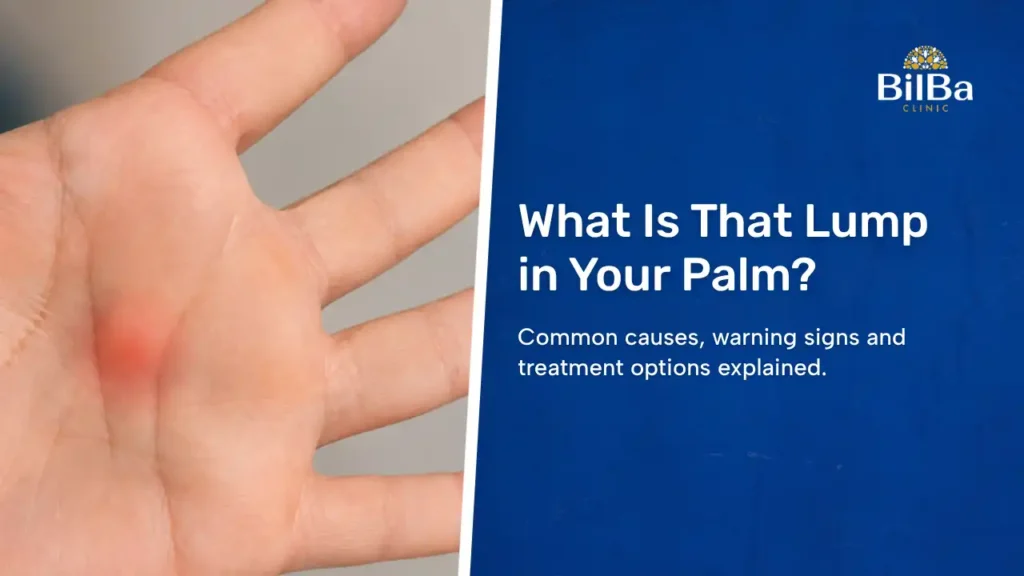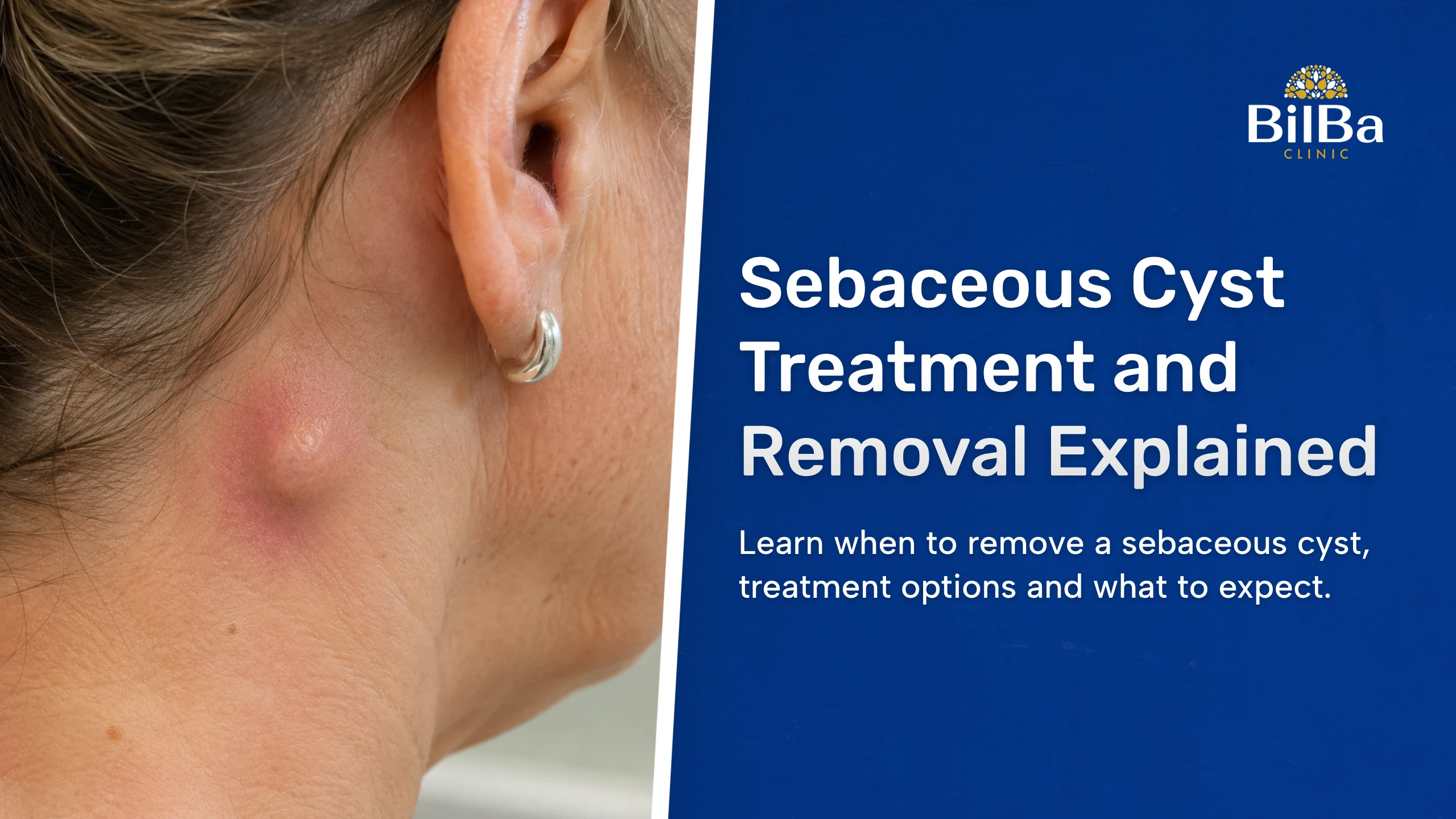
Sebaceous cyst treatment depends on what the lump is doing, so we start by looking at it and asking how it has changed. A small, quiet cyst can often be left alone and watched. One that keeps swelling, gets infected or catches on clothing is worth talking about removing. One that turns red, hot and sore needs an urgent look. At Bilba Clinic we examine the lump first and then explain your options in plain terms. This guide covers what the lump is, whether it will go away and what each treatment involves.
- Leave it and watch: the lump is small, painless and not changing.
- Talk about removal: it keeps swelling, becomes inflamed again and again, catches on a comb or clothes, or simply bothers you.
- Ask for an urgent review: it is red, hot, sore, swollen or leaking.
Whichever one fits, an examination settles what the lump actually is, and that step decides everything after it.
What a Sebaceous Cyst Is and How We Tell It From Other Lumps
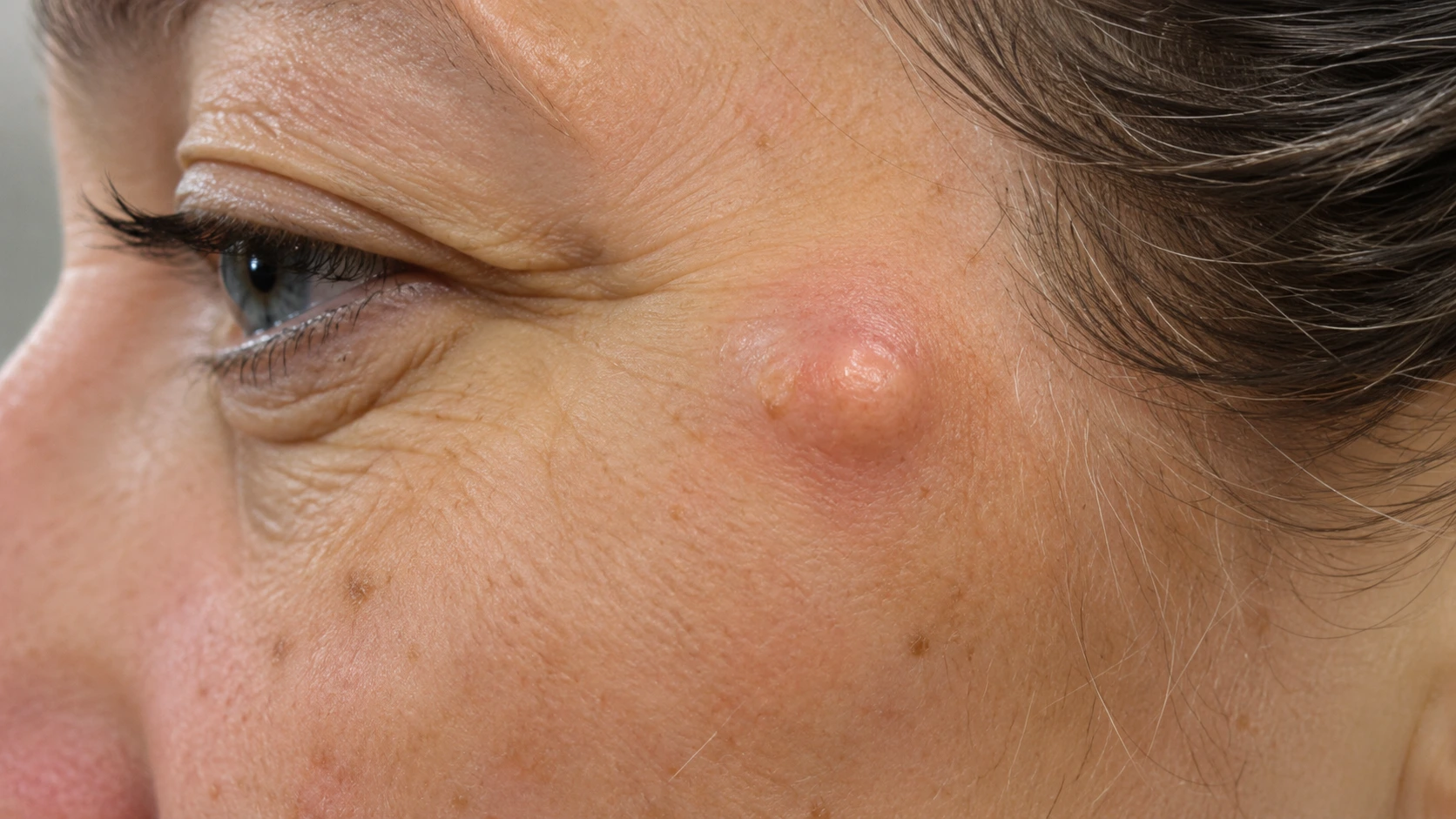
A sebaceous cyst is a small sac under the skin that fills slowly with a soft, thick material called keratin, which shows as a dome-shaped lump. The name is an old one. Most of these lumps are epidermoid cysts or pilar cysts, which grow from skin cells and not from the oil glands the name suggests.
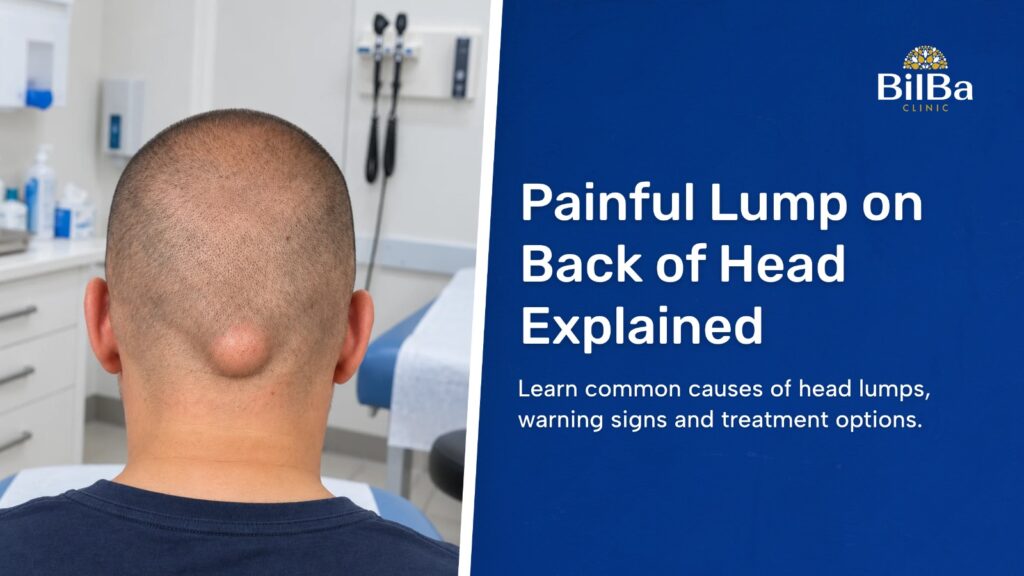
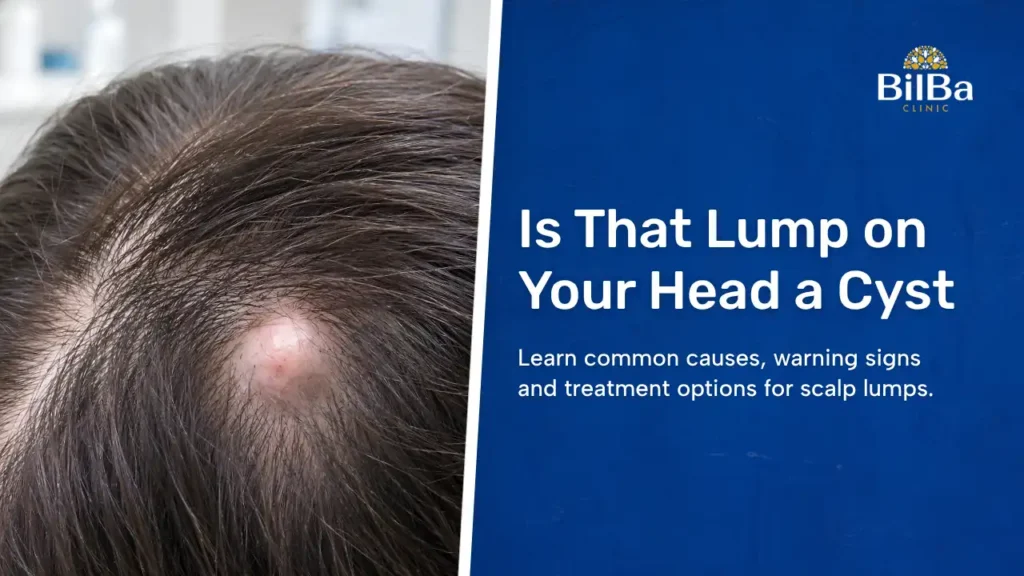
You will still hear “sebaceous cyst” in everyday use, and it is the term most people search for, so we use it here too. The lump tends to be round or dome-shaped, skin-coloured, pale or yellowish, and it can range from smaller than a pea to several centimetres across. Some have a tiny dark opening in the middle, called a punctum. Cysts on the scalp often catch on a comb.
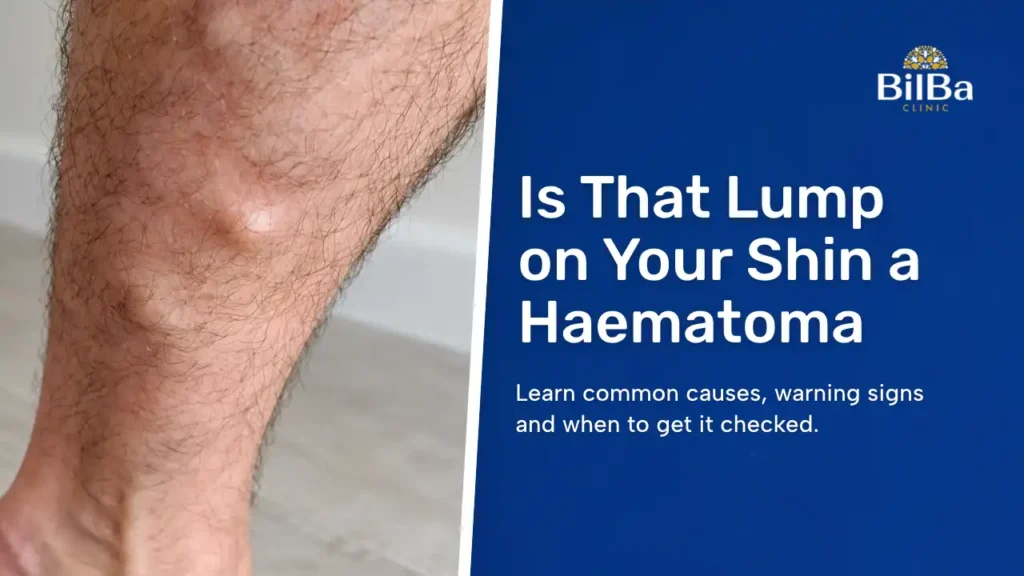
Several other lumps look similar at first glance, including a lipoma, which is a soft growth of fatty tissue, and a swollen gland or an abscess. Our guide to whether a lump is a cyst or fat deposit shows how they differ. Looking is the reliable way to tell them apart, and our clinical team examines the lump, checks how it feels and moves, and asks how long it has been there. If we are unsure what a lump is, removing it and testing the tissue gives a definite answer. A lump you have had since early childhood is worth mentioning, because a few of those are a different type of cyst and need a specialist look.
What Causes a Sebaceous Cyst to Form
In many cases there is no clear reason a sebaceous cyst forms. Skin cells can become trapped beneath the surface after irritation, an injury, a blocked hair follicle or past acne, and they go on multiplying inside a small sac. Poor hygiene is not the cause, so washing more will not stop one appearing.
A few patterns are worth knowing. Epidermoid cysts are most common in adults in their thirties and forties, and they favour the face, neck, chest and upper back, and sometimes the scrotum. Pilar cysts mostly appear on the scalp. They are more common in women, often start in middle age and tend to run in families, so if a relative has had several scalp lumps, yours may be the same kind. If that applies to you, it is worth telling us.
Cysts of this type are not catching, and they do not come from anything you did. Most never cause a problem beyond a visible lump. Trouble starts when one becomes inflamed or infected, which we cover further down, or when it grows large enough to be noticed every day.
Can a Sebaceous Cyst Be Cancerous and When Does a Lump Need Testing?
A sebaceous cyst is almost always harmless, and cancer arising in one is very rare. A lump that looks like a cyst can occasionally turn out to be something different, which is why a new or changing lump deserves an examination and not guesswork or a long wait.
The changes that make us look harder are quick growth, new pain, a change of colour, bleeding, and a lump that is still there after a few weeks. A cyst that keeps coming back in the same spot also gets a closer look. None of these means cancer. They mean the lump is behaving differently from a typical cyst, and an examination decides what happens next.
When we remove a cyst, we may send the tissue for laboratory testing where it is clinically appropriate. That confirms what the lump was and gives you a clear answer to keep. It is a routine precaution, and it does not mean we expect a problem. If anything unexpected ever showed up, we would explain what it means and what the next step would be, so you are not left to work it out alone.
Will a Sebaceous Cyst Go Away on Its Own or Need Removing?
Some small cysts settle without treatment, and a cyst that causes no trouble can be left alone. The sac stays in the skin, though, so a cyst can fill again after it settles or drains. One that keeps returning, becomes infected or bothers you is more likely to need removing.
A cyst that bursts or drains can feel like a cure, because the lump shrinks and the pressure eases. The sac usually remains underneath, which is why the swelling tends to build up again. Squeezing does not speed any of this up, and we explain why in the removal section below.
How long a cyst lasts varies from person to person, and we cannot give a reliable timeline for any single lump. What we can do is look at yours and tell you whether it is likely to stay quiet or tends to cause repeat trouble. Position, size and past inflammation all play a part. Waiting is a fair choice for a small, painless lump that is not changing, as long as you keep an eye on it and book a look if anything shifts.
If you choose to watch, a simple record helps. Note the size against a coin or a ruler, take a photo in the same light every few weeks, and write down any episode of redness, tenderness or discharge. That record shows how the lump has behaved over time, which is more useful than a memory of how it looked months ago, and it makes the decision about removal easier for both of us.
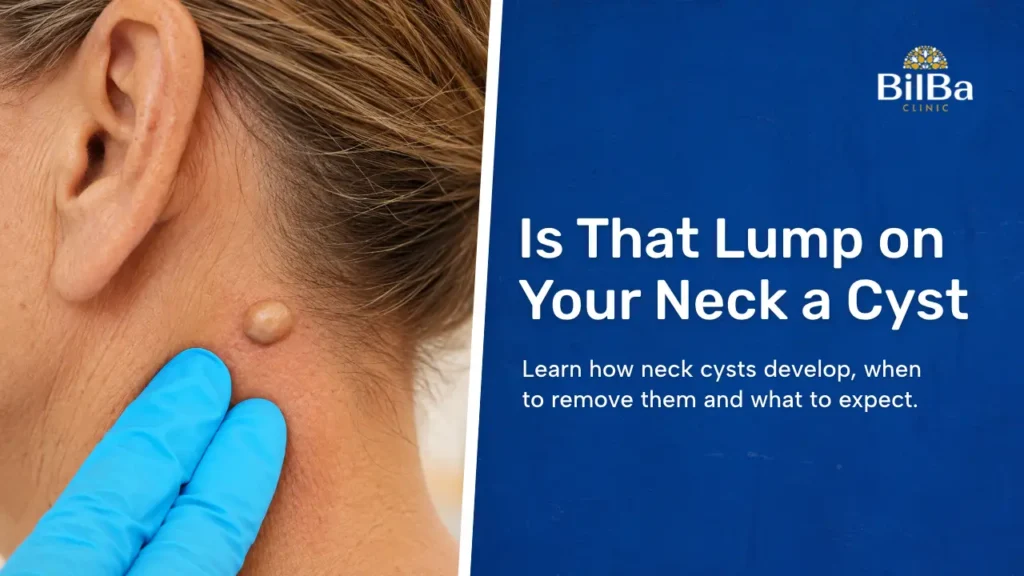
Cysts on the neck behave in much the same way, with some differences in where they sit and how they are treated. If that is where yours is, our article on a cyst on the neck covers it in more detail.
Sebaceous Cyst Treatment Options and When Each One Makes Sense
Sebaceous cyst treatment falls into three routes: watching a quiet cyst, draining one that is inflamed, and removing the whole sac. Which one suits you depends on whether the cyst is troublesome, whether it has been infected and how likely it is to return. We explain the choice after examining the lump.
- Watching: suits a small cyst that is painless and not changing. Nothing is done, and you come back if it grows, hurts or changes.
- Draining: a small cut lets the contents out of a sore, inflamed cyst. The sac is left behind, so the cyst can come back.
- Full removal: a minor procedure under local anaesthetic takes out the cyst and its sac. It leaves a scar, and it is the option that lowers the risk of that same cyst returning.
Several things feed into the choice. Size and position matter, because a cyst on the face or scalp calls for different planning from one on the back. A cyst that has never been inflamed is simpler to remove than one that has been infected before. Your own priorities count too: some people want a lump gone for comfort or appearance, while others prefer to wait and see. We set out the options and the trade-offs, and the choice is yours.
Antibiotics have a place when a cyst is infected, but they treat the infection and not the sac. Our minor skin surgery service covers cysts and other skin lumps. The three sections below take the most common questions in turn: how removal works, why squeezing backfires and what to do about an infected cyst.
Removal of a Sebaceous Cyst Under Local Anaesthetic at Bilba Clinic
Removal of a sebaceous cyst at Bilba Clinic is a minor procedure done under local anaesthetic, normally as a day case. We numb the area, make a small cut and take out the cyst together with its sac. Taking out the whole sac gives the best chance that the cyst does not return.
The visit begins with an assessment. We look at the lump, ask about its history and rule out anything that needs a different approach, because not every lump is suitable for minor surgery. If yours is suitable, the area is cleaned and numbed. You may feel a brief sting from the injection, and after that the area should be numb while we work, though you may notice some pressure or tugging.
The procedure tends to be quick. Because only the area is numbed, you stay awake and can talk to us throughout. It helps to tell us about any medicines you take, any allergies and any past reaction to local anaesthetic before we start.
We then remove the cyst using sterile surgical technique and close the area with dissolvable stitches or a small dressing, depending on its size. Some cuts need stitches and some do not. Where it is clinically appropriate, we send the removed tissue for laboratory testing to confirm what it was.
Most people return to normal daily activities the same day. We explain how to look after the wound so it heals well and the risk of infection stays low. Scarring is possible, and a small scar is expected once the area has healed. Careful technique and good aftercare help keep it as small as possible.
How to Remove Sebaceous Cyst Safely and Why Squeezing Backfires
The safe way to remove a sebaceous cyst is to have a clinician take out the whole sac under local anaesthetic. Squeezing can cause an infection or spread one that is already there, and it leaves the sac in place, so the cyst fills up again.
It is easy to see why people try. A cyst sits just under the skin, it feels as if it ought to come out, and a tiny opening in the middle looks like an invitation. The lump is a sac, though, and not just its contents, and pressing on it from outside rarely clears the sac. What can follow is soreness, redness and an infected lump that is harder to treat than the one you started with.
We would advise against any attempt to cut, pierce, squeeze or pick at a cyst yourself, and against trying products at home to draw it out. The risks are infection, scarring and a cyst that comes back, and none of them is worth taking when a short procedure can deal with the sac properly. If a cyst has already burst, leave it alone and ask us for a review. The same goes for a cyst that feels more tender or looks different after it has been handled, which is a good moment to book a look.
Infected Sebaceous Cyst Removal and When to Ask Us for an Urgent Review
An infected sebaceous cyst becomes red, swollen, warm and sore, and may leak a thick, foul-smelling discharge. Ask us for an urgent review instead of waiting, because infection can spread and a cyst is easier to treat early. Infected cyst removal tends to happen in two steps, settling the infection first and taking the cyst out afterwards.
Redness can be harder to see on brown and black skin, so look for heat, swelling, tenderness and discharge as well, and do not rely on colour alone. A cyst that keeps getting infected is one of the clearest reasons to think about removal.
Two steps are used because a cyst that is still inflamed is harder to remove cleanly, and the wound is more likely to break down and scar. We normally treat the infection first, with antibiotics or drainage where needed, let the area settle and then plan removal of the sac. That plan is a clinical decision made after we have examined you.
If a cyst has turned into a painful, hot lump with pus, it may have become an abscess, which is a collection of pus that sometimes needs draining. Our article on a skin abscess explains how that is treated. If you feel very unwell, with a high temperature, shivering or redness that is spreading quickly, seek urgent medical advice straight away.
Who Should Think About Removal and Who Can Wait
Removal is worth discussing if a cyst keeps getting infected, catches on a comb, clothes or jewellery, grows steadily, sits where you see it every day or is hard to identify. A small, painless cyst that is not changing can usually be watched. Both choices are reasonable, and the decision is yours.
The reasons we hear most often are:
- It has been inflamed or infected more than once.
- It catches on a comb, a collar, a strap or jewellery.
- It is growing, or it sits somewhere you see every day.
- You are not sure what the lump is and want it checked properly.
If this is your first cyst and it is quiet, there is normally no hurry. If the same lump has flared up more than once, the case for removal gets stronger, because a cyst that keeps getting infected is usually better dealt with by taking the whole sac out.
Waiting is a sound choice for a small cyst with no symptoms, as long as you notice changes and book a look if it grows, hurts, changes colour or bleeds. Removal deals with that cyst only. New cysts can form in future, especially on the scalp or genital skin, so one removal may not be the last you need.
We would like you to choose with clear facts and without feeling rushed. You can read more about our clinic and how we work before you book.
Book a Sebaceous Cyst Assessment at Bilba Clinic in Fitzrovia
Bilba Clinic is a CQC-registered private clinic in Fitzrovia, London, offering medical, aesthetic and wellbeing care from experienced clinicians. We are recognised by major insurers including Bupa, Vitality and WPA, and we welcome self-pay patients.
An assessment starts with a look at the lump and a plain explanation of what it is and what your options are. If removal makes sense, we talk through the procedure and what recovery involves, and there is no pressure to decide on the day. When you are ready, you can book an assessment online or contact us with any questions.
- Address: 57 Great Titchfield Street, Fitzrovia, London W1W 7PN
- Phone: +44 (0) 7858 848 244
- Email: info@bilbaclinic.co.uk
- Opening hours: Monday to Friday 10:00 to 18:00, Saturday 12:00 to 17:00, Sunday closed
Frequently Asked Questions About Sebaceous Cyst
Will a Sebaceous Cyst Come Back After Removal?
A sebaceous cyst is less likely to return when the whole sac is removed, and more likely to return when part of the sac is left behind or when the cyst is only drained. Removal treats that one cyst, so new ones can still form elsewhere, especially on the scalp. We explain what to expect for your own lump after examining it.
Does Removing a Sebaceous Cyst Leave a Scar?
Yes, removal leaves a scar, and a small one is expected once the area has healed. How visible it is depends on the size and position of the cyst and on how the wound heals. Careful technique and good aftercare help keep the scar small, and we talk through what to expect before you decide.
Is It Painful to Have a Sebaceous Cyst Taken Out?
We use local anaesthetic, so the area is numbed before we start. You may feel a brief sting from the injection, then pressure or tugging while we work. Some tenderness afterwards is common as the area heals. If anything hurts during the procedure, tell us straight away.
Can I Claim for Having a Sebaceous Cyst Taken Out on Private Medical Insurance?
Whether a policy pays depends on its terms and on the reason the cyst is being removed, so it is worth checking your cover before you book. We are recognised by several major insurers, and self-pay patients are welcome too. Mention how you plan to pay when you book and we will explain how your appointment works.