If you’ve found a painful, swollen lump that feels warm to the touch, an abscess on the skin is one of the most likely explanations, alongside a boil or an infected cyst. All three can look similar at a glance, but they behave differently and need different handling. A proper look is really the only way to tell them apart with confidence, and to work out whether yours needs draining or will settle on its own.
A quick way to tell what you might be dealing with:
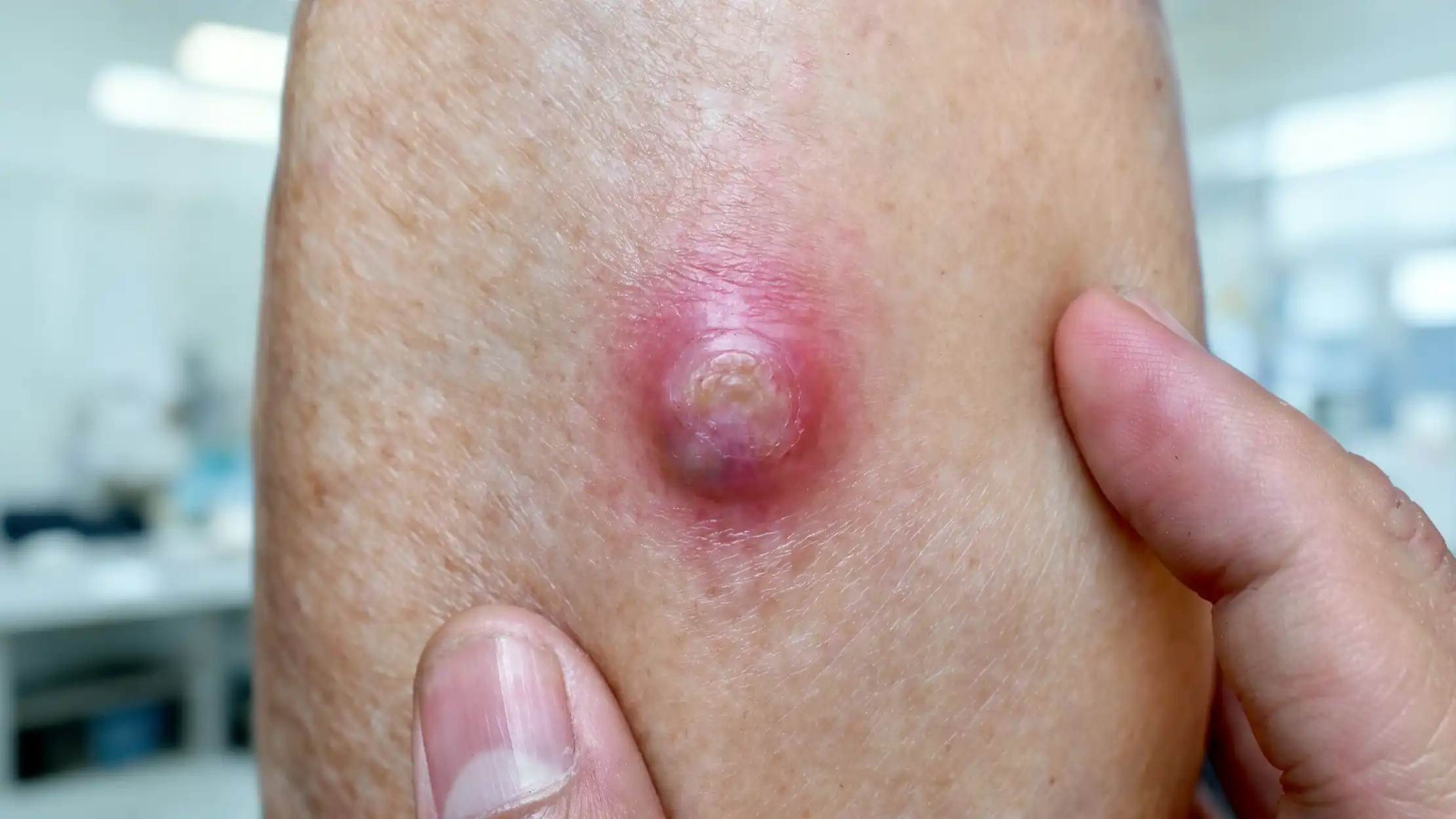
- Comes to a head with a visible pus-filled centre, feels soft in the middle: often an abscess
- Small, firm, and centred around a single hair follicle: more likely a boil
- Slow-growing, smooth, and rarely painful unless infected: points toward a sebaceous cyst
What Is an Abscess on the Skin?
What is an abscess on the skin, in plain terms? It’s a pocket of pus that forms under the skin when bacteria get in, usually through a small cut, an ingrown hair, or a blocked gland. Your immune system rushes white blood cells to fight the infection, and the pus that builds up is the byproduct of that fight, dead cells, bacteria, and fluid, all collected in one place.
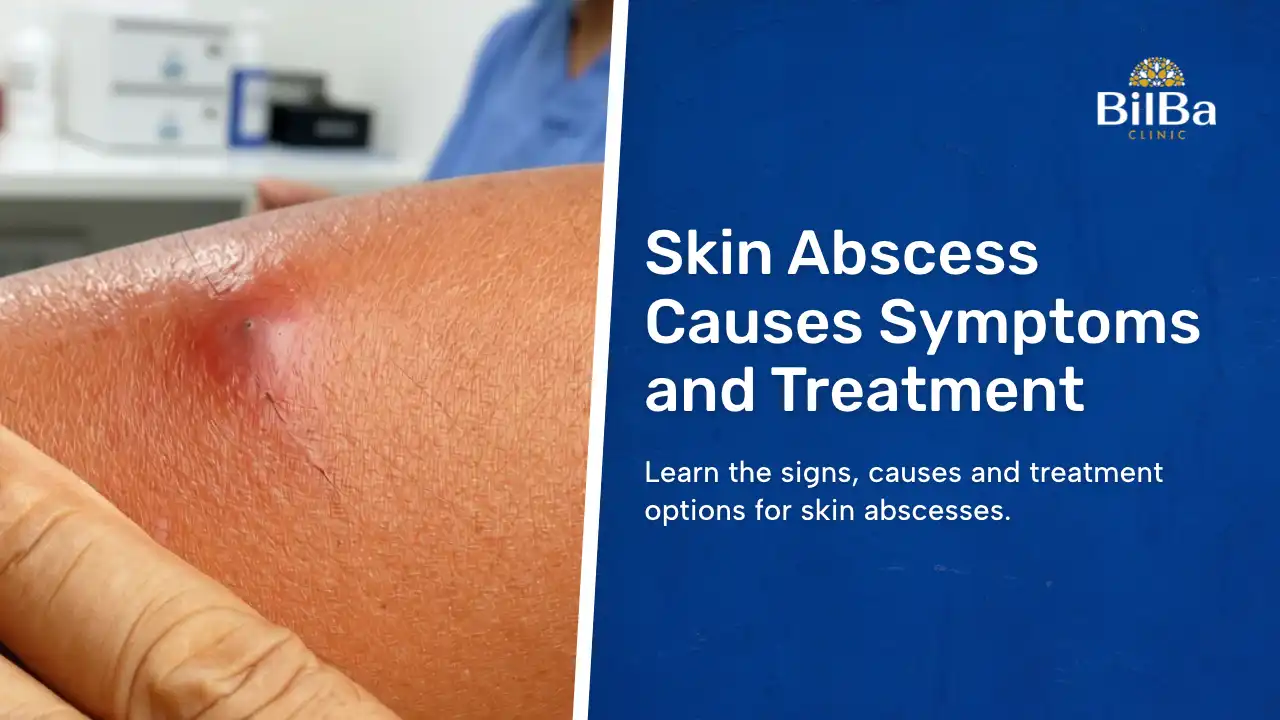
According to NHS guidance on skin abscesses, a skin abscess is a lump or swelling on the skin that contains pus, and it can appear anywhere on the body. It will often feel round, painful, and warm, and the middle may feel soft when you press it. Some cases are sometimes referred to more generally as an abscess skin lesion, particularly in clinical notes, though that’s simply another way of describing the same pus-filled swelling.
Most abscesses develop over a few days rather than appearing overnight, starting as a small area of tenderness or a firm lump before the centre softens as pus collects underneath. How quickly this happens varies from person to person and depends partly on how the bacteria got in and how your immune system responds, which is part of why two people can describe what sounds like the same lump at very different stages of development.
Not every abscess looks the same from the outside. Size, depth, and how long it’s been developing all affect what you’ll actually see and feel, which is part of why a proper examination matters more than trying to diagnose it from a photo online.
Pain tends to build gradually as an abscess forms, often starting as a mild ache or tenderness that grows sharper as pressure builds inside the pocket of pus. Some people notice the skin around it feels tight or stretched before any lump is clearly visible. Once the abscess is fully formed, movement, clothing rubbing against it, or simply pressing on the area can all become noticeably uncomfortable, which is often what prompts people to book an appointment rather than waiting it out.
Abscess vs Boil, How to Tell the Difference
People often use “boil” and “abscess” interchangeably, and the confusion is fair since a boil is technically a small, specific type of abscess that forms around an infected hair follicle. The distinction that actually matters for treatment is size and depth. A boil is usually smaller and more superficial, and many resolve with warm compresses and time. A larger or deeper abscess is less likely to clear on its own and more often needs a proper drainage procedure.
Occasionally, several boils cluster together under the skin and merge into what’s called a carbuncle, a larger, deeper collection of connected abscesses that tends to cause more pain and a stronger general feeling of being unwell than a single boil would. Carbuncles are less common than a lone boil or abscess and mostly affect middle-aged men, but when they do occur, they’re more likely to need proper clinical drainage rather than settling with home care alone.
Could It Be a Sebaceous Cyst Instead?
A sebaceous cyst is the other lump people frequently confuse with an abscess. Cysts are usually slow-growing, painless unless they become infected, and have a smoother, more defined edge than an abscess, which tends to look more inflamed and irregular. If a cyst does become infected, it can start to behave and feel like an abscess, which is exactly the kind of overlap that makes a clinical check worthwhile rather than guessing.
Or Something That Isn’t a Skin Problem at All?
Two other lumps are worth ruling out before assuming it’s an abscess, particularly if yours is in the groin, armpit, neck, or stomach area. A swollen lymph node tends to feel firmer and more mobile under the skin, without the soft, fluid-filled centre an abscess develops, and it’s often accompanied by a nearby infection or illness rather than appearing on its own. A hernia, most common around the stomach or groin, usually bulges more with coughing or straining and often eases when you lie down, which an abscess won’t do. Neither is something to self-diagnose with confidence, but if your lump behaves in either of these ways rather than the pattern described above, that’s worth mentioning specifically at your appointment.
What Are the Most Common Abscess on Skin Causes?
What are the most common abscess on skin causes? Bacterial infection is behind the vast majority of cases, most often when bacteria that normally live harmlessly on your skin get underneath it through a cut, scratch, ingrown hair, or blocked sweat gland. Once inside, they multiply and trigger the immune response that produces pus.
Some people are more prone to developing abscesses than others. Risk factors include:
- Smoking, which impairs circulation and slows the skin’s ability to fight infection
- Living with obesity, which increases skin folds and moisture where bacteria thrive
- Having diabetes, which can reduce immune response to bacterial infection
- Having a skin condition such as eczema, which creates more entry points for bacteria
- Being between 15 and 40 years old, an age range the NHS notes is more commonly affected
None of these factors guarantee you’ll develop an abscess, and plenty of people without any of them still do. They simply raise the odds, which is worth knowing if you keep getting abscesses in the same general area and want to understand why.
Good everyday hygiene lowers the risk without eliminating it entirely. Keeping cuts and grazes clean, avoiding tight clothing that traps moisture and friction against the skin, and treating ingrown hairs promptly rather than picking at them all reduce the chances of bacteria finding a way in. None of this is a guarantee, since some abscesses form despite doing everything right, but it does shift the odds in your favour over time.
Signs You’re Dealing With an Infected Abscess on Skin
An infected abscess on skin usually announces itself clearly. Beyond the visible lump, look out for the skin around it turning red, hot, and increasingly tender, sometimes spreading further than the abscess itself. You might also develop a fever, chills, or a general feeling of being unwell, which suggests the infection is affecting more than just the local area.
On lighter skin, redness is usually the most obvious sign. On brown and black skin, that redness and the colour of the abscess itself can be considerably harder to spot, so swelling, warmth, tenderness, and how the skin feels compared to the surrounding area become more reliable signs to go by than colour alone.
Certain signs mean you shouldn’t wait to get it checked. Contact a doctor promptly if the area is spreading quickly, if you develop a fever, or if you have an existing condition like diabetes that affects how well you fight infection, since these situations can progress faster than a simple, uncomplicated abscess would.
Common Places an Abscess on the Skin Can Appear
Once you know what you’re looking at and what it isn’t, location is often the next question patients ask, since an abscess can develop almost anywhere there’s skin and a hair follicle or sweat gland nearby. Certain areas come up more often than others in our clinic. An abscess on skin of stomach or an abscess on belly skin tends to develop around hair follicles or after minor skin trauma in that area. An abscess on chest skin follows a similar pattern, often starting at a blocked pore or an ingrown hair.
Some locations bring their own specific considerations. An abscess under skin inner thigh can be aggravated by friction and moisture from clothing or activity, which makes keeping the area dry part of both prevention and aftercare.
Abscess on Tailbone Under Skin, a Special Case
An abscess on tailbone under skin is a slightly different case, since recurring abscesses in that exact spot are often linked to a pilonidal sinus, a small tract under the skin that regularly traps hair and debris. We’ve written a separate, more detailed guide on pilonidal sinus excision if that’s where yours has appeared, since recurring cases there often need a different long-term approach than a one-off drainage.
Wherever it’s located, the same basic question applies: is this a simple, self-contained abscess, or is it a sign of something that needs a broader look, such as a lump under the skin that doesn’t fit the usual abscess pattern. We’ve covered that broader question in more detail in our guide to lumps under the skin, which is worth a read if you’re not entirely sure what you’re looking at.
How to Treat a Skin Abscess
How to treat a skin abscess depends mainly on its size and how far it’s progressed. Small, early abscesses sometimes respond to warm compresses held against the area for ten minutes, several times a day, which can encourage a superficial abscess to come to a head and drain naturally. This works best for small, shallow cases, not larger or deeper ones.
Once an abscess is large, deep, or has been present for more than a couple of weeks without improving, drainage becomes the more reliable option. Antibiotics alone are rarely enough on their own for a formed abscess, since they don’t reliably reach the pus-filled pocket in useful concentrations, though they’re often used alongside drainage if the infection has spread beyond the abscess itself.
How Doctors Drain an Abscess
The procedure itself is simple. A local anaesthetic numbs the area completely, then a small incision releases the pus, which is exactly what abscess incision and drainage technique involves at its core, a clean cut, gentle drainage, and sometimes a swab taken to identify the specific bacteria involved. The cavity may be packed with gauze afterwards to help it heal from the inside out rather than closing over too early and trapping any remaining infection.
That swab result occasionally comes back showing a resistant strain such as MRSA, which sounds more alarming than it usually is in this context. It simply means the choice of antibiotic, if one is needed at all, has to be more specific, and we’ll talk you through what that means for your recovery and anyone you live with if it applies. Most abscesses heal perfectly well after drainage regardless of which bacteria caused them, since removing the pus itself does most of the work.
Recovery is generally quick. Most people feel real relief within a day or two of drainage, once the pressure from the trapped pus is gone. It’s worth knowing that abscess on skin keeps coming back for some people, particularly when the underlying cause, such as a blocked gland or a pilonidal tract, hasn’t been fully addressed. If that’s happened to you more than once in the same spot, it’s worth raising directly at your appointment rather than treating each one as an isolated, unrelated event.
Aftercare in the days that follow makes a real difference to how cleanly the wound heals. Keeping the dressing clean and dry, changing it as advised, and watching for any return of redness, swelling, or discharge are the main things to stay on top of. Most people can return to normal daily activities within a day or so, though anything that puts direct pressure or friction on the area, tight clothing, prolonged sitting on it, or strenuous exercise, is worth avoiding for a few days longer until the wound has properly settled. If the area starts looking worse rather than better at any point during healing, that’s a reason to get back in touch rather than waiting for your next scheduled check.
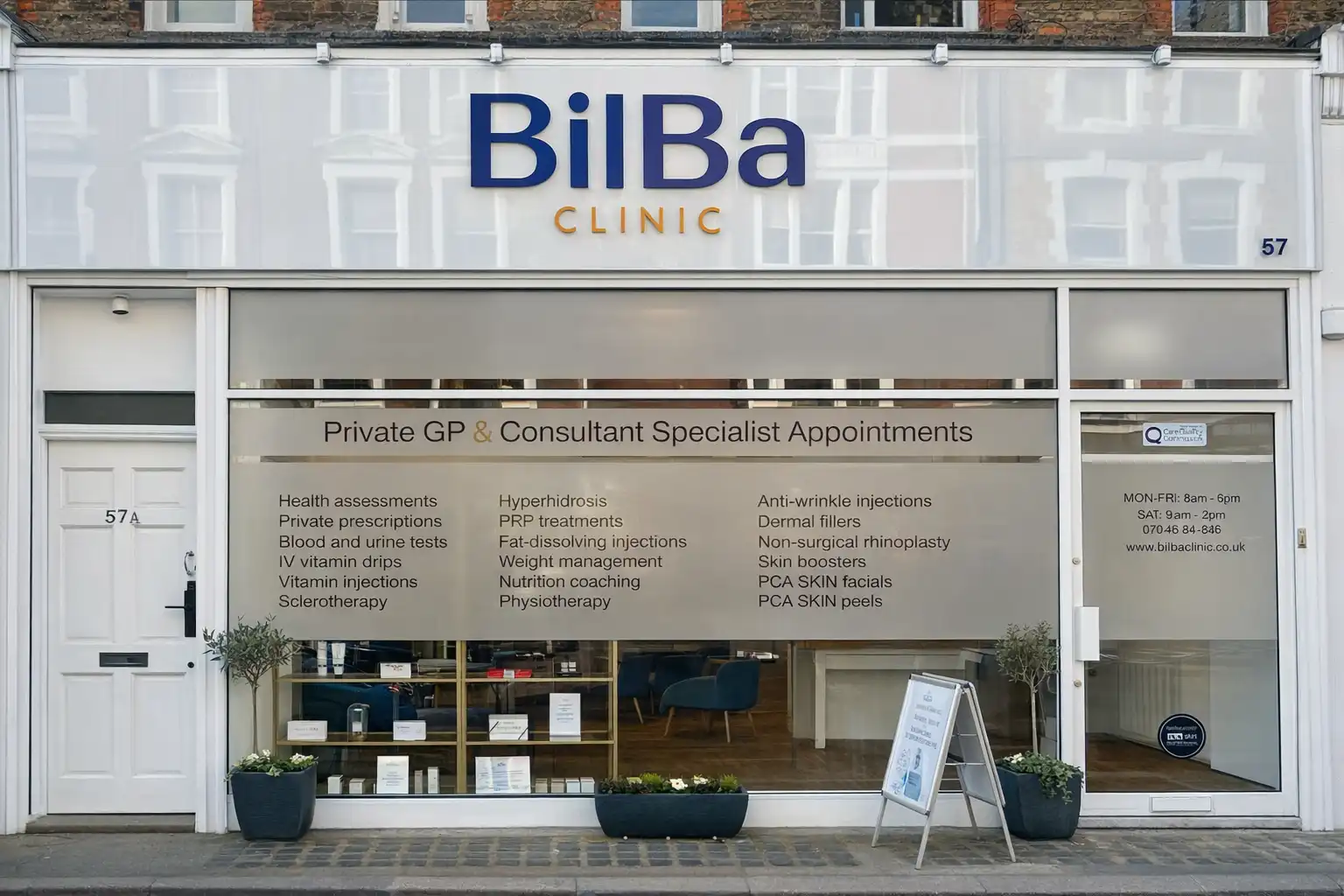
Private Abscess on the Skin Treatment at Bilba Clinic in Fitzrovia
Bilba Clinic is a CQC-registered private clinic in Fitzrovia, London, offering medical, aesthetic and wellbeing care from experienced clinicians. We’re recognised by major insurers including Bupa, Vitality and WPA, alongside patients who prefer to pay directly for their care.
If you’re dealing with a painful, swollen lump and aren’t sure whether it needs draining, our General & Vascular Surgery team can assess it quickly and tell you plainly what’s going on, without any pressure to have a procedure you don’t actually need. Plenty of smaller abscesses really do settle with simple home care, and we’d rather tell you that honestly than book you in for something unnecessary.
Abscess Incision and Drainage at Bilba Clinic starts from £900, though the exact cost depends on the size, depth, and location of the abscess, along with whether any additional aftercare is needed. Our current pricing page gives a general starting guide, and we’ll always confirm the precise figure for your specific case at consultation before anything is booked.
Book a consultation to get started, or contact us if you’d rather talk it through first.
- Address: 57 Great Titchfield Street, Fitzrovia, London W1W 7PN
- Phone: +44 (0) 7858 848 244
- Email: info@bilbaclinic.co.uk
Opening hours:
- Monday to Friday: 10:00 to 18:00
- Saturday: 12:00 to 17:00
- Sunday: Closed
Frequently Asked Questions
Do Skin Abscesses Go Away on Their Own?
Sometimes, yes, especially small, shallow ones that come to a head and drain naturally with warm compresses. Do skin abscesses go away without any treatment at all? That really comes down to size and depth, since larger or deeper abscesses are much less likely to resolve without a proper drainage procedure. If yours hasn’t improved within a week or two, or is getting bigger rather than smaller, that’s usually the point where a clinical assessment makes more sense than continued waiting.
How Long Should Pus Take to Drain From an Abscess?
Once an abscess is properly drained, most of the pus comes out within the procedure itself, and any residual discharge typically clears within a few days as the wound heals. How long should pus take to drain from an abscess that’s been left to resolve on its own, without any procedure? That’s a different, less predictable question. A self-draining abscess can take anywhere from several days to a couple of weeks to fully resolve, and there’s a real risk it won’t drain completely, which is exactly why a proper procedure tends to give a faster, cleaner result.
What Does an Abscess on Black Skin Look Like?
An abscess on black skin can look noticeably different from how it appears on lighter skin. The redness that’s usually the clearest visual sign on white skin is often much harder to see on brown and black skin, so the abscess may look closer to the surrounding skin tone rather than clearly inflamed. Warmth, swelling, and tenderness to the touch become more reliable indicators than colour alone, and any spreading of those symptoms away from the lump is still a sign to get it checked promptly, even without obvious redness.
Is a Skin Abscess an Emergency?
Most skin abscesses aren’t emergencies and can be assessed at a routine appointment. It becomes more urgent if the surrounding skin is spreading redness or warmth, if you develop a fever or feel shivery, or if you have a weakened immune system or a condition like diabetes that affects how you fight infection. In those situations, getting seen quickly matters more than waiting for a routine slot, since infection can spread faster than a simple abscess would.
Should You Pop a Skin Abscess Yourself?
No, and this is worth being direct about. Squeezing or piercing an abscess at home risks pushing the infection deeper into the surrounding tissue rather than releasing it safely, and it doesn’t remove the full pocket of infection the way a proper clinical drainage does. It can also introduce new bacteria into an already open wound, or leave scarring that a properly performed drainage would have avoided. A professional drainage procedure, done with sterile equipment and proper technique, gives a far safer and more complete result than anything attempted at home, even when the abscess looks ready to burst on its own.