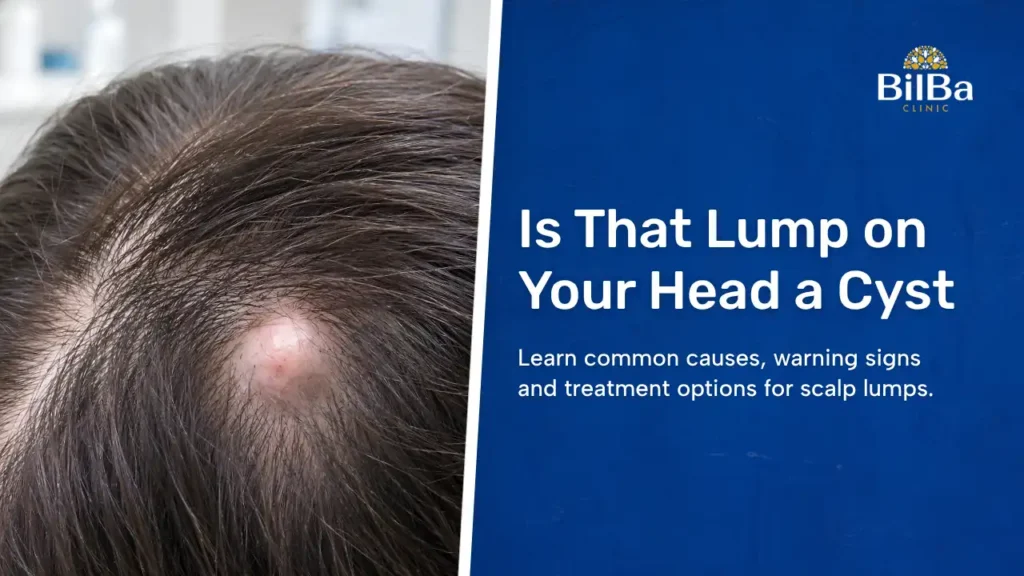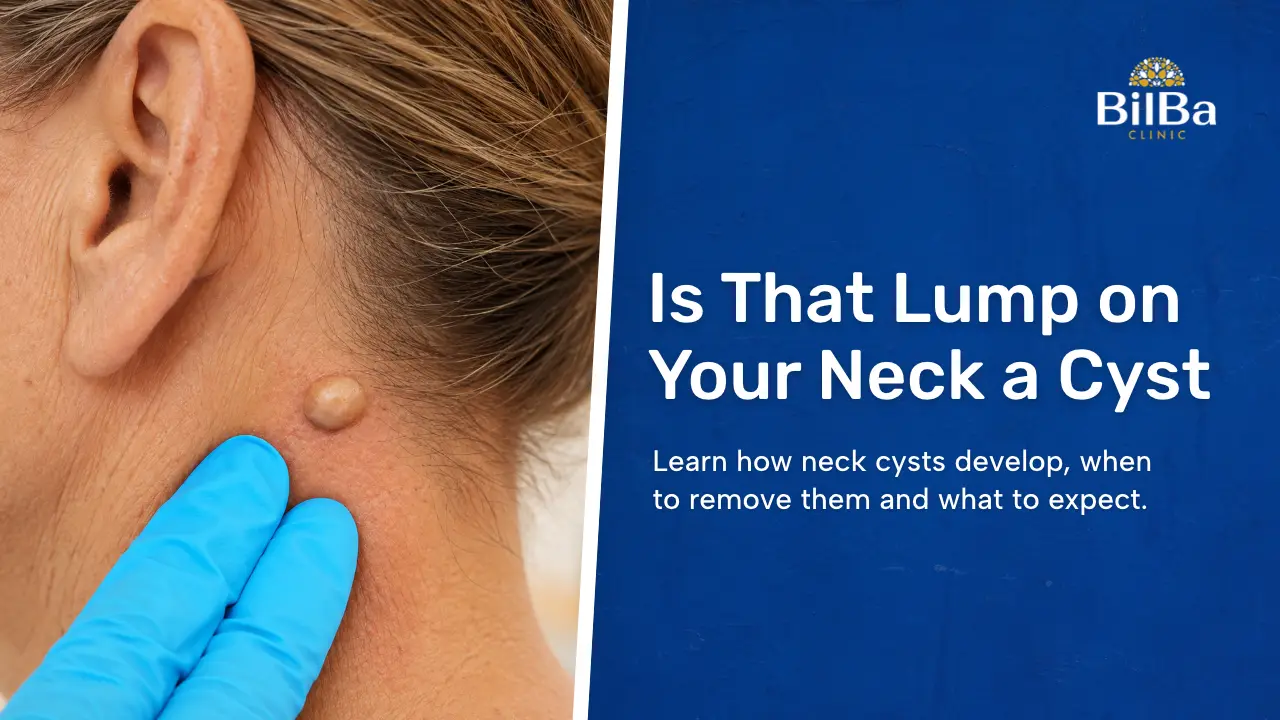
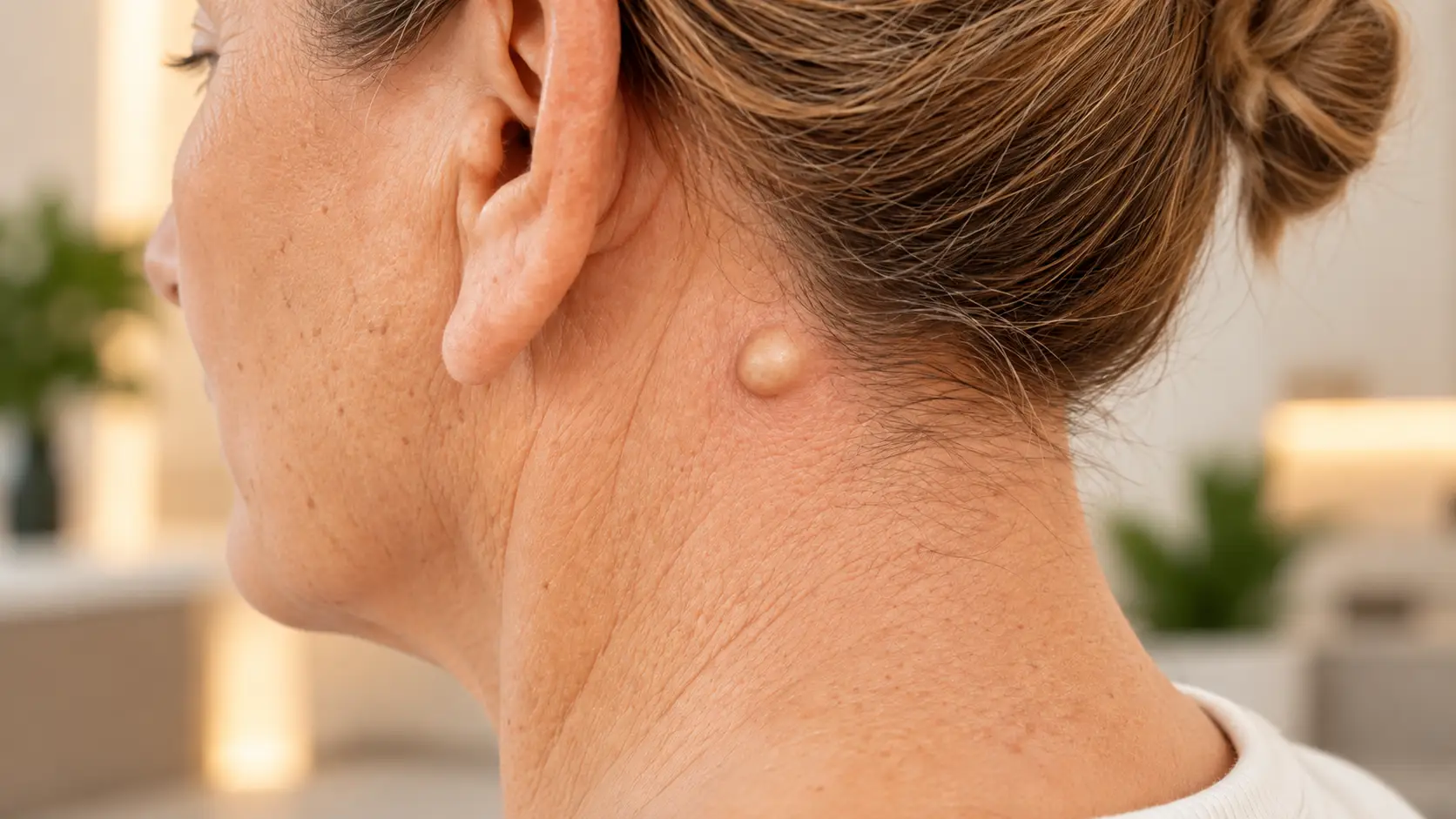
A sebaceous cyst on neck skin usually shows up as a small, round lump just under the surface, sometimes with a tiny dark spot at its centre. Most are harmless and grow slowly over months or years, though the neck is a slightly more delicate area to treat than somewhere like the back or thigh, given how close it sits to nerves and blood vessels. Removal at a private clinic typically starts from around £900, with the final figure depending on the cyst’s size and exact position. This guide walks through what these cysts actually are, where they tend to appear on the neck, how removal works, and what it costs.
A quick way to tell what you’re dealing with before booking anything:
- A cyst usually feels firm and round, sometimes with a tiny central dark spot
- A lipoma feels soft, doughy, and slides easily under your finger
- A swollen lymph node tends to feel tender and often follows a recent cold or infection
We’ve covered how a cyst differs from a fatty lump in more detail elsewhere, including how a professional examination settles the question when the feel alone isn’t conclusive.
How Much Does Cyst Removal Cost at Bilba Clinic
How much does cyst removal cost is one of the first questions most patients ask, and fairly enough, since prices vary quite a bit across London depending on the clinic, the cyst’s size, and how complex the removal is. Cysts on the neck can sit close to nerves and blood vessels, which is part of why removal here is often priced slightly higher than a cyst somewhere like the back or leg. At Bilba Clinic, excision of a sebaceous cyst starts from £900, though we’d always rather give you an accurate figure after a proper assessment than a flat number that might not reflect your specific cyst. Our current pricing page has the exact, up to date figures for minor skin surgery and cyst removal.
A few things typically shape the final figure. A larger cyst usually takes longer to remove and close properly, which affects the price. A cyst that’s already infected may need treating first before removal is even possible, adding a separate step. And a cyst sitting especially close to major nerves or blood vessels in the neck may need a more careful, deliberate technique than one in a simpler spot, which is reflected in the cost too. None of this is meant to make the figure feel vague, it’s simply why we’d rather examine yours properly before quoting a final number.
It’s also worth checking what’s actually included in any quote you’re given, whether that’s a competitor’s or ours. Consultation, the procedure itself, dressings, and a follow-up check are usually bundled together at reputable clinics, but it’s a fair question to ask upfront rather than assuming, since an unusually low headline price sometimes excludes aftercare that ends up as an extra cost later.
Where Sebaceous Cysts on Neck Most Often Show Up
Cysts can develop almost anywhere on the neck, and where one sits often shapes how it’s noticed and, sometimes, how removal is approached.
What Sebaceous Cysts on Back of Neck Usually Look Like
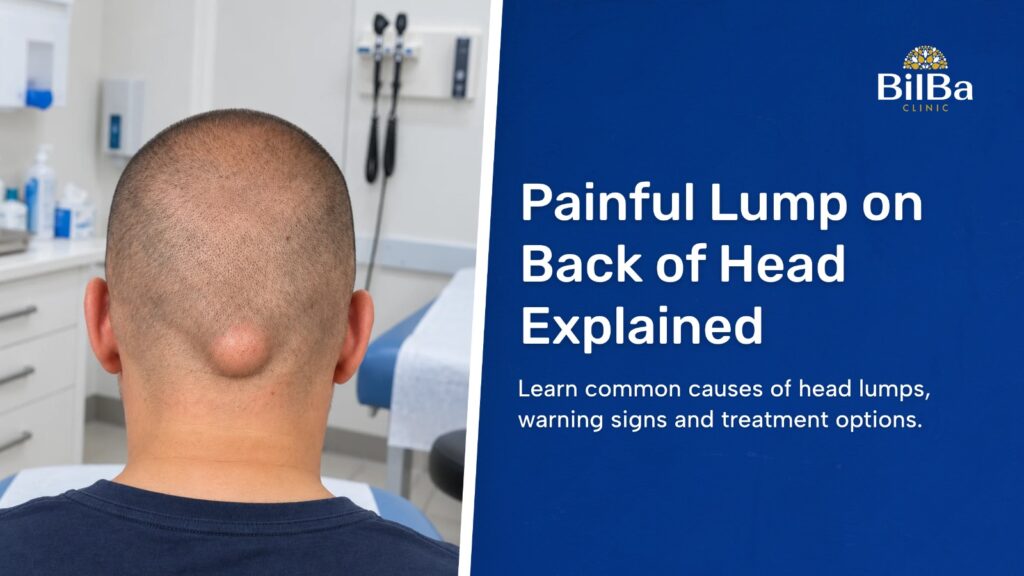
Sebaceous cysts on back of neck are among the most common we see, partly because this area sits under constant friction from collars, hair, and hands reaching up to check the spot. They tend to feel round and firm, moving slightly under the skin rather than being fixed to it. Many patients only notice one after feeling it during a haircut or while adjusting a shirt collar, since the back of the neck is hard to see clearly in a mirror.
Because this is such a common spot for cysts generally, it’s also where we most often see one that’s been left alone for years without causing any real problem. That’s usually fine, but a cyst here that starts growing, becomes tender, or changes in any noticeable way is worth the same proper assessment as a newer one, rather than being written off simply because it’s been there a while.
Could It Be a Sebaceous Cyst on Front of Neck Instead
A sebaceous cyst on front of neck is less common but not rare, and it’s worth a slightly more careful look before assuming that’s what it is. The front of the neck also houses the thyroid gland and several lymph nodes, so a lump here deserves proper examination to rule out those structures rather than assuming it’s an ordinary skin cyst. A true sebaceous cyst sits within the skin itself and moves with it when you swallow or turn your head, while a thyroid nodule sits deeper and tends to move up and down slightly as you swallow. This is exactly the kind of distinction that’s much easier for a clinician to confirm on examination than to work out from how it feels alone, and it’s one of the main reasons we’d always recommend a proper look rather than self-diagnosing a lump in this particular spot.
A Sebaceous Cyst Behind Neck Can Feel Slightly Different
A sebaceous cyst behind neck, closer to the nape and hairline, often sits in an area with thicker skin and more hair coverage, which can make it feel slightly firmer to the touch than cysts elsewhere. It’s also more prone to catching on hairbrushes or hair ties, which is one reason people in this position tend to seek removal sooner rather than living with it. Because this spot is harder to see directly, it’s also common for a cyst here to be noticed by someone else first, a hairdresser, partner, or family member, before the person themselves feels it. If someone has pointed one out to you, that’s a perfectly good reason to get it looked at properly, even if you can’t easily check it yourself in a mirror.
Why a Sebaceous Cyst on Neck Hairline Gets Noticed First
A sebaceous cyst on neck hairline is usually spotted quickly simply because it’s in a place hands and combs pass over constantly. Repeated friction here can occasionally irritate the cyst, making it slightly tender even without a true infection, so if yours is at the hairline and feels more sensitive than expected, that’s often the reason rather than a sign something more serious is happening. It’s also worth being gentle when brushing or styling hair over the area, since repeated catching can occasionally cause small skin breaks that raise the chance of irritation turning into a genuine infection.
If you regularly tie your hair back or wear headwear that sits directly over the hairline, it’s worth mentioning this at your assessment, since it can factor into how we advise you to care for the area both before and after removal.
When a Large Sebaceous Cyst on Neck Needs a Closer Look
A large sebaceous cyst on neck, generally anything approaching a couple of centimetres or more, is more likely to cause discomfort from clothing or jewellery rubbing against it, and can be more visible under a collar. Size alone doesn’t make a cyst dangerous, but a larger one is more likely to be recommended for removal simply because of the practical disruption it causes day to day, rather than sitting and monitoring it indefinitely. Larger cysts can also take slightly longer to heal after removal, simply because the incision needed to remove the sac cleanly tends to be a little bigger, though this rarely changes the overall recovery timeline by more than a few extra days.
What Sebaceous Cyst on Neck Removal Actually Involves
Sebaceous cyst on neck removal is a minor surgical procedure carried out under local anaesthetic, so you’re awake but the area is fully numbed throughout. We make a small incision, remove the cyst along with its surrounding sac, since leaving any of the sac behind is the most common reason cysts return, and close the area with either dissolvable stitches or a small dressing depending on size. Most appointments, including consultation and the procedure itself, are completed within a single visit.
Recovery from sebaceous cyst on neck removal is usually quick. Most people are back to normal daily activities the same day, though we’d suggest avoiding anything that puts direct pressure on the area, like a tight collar or backpack strap, for a few days while it settles. Mild swelling and tenderness around the site for a week or so is normal, and a small scar is expected once healing is complete, usually fading considerably over the following months. If stitches are used, we’ll let you know whether they’re the dissolvable kind or whether a follow-up appointment to remove them is needed.
Keeping the area clean and dry for the first day or two, then following whatever specific aftercare advice you’re given, makes a real difference to how the wound heals. We’ll also send removed tissue for testing where appropriate, mainly as standard good practice rather than because sebaceous cysts are commonly anything other than benign, and we’ll let you know the result once it’s back.
What Makes Sebaceous Cyst on Back of Neck Treatment Slightly Different
Sebaceous cyst on back of neck treatment is generally uncomplicated, since this area has more give in the skin and fewer structures to work carefully around compared with the front of the neck. Even so, the neck’s proximity to nerves running toward the shoulder and scalp means we still take a more deliberate, careful approach here than we might for a cyst on, say, your back or thigh, which is part of why neck removal is priced slightly differently to a cyst somewhere less sensitive. Hair coverage in this area can also make the incision easier to hide as it heals, something patients often ask about before going ahead, and we’re happy to talk through positioning and scarring expectations at the assessment itself rather than leaving it as an afterthought.
Signs an Infected Sebaceous Cyst on Neck Needs Urgent Care
An infected sebaceous cyst on neck usually becomes red, warm to the touch, and noticeably more painful than the dull ache or pressure of an uninfected cyst, sometimes alongside a build-up of pus underneath the skin and a general feeling of being slightly unwell if the infection is more advanced. According to the NHS, you should get an urgent GP appointment or contact NHS 111 if a lump on your skin becomes sore or red, since this can signal infection that needs antibiotics or drainage rather than routine removal. Redness can be harder to spot on black or brown skin, so warmth, swelling, and pain are just as important to watch for as visible colour change.
A few factors make you somewhat more likely to develop cysts in general, according to NHS guidance:
- A family history of cysts, particularly in close relatives
- Being an adult, especially in middle age
- Being a woman
- Having a history of acne
It’s worth repeating the NHS’s clear advice here too: never squeeze a cyst yourself. Doing so risks pushing the contents deeper, causing infection, or spreading an infection that’s already present. We’ve written more generally about when a lump under the skin needs checking if you’re not yet sure whether what you’re feeling is a cyst at all.
If a cyst does become infected, we won’t usually remove it there and then. The area often needs a short course of antibiotics first to settle the infection, and sometimes the fluid needs draining separately before the cyst itself is safe to excise properly. Trying to remove an actively infected cyst carries a higher risk of the infection spreading or the wound healing poorly, so a short delay to treat the infection first tends to give a better outcome than rushing straight to surgery.
Choosing a Private Clinic for Sebaceous Cyst on Neck Removal in London
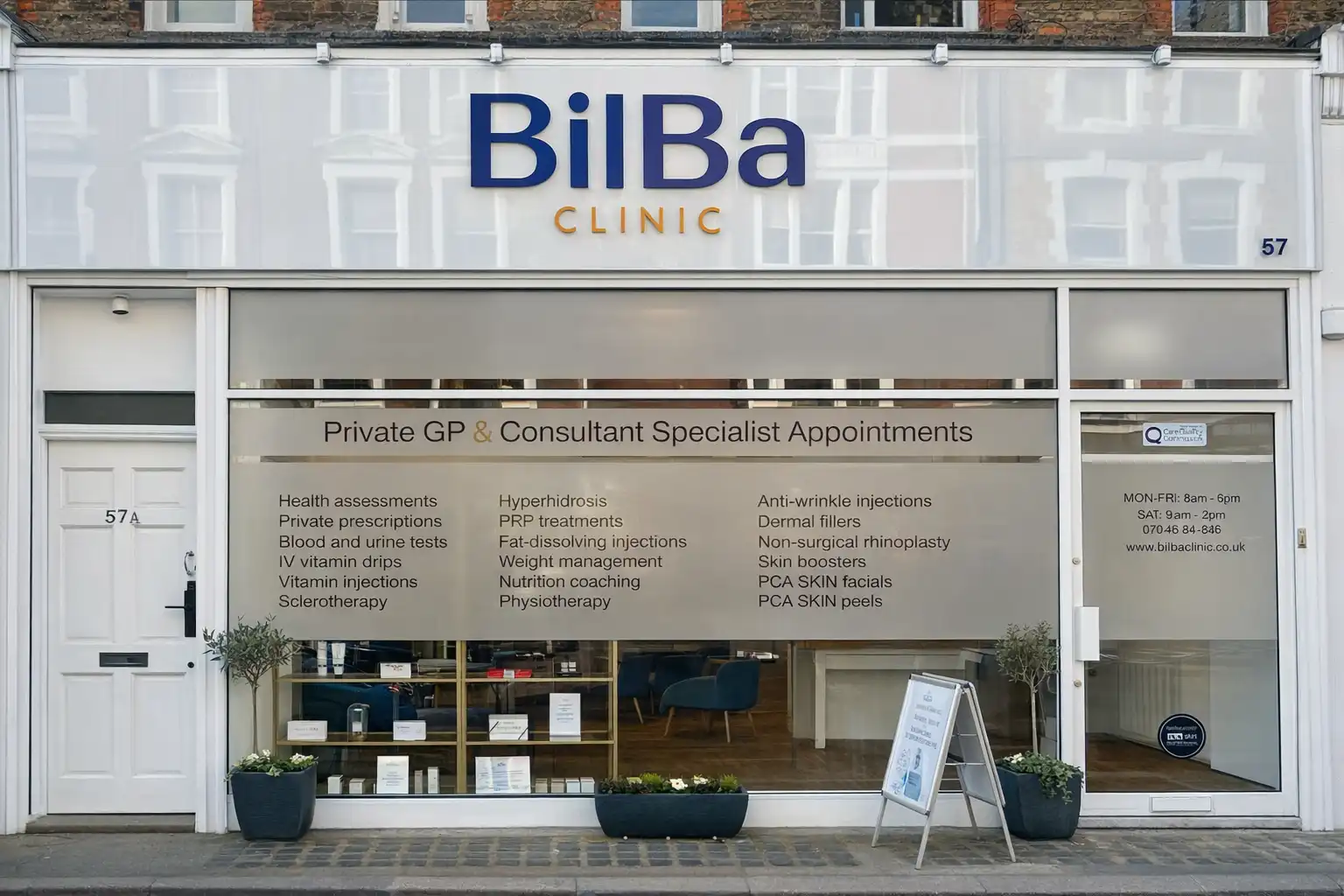
Bilba Clinic is a CQC-registered private clinic in Fitzrovia, London, offering medical, aesthetic and wellbeing care from experienced clinicians. We’re recognised by major insurers including Bupa, Vitality and WPA, alongside patients who prefer to pay for their consultation directly.
When you’re choosing where to have a cyst removed, particularly on the neck, it’s worth asking whether the clinician examines the area properly before recommending removal, whether they explain what’s involved in plain terms, and whether aftercare guidance is actually clear rather than an afterthought. Given how close some neck cysts sit to nerves and blood vessels, it’s also worth asking directly about the clinician’s experience with this specific area rather than assuming all minor skin surgery is interchangeable. At Bilba Clinic, every cyst removal starts with a proper clinical assessment, and we’ll always talk you through what we find and what the procedure will actually involve before going ahead.
No GP referral is needed to book a consultation with us, and same-day appointments are often available, though it’s worth calling ahead to check for your specific dates. Whether you’ve noticed a single small cyst or something that’s been bothering you for a while, a proper assessment is the quickest way to know exactly what you’re dealing with and what your options actually are.
Book a consultation to get started, or contact us if you’d rather talk it through first.
- Address: 57 Great Titchfield Street, Fitzrovia, London W1W 7PN
- Phone: +44 (0) 7858 848 244
- Email: info@bilbaclinic.co.uk
Opening hours:
- Monday to Friday: 10:00 to 18:00
- Saturday: 12:00 to 17:00
- Sunday: Closed
Frequently Asked Questions
Will a Cyst on Neck Go Away on Its Own?
Sometimes, yes, especially if it’s small and not causing any irritation, a cyst on neck skin can shrink or clear without treatment. Many cysts simply stay the same size indefinitely, and neither outcome means anything is wrong. If yours is growing, becoming painful, or affecting how your collar or hair sits, that’s usually the point where removal starts to make more sense than waiting. There’s no reliable way to predict in advance which cysts will resolve on their own and which won’t, so monitoring for change over a few weeks is a reasonable approach if it isn’t bothering you.
What Does Lump on Back of Neck Mean, Exactly?
A lump on back of neck most often means a cyst or a lipoma, both of which are common, harmless growths that develop under the skin. It can occasionally mean a swollen lymph node, especially if you’ve had a recent infection nearby, or less commonly something else that’s worth a clinician confirming rather than guessing at from how it feels alone. A proper examination, sometimes helped by an ultrasound scan, is the reliable way to know for certain what’s causing yours. Age, how long the lump has been there, and whether it’s changed recently all factor into how a clinician reads it, so bringing a rough timeline to your appointment does help speed up the assessment.
What Causes Bump on Back of Neck to Keep Coming Back?
What causes bump on back of neck to return after it seems to have gone is usually incomplete removal of the original cyst sac, either from squeezing it at home or from a previous procedure that didn’t remove the whole capsule. Cysts can also simply form again nearby if you’re someone who’s naturally prone to them, which isn’t related to how the first one was treated. Proper surgical excision, taking the sac out along with the cyst, gives the best chance of it not returning in that exact spot, though no removal method can guarantee a new, separate cyst won’t ever develop somewhere else on the neck in future.
A Lump on Back of Neck Hairline for Years, Should You Worry?
Not usually. A lump on back of neck hairline for years that hasn’t changed in size, colour, or sensitivity is very likely to still be a benign cyst or lipoma, the same as when it first appeared. What matters more than how long it’s been there is whether anything about it has recently changed, since a sudden shift in a long-standing lump is a better reason to get it checked than its age alone. Plenty of patients come to us wanting one removed simply because it’s finally become annoying or noticeable, not because anything about it has changed medically, and that’s a perfectly reasonable reason to book removal on its own.
How to Fix Lump on Back of Neck the Right Way
How to fix lump on back of neck properly means having it assessed and, if appropriate, surgically removed under local anaesthetic, rather than attempting to squeeze, drain, or otherwise treat it yourself at home. Home attempts at removal carry a real risk of infection and rarely take out the full cyst sac, which is usually why the lump returns. A short clinical procedure, carried out by someone trained to remove the sac cleanly, gives a far more reliable and lasting result than anything achievable safely at home, however tempting a quick fix might seem.