
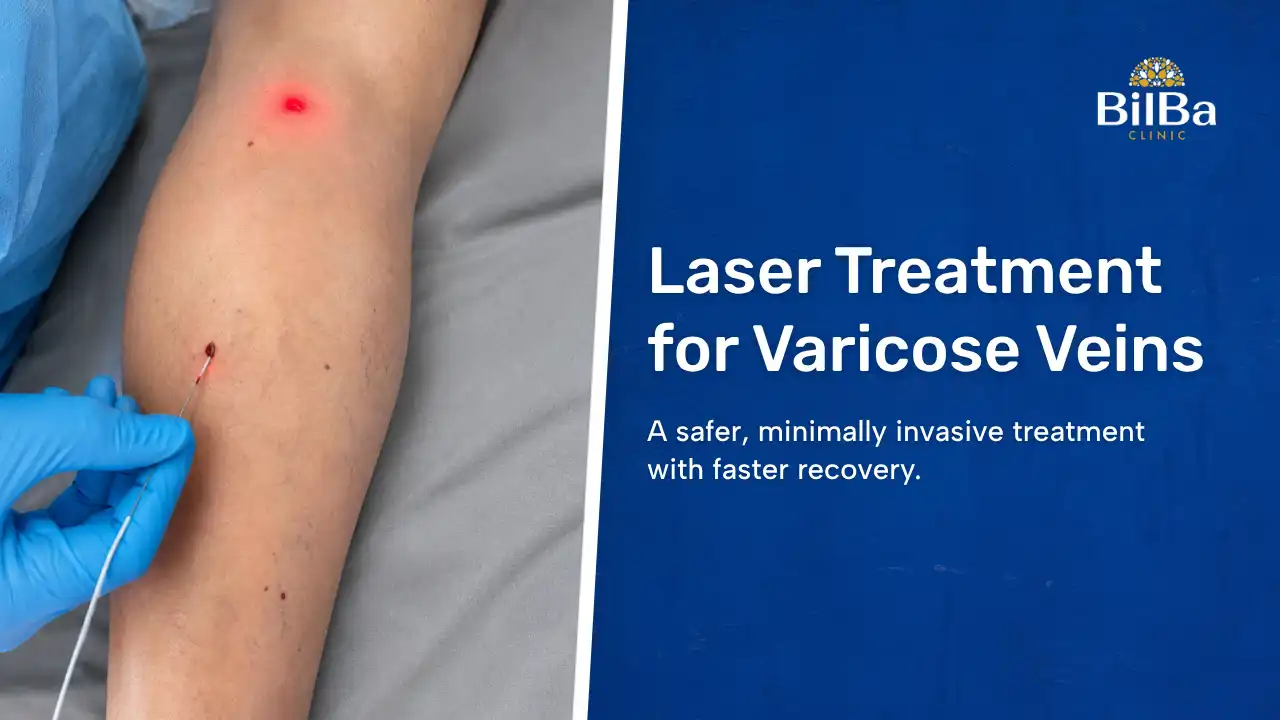
If you’re asking whether endovascular laser ablation for varicose veins is safe, the short answer is yes for most patients. It’s one of the most established and well studied vein ablation procedures available today, sometimes searched as endovascular laser treatment for varicose veins as well, and it’s what we offer here at Bilba Clinic under its correct clinical name, endovenous laser ablation for varicose veins, also written as endovenous laser treatment varicose veins, often shortened to EVLA.
The terms endovascular and endovenous get used interchangeably in casual searches, but endovenous is the medically accurate term, since the treatment works inside a vein rather than an artery. This guide covers what the procedure involves, how safe it is, what recovery looks like, and how it compares with other treatments we offer.
What Are Varicose Veins and Why They Develop
Varicose veins form when the small valves inside your leg veins stop working properly, letting blood pool instead of flowing back up toward your heart. Over time this pressure stretches and twists the vein, giving it that bulging, rope like appearance under the skin. They’re extremely common, often more of a cosmetic concern, though left untreated they can cause real discomfort and slowly get worse.
Varicose Vein Early Signs You Shouldn’t Ignore
The varicose vein early signs are easy to dismiss because they rarely start with visible bulging veins. According to NHS guidance, they often develop gradually and can be present long before the veins themselves become obviously enlarged, something we cover in more depth in our early signs guide. Common early signs include:
- A heaviness or ache in the legs by the end of the day
- Mild ankle swelling or cramping at night
- Small thread like veins visible on the surface
- Skin over a vein feeling warm, itchy, or slightly discoloured
If a vein ever feels hard, hot, or painful to touch, or if you notice skin changes near the ankle that aren’t healing, that’s worth getting checked promptly rather than waiting.
How Are Varicose Veins Treated Today
How are varicose veins treated today looks quite different to a couple of decades ago. Vein stripping under general anaesthetic used to be the standard approach, but it’s largely been replaced by minimally invasive varicose vein treatment options, walk in walk out procedures done under local anaesthetic instead. The varicose vein new treatment options available now, endovenous laser ablation, radiofrequency ablation, and foam sclerotherapy, all work by closing the faulty vein from the inside rather than physically removing it through surgery. At Bilba Clinic we offer endovenous laser ablation and foam sclerotherapy, choosing between them based on the size, location, and pattern of the veins involved.
Varicose Vein Removal by Laser, What It Actually Involves
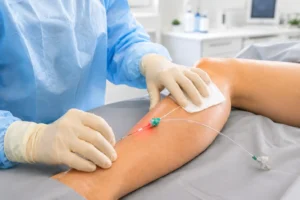
Varicose vein removal by laser, more precisely endovenous laser ablation, works by sealing the faulty vein shut rather than cutting it out. A thin catheter carrying a laser fibre is guided into the vein under ultrasound, and as it’s slowly withdrawn, heat from the laser causes the vein wall to collapse and seal closed. Blood then naturally reroutes through healthier nearby veins. Laser for varicose vein removal is done under local anaesthetic, so you’re awake and comfortable throughout, and the whole procedure typically takes under an hour.
Endovenous Laser Treatment (EVLT) Explained Step by Step
Endovenous laser treatment, sometimes shortened to EVLT, follows a consistent sequence. First we numb the area with local anaesthetic injected under ultrasound guidance, the core of ultrasound guided vein treatment that keeps the process precise. A fine catheter is then inserted through a small puncture point, most commonly for saphenous vein ablation since the great and small saphenous veins are the ones most often affected. Once positioned, the laser delivers heat that seals the vein closed as the fibre is withdrawn, thermal ablation varicose veins specialists rely on most often, alongside radiofrequency energy as a less common alternative.
Varicose vein laser surgery is a phrase people sometimes use for this, though it isn’t surgery in the traditional sense since there’s no incision or general anaesthetic involved. This is the same EVLA varicose veins treatment protocol used across most private and NHS vascular clinics in the UK today. You’ll feel some pressure and warmth, but the anaesthetic means it shouldn’t be painful, and most people are up and walking within minutes of the procedure ending.
Is Endovascular Laser Ablation for Varicose Veins Safe
Is endovascular laser ablation for varicose veins safe. Yes, for the vast majority of appropriately assessed patients, and there’s a large body of clinical research behind that answer. Studies consistently show occlusion, meaning the vein staying successfully sealed, in around 95% of cases, a rate that’s comparable to surgical vein stripping and better than sclerotherapy over the long term. That said, no procedure is entirely without risk, and being upfront about the endovenous laser treatment risks is part of doing this properly.
Laser ablation varicose veins complications are uncommon but real, they include bruising, temporary tenderness along the treated vein, and in a small number of cases, skin changes in colour or texture near the site.
Endovenous Laser Treatment Side Effects, What the Research Shows
The most commonly reported endovenous laser treatment side effects are minor and usually settle within one to two weeks:
- Bruising along the treated vein
- Mild swelling
- A pulling or tight sensation as the vein heals
Varicose vein laser treatment side effects involving infection or nerve irritation are less common, affecting a small minority of patients. The more serious side effects of endovascular laser ablation to be aware of centre on deep vein thrombosis, a blood clot forming in a deeper vein, which research puts at around 2% of cases. It’s uncommon, but it’s exactly why a proper consultation and, where appropriate, a follow up scan matters, rather than treating this as a purely cosmetic, risk free procedure.
Is Endovenous Laser Treatment Painful
Is endovenous laser treatment painful is one of our most asked questions, and most patients feel very little during the procedure itself. Local anaesthetic numbs the area, so is laser ablation for varicose veins painful in the moment, not typically, though you may notice pressure or a mild pulling sensation. Does laser treatment for varicose veins hurt afterward is a different question, some tenderness and bruising for a week or two is normal, manageable with simple over the counter pain relief.
Laser Varicose Vein Recovery, What to Expect
Laser varicose vein recovery is one of the real advantages of this treatment over older surgical approaches. Varicose vein removal and recovery used to mean weeks off your feet after vein stripping surgery, but with EVLA most people are walking within minutes and back to normal daily activities, including work, within a day or two. Recovery time after laser ablation varicose veins does vary depending on how many veins were treated and your own healing pace, but strenuous exercise and heavy lifting are usually best avoided for around two weeks while the vein fully seals and settles.
After Endovenous Laser Ablation, Your First Few Days
After endovenous laser ablation, we’ll usually recommend wearing a compression stocking for around one week, since do you need compression stockings after EVLA is a common question and the honest answer is yes for most patients, it helps reduce swelling and supports the vein as it heals. Some leg pain after endovenous laser ablation in the first few days is normal, typically described as tightness or aching along the treated vein rather than sharp pain, and it should ease steadily rather than worsen.
Gentle walking is actively encouraged from the first day, it helps circulation and speeds recovery, while sitting or standing still for long stretches is best kept to a minimum during this period.
Endovenous Laser Ablation Results and Success Rate
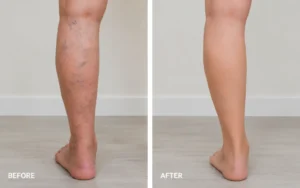
Endovenous laser ablation results are generally very good, with most patients seeing visible veins, aching, and swelling reduce within a few weeks as the body reabsorbs the treated vein. Varicose veins laser treatment success rate figures from clinical studies sit around 95%, and the endovascular laser ablation success rate holds up well over years, not just months. So can you get rid of varicose veins with laser, in most cases yes, the treated vein stays sealed in the large majority of patients long term.
What we can’t promise is that new varicose veins won’t ever develop elsewhere, can varicose veins come back after laser treatment is really a question about new veins forming over time rather than the treated one reopening, and that’s an honest possibility worth knowing about rather than something we’d gloss over.
Endovenous Laser Ablation vs Sclerotherapy, Which Suits You
Endovenous laser ablation vs sclerotherapy is a genuine decision many of our patients face, since we offer both here at Bilba Clinic. Foam sclerotherapy involves injecting a solution that scars and closes the vein, done without a laser or catheter, suiting smaller or more superficial veins well, an approach we go into more detail on in our sclerotherapy guide. Endovenous laser ablation is generally the stronger option for larger, deeper trunk veins like the great saphenous vein, with higher long term closure rates.
As a vein stripping alternative, both sit well ahead of traditional surgery in terms of recovery time, though laser ablation edges ahead of sclerotherapy specifically on long term technical success. Radiofrequency ablation vs laser ablation veins is a similar comparison you may come across, using a different heat source on the same closure principle, though it isn’t something we currently offer here.
Is EVLA Better than Vein Stripping
Is EVLA better than vein stripping depends on what you’re weighing up. Clinically, long term studies show the two perform similarly well in terms of keeping the vein closed. Where EVLA clearly wins is recovery, no general anaesthetic, no surgical incision, and a return to normal activity measured in days rather than weeks. For most people considering treatment today, that difference alone makes EVLA the more practical choice, though vein stripping still has a role in certain more complex cases.
Varicose Vein Laser Treatment Price at Bilba Clinic
Varicose vein laser treatment price is one of the first things people want to know. So how much does endovenous laser treatment cost with us, our Endovenous Laser Ablation (EVLA) starts from £2,500, covering the procedure under local anaesthetic. How much is private varicose vein removal more broadly across the UK varies by clinic and how many veins need treating, so varicose vein treatment cost UK figures elsewhere aren’t always directly comparable.
Laser treatment for varicose veins cost, and EVLA cost London specifically, tends to sit toward the higher end nationally given the cost of running a clinic here in Fitzrovia, though we think the assessment and aftercare that comes with it justifies that. How much does varicose vein laser treatment cost UK wide depends on the clinic, so for current figures, our pricing page has the full breakdown.
Book Your Varicose Vein Consultation with Us
If your legs have been aching, swelling, or showing the early signs we’ve covered above, it’s worth booking a proper assessment rather than waiting to see if things settle on their own. As a private varicose vein clinic London patients trust for simple, no referral needed access, we offer both endovenous laser ablation and varicose vein non surgical treatment options like foam sclerotherapy, so you’re not locked into one approach before you’ve even been assessed.
Whether you want varicose vein removal London wide, the best varicose vein treatment London has to offer, or specifically varicose vein treatment Fitzrovia based and close to home, you can book varicose vein consultation London slots with us directly online, or get in touch first if you’d rather talk through your symptoms. We can also give you access to our wider medical services if anything else needs looking at during the same visit.
Your Endovascular Laser Ablation Questions Answered
Is endovenous laser ablation safe for everyone?
Not everyone is a suitable candidate. People who are pregnant, unable to walk normally, or who have certain clotting disorders are usually not, which is exactly what your consultation is for.
How long does endovascular laser ablation take?
Most single vein treatments take under an hour, and you’ll be walking again within minutes of finishing.
Do I need time off work?
Most patients return to desk based work within a day or two, though we’d advise avoiding heavy lifting or intense exercise for around two weeks.
Will I need more than one treatment?
Some patients with multiple affected veins need a short course of sessions rather than a single visit, which we’ll map out clearly during your consultation.
Is this treatment available on the NHS?
Access varies by local commissioning criteria, and many NHS trusts only fund treatment where there are complications like ulcers or skin changes. We offer it privately without those restrictions, so it’s worth discussing what’s right for your specific situation.