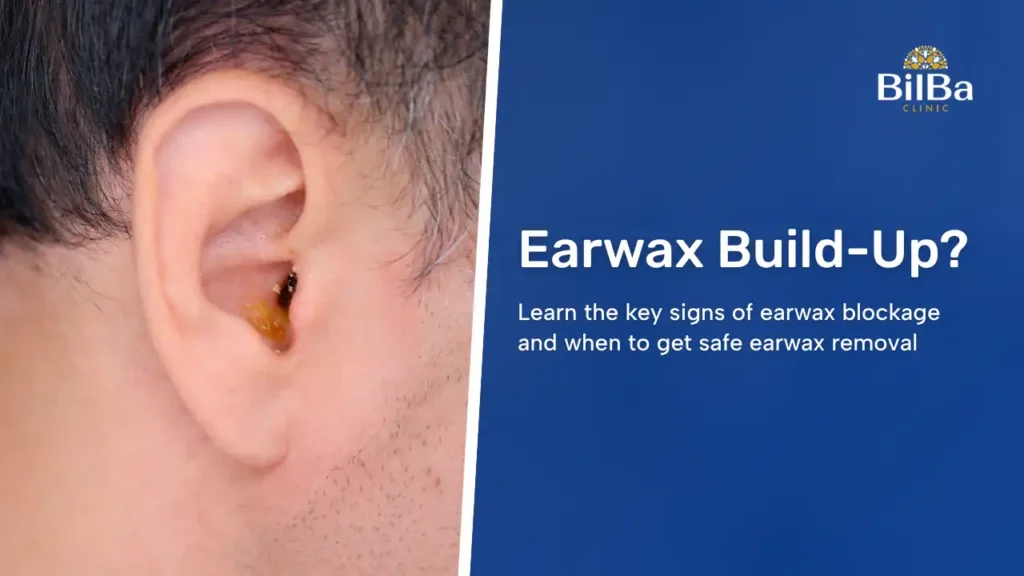
Waking up with one ear that sounds muffled, or noticing your own voice sounds strangely loud, is often put down to a cold or too much noise the night before. Often it’s neither. When wax has built up and hardened inside the ear canal, doctors call it cerumen impaction, cerumen simply being the medical word for earwax. It’s common, usually harmless, and easy to treat once you know what’s happening and what it costs to get sorted properly.
This guide answers the cost question first, then walks through what cerumen impaction is, why it happens, and how we treat it at Bilba Clinic in London.
The Cost of Cerumen Impaction Treatment
Cerumen impaction treatment at Bilba Clinic starts from £80 for one ear and £120 for both, covering a full clinical assessment and microsuction on the same visit. Prices can change, so check our pricing page for the exact current figures before booking. Most people are seen and treated in a single appointment, with no GP referral needed.
Treatment options range from softening drops used at home to microsuction carried out by a trained clinician, and which one suits you depends on how compacted the wax has become and whether it’s affecting your hearing. Mild build-up sometimes clears with a few days of drops. Once wax has hardened and packed against the eardrum, home methods rarely shift it, and a proper clinical assessment becomes the more reliable next step.
At Bilba Clinic, every appointment begins with an otoscope examination so we can see how much wax is present and check the eardrum is healthy, before deciding whether microsuction, irrigation, or a short course of drops first is the right approach for you.

What Earwax Impaction Actually Means
Earwax impaction and cerumen impaction describe exactly the same condition, cerumen is simply the clinical name for earwax. It happens when wax builds up faster than your ear can clear it naturally, hardens, and blocks part or all of the ear canal, affecting hearing and comfort until it’s removed.
Your ears produce earwax constantly to trap dust and protect the skin lining the canal. In most people, old wax works its way out on its own through jaw movement and normal skin turnover, and no cleaning is needed at all. Problems start only when that natural clearing process can’t keep up, whether because of how your ear canal is shaped, how much wax you produce, or habits like using cotton buds that push wax deeper rather than out. It’s particularly common in older adults, regular hearing aid users, and people who swim or wear earplugs often, since each of these interferes with clearing in a different way.
Cerumen Impaction Ear Explained
Cerumen impaction ear symptoms centre on the ear canal itself, the narrow passage running from the outer ear to the eardrum. Wax normally sits harmlessly in the outer third of this canal. When it’s pushed deeper, or builds up faster than it can clear, it can press directly against the eardrum and cause the blocked, muffled feeling most people describe.
This is also why cotton buds make things worse rather than better. They clear the very outer part of the canal while pushing the rest of the wax further in, closer to the eardrum, where it’s harder to reach and more likely to become impacted.
What Does Impacted Earwax Mean?
What does impacted earwax mean in practice? It means wax has hardened and packed tightly enough inside the ear canal that it can’t clear on its own, unlike ordinary earwax build-up, which often resolves without any treatment. Impacted wax typically needs either several days of softening drops or a short clinical procedure to remove it fully.
The distinction matters for how you treat it. Mild, loose wax often just needs time and perhaps a few drops. Wax that has become fully impacted rarely responds the same way, and repeated attempts at home can end up making the blockage more compact rather than clearing it.

Common Earwax Build Up Symptoms
Earwax build up symptoms are often mild at first, which is part of why people leave them unchecked for weeks. According to NHS guidance on earwax build-up, common signs include:
- Hearing loss, where sound feels muffled or distant
- Earache or a sensation of pressure and fullness
- Ringing or buzzing in the ear, known as tinnitus
- Vertigo, a spinning or dizzy, sick feeling
Not everyone gets every symptom, and how noticeable they are usually depends on how much wax has built up and whether one or both ears are affected. It’s also common for symptoms to start in one ear before the other, since one ear often produces more wax or has a narrower canal than the other.
How Wax Impaction in Ear Symptoms Differ
Once build-up progresses into true impaction, the pattern above tends to shift. Wax impaction in ear symptoms feel more constant, since impacted wax presses continuously against the eardrum rather than sitting loosely further out in the canal. A feeling of fullness that never quite lifts, even after yawning or swallowing, is a fairly reliable sign that wax has become properly lodged rather than just present in smaller amounts.
What Earwax Impaction Pain Feels Like
Pain is the symptom people often worry about most, and it’s worth knowing what to expect. Earwax impaction pain usually feels like a dull ache or steady pressure rather than a sharp, sudden pain, and tends to worsen when chewing, yawning, or lying on the affected side. If pain comes with discharge, a fever, or sudden severe pain rather than a dull ache, that points more toward an ear infection than simple wax impaction, and is worth having checked by a GP rather than waiting for a routine earwax appointment.
What Causes Cerumen Impaction in Adults
What causes cerumen impaction usually comes down to a mismatch between how much wax your ears produce and how well they clear it naturally. NHS guidance lists several contributing factors, including narrow or oddly shaped ear canals, extra hair inside the canal, skin conditions affecting the scalp or ear, and inflammation such as otitis externa, commonly known as swimmer’s ear.
Common contributing factors include:
- Narrow or damaged ear canals
- Excess hair inside the ear canal
- Skin conditions affecting the scalp or ear
- Otitis externa, or swimmer’s ear
- Regular use of hearing aids, earphones, or earplugs, which can push wax deeper instead of letting it clear naturally
Most people have more than one of these factors at once, which is part of why some people need wax removed every few months while others never have a problem at all.
What Cerumen Impaction May Be Caused By
Beyond anatomy, cerumen impaction may be caused by everyday habits just as much. Cotton buds are the most common culprit, since pushing them into the canal packs wax against the eardrum rather than removing it. Frequent earphone or hearing aid use has a similar effect over time, gradually compacting wax that would otherwise have cleared on its own.
Cerumen Impaction Conductive Hearing Loss Explained
Cerumen impaction conductive hearing loss happens because a blockage in the ear canal physically stops sound waves reaching the eardrum properly. Conductive hearing loss simply means the problem lies in how sound travels to the inner ear, rather than in the nerve or inner-ear structures themselves, which is why it usually improves once the wax causing it is removed.
This type of hearing loss is generally temporary and reversible, unlike sensorineural hearing loss caused by damage to the inner ear or hearing nerve. Hearing that fades gradually shouldn’t be assumed to be earwax without a proper look though, since the same symptom can point to several different causes. If it hasn’t improved within a few days of having wax removed, mention this to your clinician rather than assuming nothing more can be done.

Earwax Build Up Treatment Options in London
Earwax build up treatment ranges from simple home care to a short clinical procedure, and which is right for you depends on how compacted the wax has become. Softening drops, such as olive or almond oil, are usually the first step for mild build-up, while impacted wax that hasn’t cleared after this generally needs removing by a trained clinician instead.
For home care, a few drops in the affected ear while lying on your side, left for several minutes before sitting back up, repeated a few times a day for around a week, is enough to soften and shift milder build-up in many people. Proprietary softening sprays from a pharmacy work in a similar way, and a pharmacist can advise which suits you if you have sensitive skin or a history of ear infections. If your ear still feels blocked after a week or two, or feels completely blocked from the start, that usually means the wax has become impacted rather than simply excessive.
Avoid cotton buds and ear candles altogether. Cotton buds push wax deeper, and ear candles carry a real burn risk with no good evidence they clear wax at all.
How to Remove Impacted Cerumen Safely
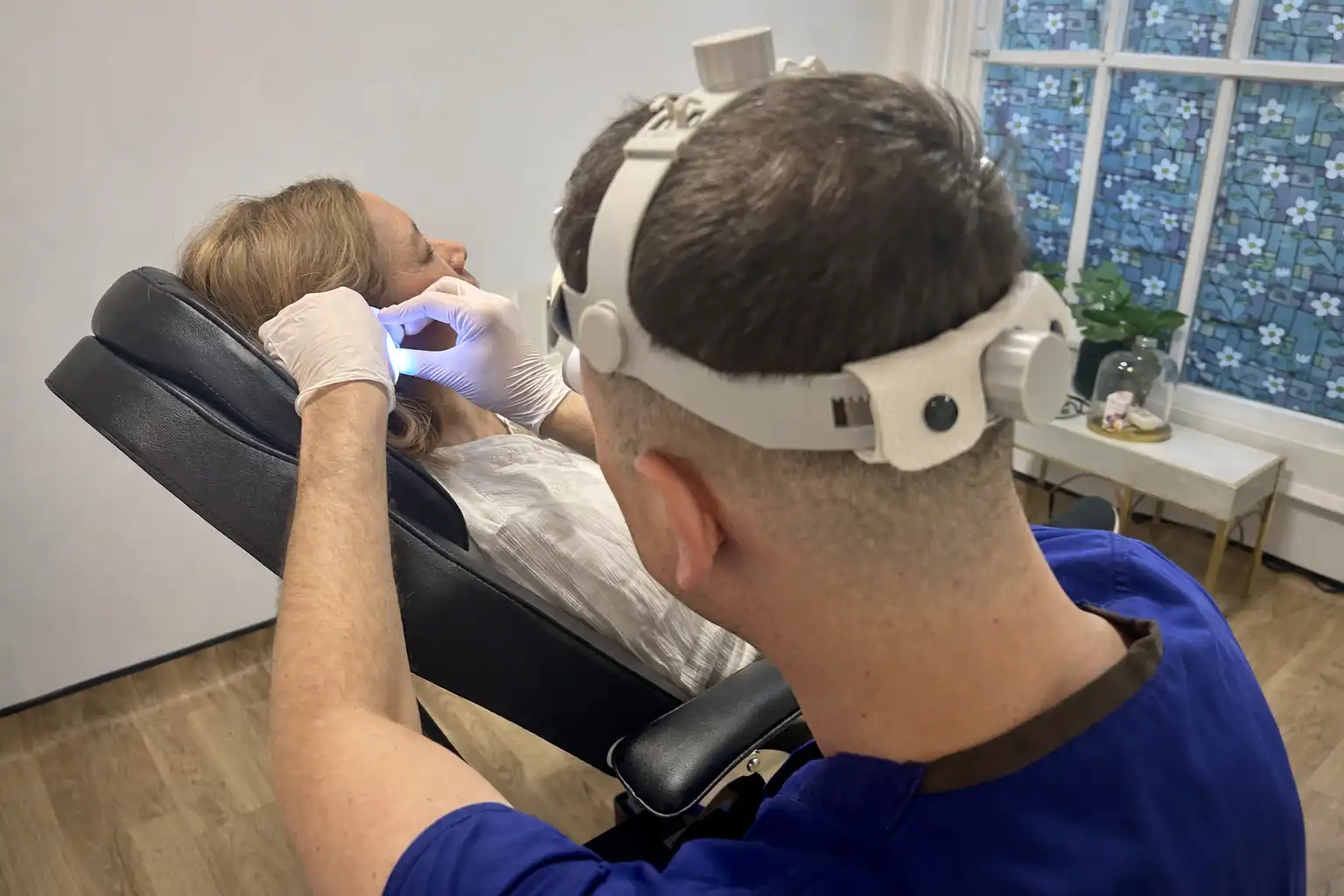
How to remove impacted cerumen safely almost always means a clinical procedure rather than a home remedy, once wax has properly hardened against the eardrum. At Bilba Clinic, we use microsuction, a gentle, low-pressure suction method carried out under direct vision, which avoids the water used in traditional ear irrigation.
Every microsuction appointment starts with an otoscope examination, so we know what we’re dealing with before treatment begins. Because no water is used, microsuction tends to suit people with sensitive ears, a history of ear infections, or even some previous ear surgery, though we confirm suitability for you individually first. Most sessions take around 15 to 30 minutes, and we can often treat both ears in the same visit. Many people notice a difference in their hearing straight after treatment, though how much improvement you get depends on how impacted the wax was.
Clearing impacted wax once doesn’t guarantee it won’t build up again. Some people are simply more prone to it than others, and if that’s the case for you, we can talk through a sensible interval for repeat check-ups.
Cerumen Impaction Treatment at Bilba Clinic
Bilba Clinic is a CQC-registered private clinic in Fitzrovia, central London, offering medical, aesthetic and wellbeing care from experienced clinicians. We’re recognised by major insurers including Bupa, Vitality and WPA, alongside self-pay patients.
If blocked or muffled hearing has been bothering you, we offer earwax removal using microsuction, assessed and treated in most cases on the same visit. We don’t skip the assessment stage even for simple-sounding cases, since a proper look with an otoscope is the only reliable way to confirm cerumen impaction rather than something else causing similar symptoms.
Our clinical team follows the same safety standards across every procedure we offer, in line with our status as a CQC-registered clinic. If you’d like more detail on why leaving impacted wax untreated can cause ongoing problems, our safe earwax removal article covers this in more depth. When you’re ready, you can book online or get in touch first if you have questions.
- Address: 57 Great Titchfield Street, Fitzrovia, London W1W 7PN
- Phone: +44 (0) 7858 848 244
- Email: info@bilbaclinic.co.uk
- Opening hours: Monday to Friday 10:00 to 18:00, Saturday 12:00 to 17:00, Sunday closed
Frequently Asked Questions
Can Cerumen Impaction Cause Hearing Loss?
Yes, cerumen impaction is one of the most common causes of temporary hearing loss. Because impacted wax blocks the ear canal, sound can’t reach the eardrum properly, which produces a muffled or reduced hearing effect. This type of hearing loss is conductive rather than permanent, and typically resolves once the wax is safely removed.
Can Cerumen Impaction Cause Dizziness?
Yes, dizziness is a recognised symptom of earwax build-up, listed alongside hearing loss and tinnitus in NHS guidance. Impacted wax pressing against the eardrum can create a sensation of vertigo or unsteadiness in some people, though dizziness has several possible causes, so it’s worth getting checked rather than assuming earwax is definitely the reason.
Is Cerumen Impaction Serious?
Cerumen impaction is rarely serious, but it isn’t something to ignore indefinitely either. Left untreated, it can cause ongoing hearing loss, discomfort, and a higher chance of ear infection from trapped moisture. Most people see a full recovery once the wax is properly removed.
Does Cerumen Impaction Go Away on Its Own?
Mild wax build-up sometimes clears on its own or with a few days of softening drops. True impaction, where wax has hardened against the eardrum, rarely resolves without help. If your symptoms have lasted more than a week or two, a clinical assessment is more reliable than waiting it out.
How Often Should You Get Earwax Removed?
This depends entirely on how quickly your ears produce wax and how well they clear it naturally. Some people never need professional removal, while others benefit from a check every six to twelve months. We can advise on a sensible interval once we’ve seen your ears and how they behave over time.