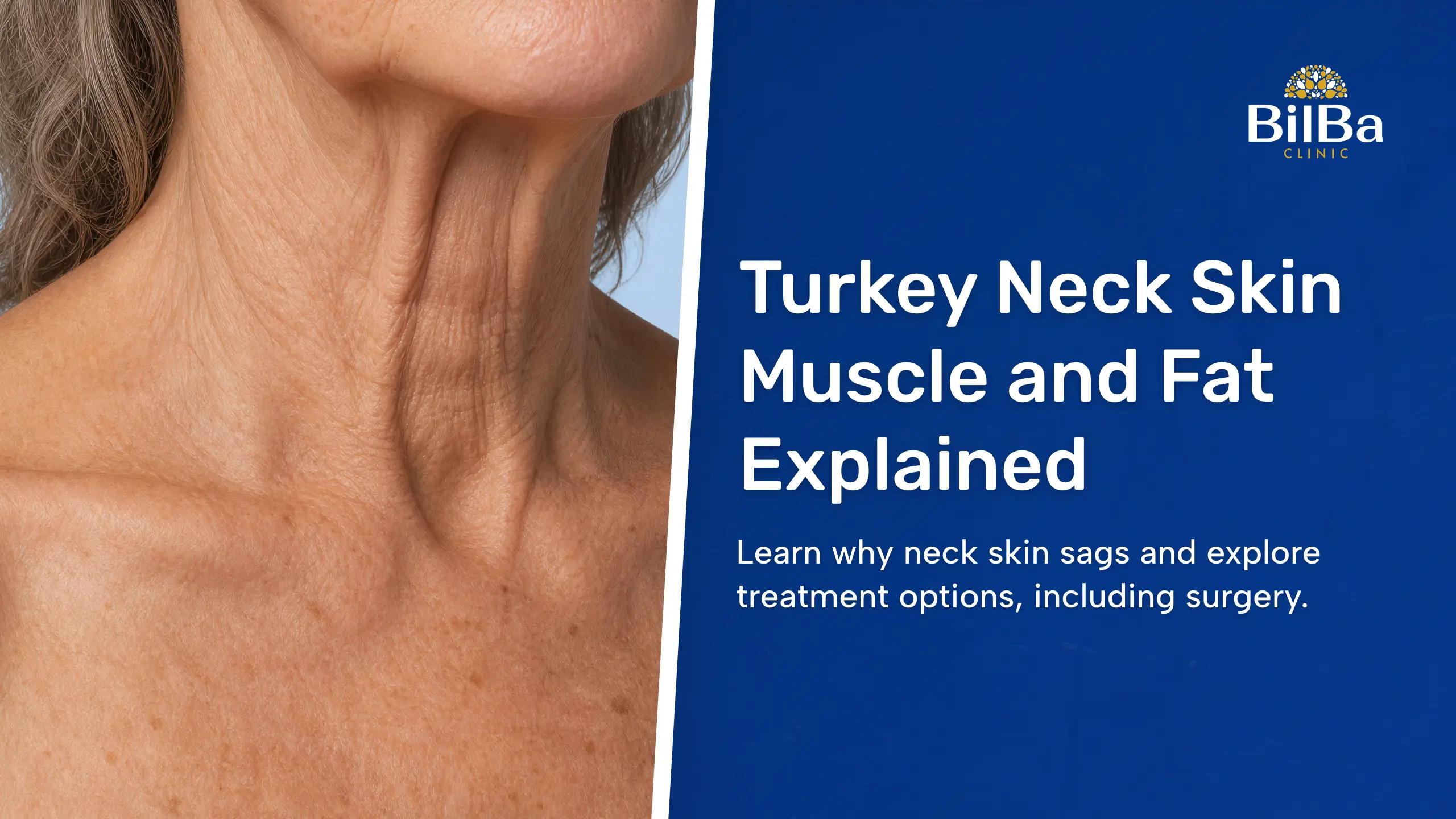
Turkey neck is rarely one problem. Most people who search for it are looking at a mix of three things. The skin has lost its spring, the neck muscle has drifted apart in the middle, and fat has gathered under the chin. Each looks a little different and each responds to a different fix, which is why a treatment that worked for a friend may do very little for you. At Bilba Clinic we see all three patterns in our plastic surgery consultations. This guide shows you how to tell them apart and when surgery is worth considering.
- Skin: the neck looks creased or crepey, and the skin hangs in a loose fold.
- Muscle: two vertical cords run from the chin down the front of the neck.
- Fat: a soft, squeezable fullness sits under the chin or along the jaw.
Most necks show more than one of these, and that mix decides what will help.
What Causes Turkey Neck Under Your Chin and Jaw?
Three layers of the neck can change with time: the skin, the platysma muscle and the fat under the chin. Skin loosens as collagen weakens, the muscle loses tone and forms bands, and fat collects below the chin. Which layer matters most decides which treatment is likely to help.
A proper examination by our clinical team separates the layers. In a mirror they can look alike, yet they behave very differently under treatment, so working out which one dominates saves a lot of guesswork.
Loose Skin, Weaker Collagen and Gravity
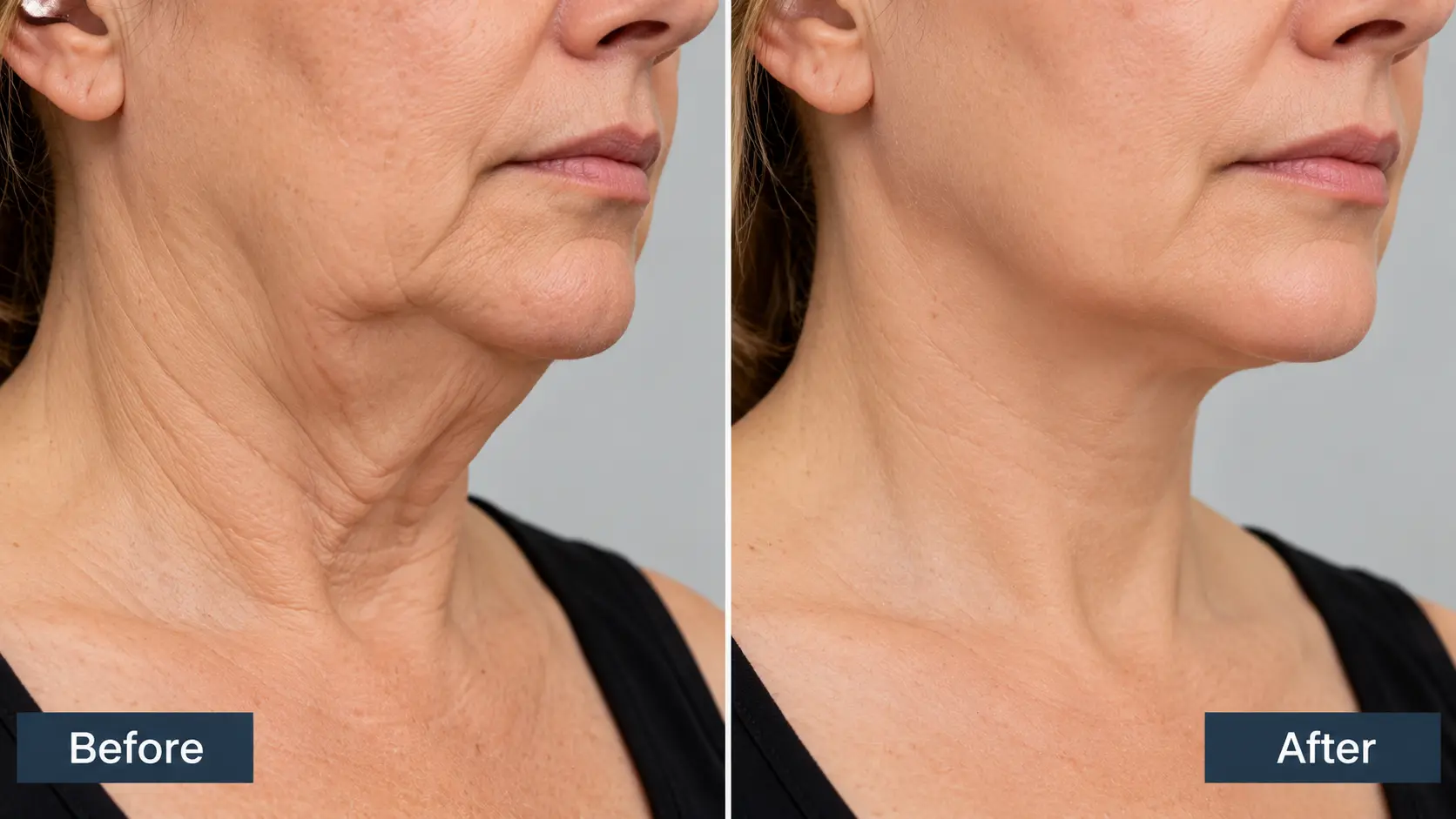
Skin is the layer most people notice first. Over the years the collagen that gives skin its support breaks into smaller fragments and is replaced more slowly, so the skin becomes thinner and looser. Gravity then pulls on that unsupported skin day after day, and sun exposure adds to the damage. The result is a crepey surface, fine horizontal lines and a loose fold below the chin that stays put when you tighten your neck.
Muscle Bands That Show as Vertical Cords
Under the skin sits the platysma, a thin sheet of muscle that covers the front of the neck. With age it loses tone, and its front edges drift apart. That shows up as two vertical bands running down the neck from the chin. Fat can also push out between the edges of the muscle, which makes the cords look thicker and the neck look heavier than it really is.
Fat Under the Chin That Looks Like Sagging
Some people carry extra fat under the chin at any age, while others find it gathers there as the rest of the face loses volume. It creates a double chin or a soft hanging fold, and it can blur the sharp angle between the jawline and the neck. Because fat is soft and squeezable, it feels very different from loose skin or a tight muscle band, and it responds to different treatments.
Turkey Neck Causes That Overlap in the Same Neck
Most necks do not fit neatly into one category. Turkey neck causes tend to arrive together: a little loose skin, early bands and mild fat each add a small problem, and fixing only one leaves the other two on show. Structure plays a part as well, because bone support in the face thins with age and the bone under the chin can sit low, which softens the angle of the neck. That mix is the main reason a single treatment disappoints some people. During an examination we note how much each layer contributes, then rank them by how much they bother you.
Why Do I Suddenly Have a Turkey Neck When Nothing Else Changed?
Most of the time the change is not sudden at all. The skin, muscle and fat have been shifting slowly, and something has finally made it visible, such as weight loss, a photo taken from a new angle or a change in the volume of your face. A new lump or swelling is a different matter and needs an examination.
Weight and facial volume can both change how the neck looks over a few months. A change that seems to have appeared within weeks is still worth having looked at, because the pattern shows which layer is involved. If a firm lump, swelling or pain appears under your chin or along your neck, do not wait to see whether it settles. Ask us for an urgent review, and read our chin lump guide for what different lumps can feel like. If you have trouble breathing or swallowing, seek emergency medical help straight away.
Turkey Neck After Weight Loss and Skin That Cannot Keep Up
Skin that has been stretched for a long time cannot always shrink back to match a smaller shape. After weight loss, fat under the chin may reduce, which can make loose skin and any muscle bands easier to see. How much the skin recovers varies from person to person, and a neck that looks full of folds at first may look different once your weight has settled. If you are still losing weight, mention it when you book, because skin keeps changing while weight does and that can affect when surgery is worth planning. Our loose skin guide covers the options we use for loose skin elsewhere on the body.
What Causes Turkey Neck in Women, and Is It Different for Men?
The same three layers change in women and in men: skin loosens, the neck muscle weakens and fat gathers under the chin. We cannot point to a cause that belongs only to women. What differs between people is how much each layer contributes and how early it shows, and an examination is the only reliable way to judge that.
If a change seems tied to a life stage, such as pregnancy or the menopause, mention it. It helps us understand the pattern, even though we would never promise a single explanation. Treatment choices follow the layer involved, and the sex of the patient does not decide them.
Which Turkey Neck Treatment Fits Skin, Muscle or Fat?
Fat, muscle and skin each call for a different technique. Fat under the chin can be reduced by liposuction or removed directly, muscle bands are tightened by stitching the platysma, and loose skin is lifted and trimmed. Many necks need more than one of these, which is why the right turkey neck treatment depends on the layer involved.
Lighter options such as injections and energy-based skin tightening exist, but this guide stays with surgery because that is what our plastic surgery service covers. You can read more about Bilba Clinic and the care we offer before you decide anything.
Is There One Turkey Neck Solution for All Three Causes?
Rarely does one procedure deal with all three layers. Liposuction on its own helps mild fat but does little for loose skin or bands, and a skin lift on its own leaves fat and muscle bands in place. Because most necks show a mix, the best plan is often a combination, chosen after an examination rather than from a photograph. A turkey neck solution that promises to fix everything with a single step deserves some caution, and a good surgeon will say clearly where a change is likely to be small.
When Does Surgery for Turkey Neck Make Sense?
Surgery becomes a sensible option when loose skin, muscle bands or fat are too much for lighter treatments to improve, or when you want a longer-lasting change. In one commonly used grading approach, milder neck changes are managed without surgery and more advanced ones may need it. The decision comes after an in-person assessment, a plain explanation of the risks and enough time to think it over. Our private plastic surgery service is built around that approach.
Surgery tends to suit people whose main concern is loose skin or visible bands that creams, injections or energy treatments will not shift, and who have a clear idea of what they hope to change. It does not stop the ageing process, and some slackening can appear even in the first months, so a good surgeon talks about what a good result looks like before anyone books a date.
Some health factors affect healing and the final result: body mass index, smoking or nicotine use, certain medications, diabetes, and a reduced blood supply from earlier surgery or radiation. We ask about all of them, and they can change the advice we give.
What Turkey Neck Surgery Involves Step by Step
The surgical plan is agreed in advance between you and the surgeon, and the details depend on the procedure. There are many ways to operate on the neck, and the surgeon recommends the technique that suits your neck best. Where there is excess fat, it is reduced with liposuction or removed directly through a small cut. The platysma is tightened, either by pulling it back and securing it or by joining its edges in the middle so they act as one sheet. The skin is then lifted, trimmed and stitched into its new position. Incisions often include a small cut under the chin and, for some operations, cuts in front of and behind the ears. The type of anaesthetic depends on the procedure and what you and your surgeon agree, so ask about it before you decide.
How Turkey Neck Lift Surgery Differs From Liposuction Alone
Liposuction removes fat and nothing else. That is why it suits mild fat under the chin in a neck with good skin tone, and why a lift comes into the conversation when skin is loose or bands are visible. Turkey neck lift surgery treats the skin and the muscle as well as the fat. A neck lift is usually carried out as part of a facelift, with a small cut under the chin that lets the surgeon reach and tighten the muscle, as this PHIN neck lift guide explains. Liposuction can be added when fat contributes. The minor facial and neck lift is the procedure we list for this area, and we will say plainly if a different operation would suit you better.
Risks, Recovery and Why Smoking Matters Before Surgery
All surgery carries risk, and neck surgery has a list of its own. We go through each item with you in full. The main ones are:
- Bruising, swelling and a tight, pulling feeling in the neck while it heals.
- A collection of blood or fluid under the skin, which sometimes needs draining. In rare, extreme cases a blood collection can press on the airway and need emergency treatment.
- Numbness or altered feeling that settles within 12 to 18 months for most people, with shooting pains possible for up to a year.
- Weakness of facial movement from nerve injury, which is usually temporary but can be lasting, and scarring that can occasionally be thick.
After a facelift that includes the neck, most people need about two to four weeks to recover, with bruising visible for at least two weeks, and the full effect can take up to nine months to show. A smaller procedure may need less time, and your surgeon will explain the plan for yours.
Smoking and nicotine in any form, including vaping, patches and gum, reduce blood flow to the tissues and raise the risk of skin loss and slow healing. The usual advice is to stop at least six weeks before surgery and to stay off nicotine afterwards.
Questions to Ask Any Surgeon Before You Book
Whichever clinic you choose, ask who will carry out your operation and how often they perform neck surgery. Ask what follow-up is included and what happens if a problem comes up after you go home. Check that the clinic is registered with the CQC, and ask what the quote covers. Some providers quote one package price, while others bill the surgeon, the anaesthetist and the facility separately, so the full cost may not be clear until the invoices arrive. Ask how much time off work to plan for, and what the first few weeks of aftercare look like. A written quote makes different clinics far easier to compare.
Book a Turkey Neck Consultation With Our Plastic Surgery Team
Bilba Clinic is a CQC-registered private clinic in Fitzrovia, London, offering medical, aesthetic and wellbeing care from experienced clinicians. We are recognised by major insurers including Bupa, Vitality and WPA, and we welcome self-pay patients.
Cosmetic neck surgery is usually self-funded, so most patients pay privately. Costs vary with the procedure, the anaesthetic and where the surgery takes place, and we would rather give you an accurate figure after a proper look. As a starting guide, a plastic surgery consultation is £250 and a minor facial and neck lift starts from £4,500. Our current pricing page has the latest figures.
A consultation covers an assessment of your neck, an explanation of which layers are involved and a plain view on whether surgery will help. There is no pressure to book anything on the day. When you are ready, you can book a consultation online or contact us with questions, and our plastic surgery team will take it from there.
- Address: 57 Great Titchfield Street, Fitzrovia, London W1W 7PN
- Phone: +44 (0) 7858 848 244
- Email: info@bilbaclinic.co.uk
Opening hours
- Monday to Friday: 10:00 to 18:00
- Saturday: 12:00 to 17:00
- Sunday: closed
Frequently Asked Questions about Turkey Neck
What Age Does Turkey Neck Start?
There is no fixed age at which turkey neck starts. Collagen loss and gravity work slowly, so changes in the skin, muscle and fat under the chin build over many years before they bother you. Weight change can bring them forward. If you have noticed a change, an examination shows which layer is behind it.
Where Does Turkey Neck Come From?
Turkey neck comes from changes in three layers of the neck: skin that loosens as collagen weakens, the platysma muscle that loses tone and forms bands, and fat that collects under the chin. Ageing, long-term sun exposure and weight change all play a part. How early it shows differs between people, so two people of the same age can look quite different.
Can Liposuction Alone Fix Turkey Neck?
Liposuction alone can improve turkey neck only when the cause is mild fat under the chin and the skin still has good tone. It does little for loose skin or muscle bands. If skin or bands are the main problem, a lift is more likely to be discussed, and the neck should be examined before either is recommended.
How Long Does Recovery Take After Neck Surgery?
Recovery after neck surgery depends on the procedure. After a facelift that includes the neck, most people need about two to four weeks, with bruising visible for at least two weeks and stitches usually out within one to two weeks. The final result can take up to nine months to settle. Your surgeon explains the recovery plan for your own procedure.
Is Neck Numbness Normal After Surgery?
Numbness in the neck is common after surgery and settles within 12 to 18 months for most people, although shooting pains can last for up to a year. Movement, such as lifting the chin or turning the head, may feel restricted for a few months. Tell the surgical team if numbness spreads or weakness appears in your face, because that needs a proper review.
Does Turkey Neck Surgery Leave Scars?
Turkey neck surgery leaves scars because it involves cuts. Their position depends on the procedure, often under the chin and, for some operations, in front of and behind the ears. How scars heal varies between people, and in some patients they can become thick or raised. Ask to see where your incisions would sit before you decide.
Will Private Medical Insurance Pay for a Neck Lift?
Private medical insurance generally does not pay for a neck lift, so most patients pay for it themselves. Policies differ, and we cannot confirm what yours covers. We are happy to talk through costs at your consultation so there are no surprises.