
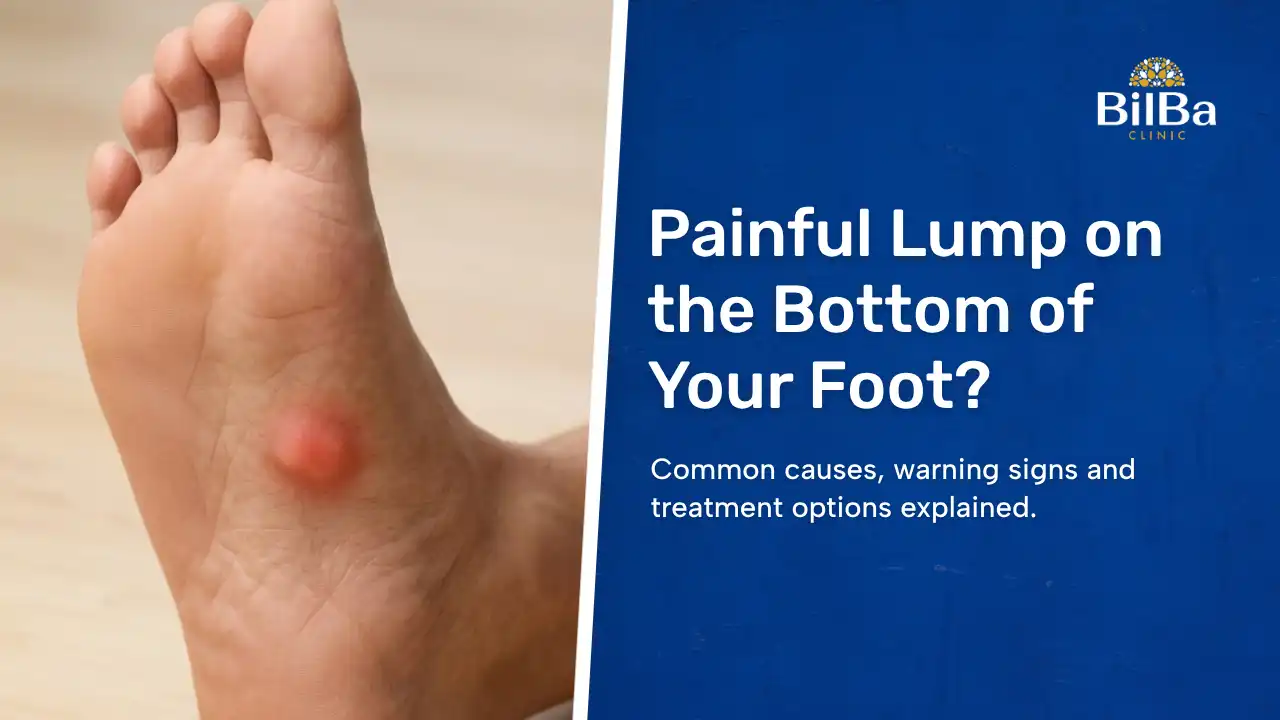
A painful lump under skin on bottom of foot, sometimes just called a painful lump under skin on foot, is usually not serious. Most cases come from a small number of common causes. These include thickened skin, a wart, or a small growth beneath the surface. This guide explains what causes a lump to form on the sole of the foot. It covers the different types you might be dealing with, and when to get it checked. It also covers what happens at your appointment and what treatment involves.
What Causes a Painful Lump Under Skin on Bottom of Foot
Why does it hurt when I press a lump on my foot. The bottom of your foot carries your full body weight with every step. Any lump there sits under constant pressure. This is why even a small lump on bottom of foot under skin can feel painful. The same lump elsewhere on your body might not hurt at all. Repeated pressure, friction from shoes, and thick skin on your sole all play a part. This is why lumps here often become tender.
Common Types of Lumps on the Bottom of the Foot
Several different conditions cause a lump on the bottom of the foot. Getting the right diagnosis matters. The right treatment depends entirely on which one you have.
Plantar Fibroma
A plantar fibroma is a firm, fibrous lump that grows within the arch of your foot. It develops in the tissue that supports your foot’s arch. It tends to grow slowly. It can feel like a hard lump on bottom of foot when pressed. Plantar fibromas are almost always benign. But they can become uncomfortable when standing or walking for long periods.
Plantar Wart Under Skin
A plantar wart under skin is caused by a virus that enters through small breaks in the skin. It often looks like a white bump under skin on foot. Sometimes you’ll see tiny dark specks inside it. Unlike other lumps, a wart tends to feel flat and rough rather than raised. Pressing it from the side is usually more painful than pressing straight down.
Corn or Callus Lump on Foot
A corn or callus lump on foot forms when skin thickens in response to repeated pressure or friction. This is your skin’s way of protecting itself. Calluses tend to be broader and flatter. Corns are smaller and more focused. A hard callus bump on bottom of foot, or a hard dry lump on bottom of foot, often points to this cause. It’s rarely a true growth beneath the skin.
Foreign Body Lump in Foot
A foreign body lump in foot happens when something small gets lodged under the skin, like a splinter, thorn, or piece of glass. Your body reacts around it. This can create a firm, sometimes painful lump. Weeks later, it may not show any obvious entry point. If you remember stepping on something sharp before the lump appeared, this is worth mentioning at your consultation.
Lump on Ball of Foot, Sole, or Heel, Does Location Matter
Location gives useful clues. But it’s not the full picture on its own. A lump under skin on ball of foot, or a lump on ball of foot under skin, often relates to pressure points during walking. This area absorbs a lot of force with each step. A lump under skin on sole of foot or a sore lump on sole of foot can come from any of the causes above. A small hard lump on sole of foot near the heel may point toward a different pattern again. Common patterns by location include:
- Lump under skin on heel of foot, or lump on heel under skin painful when standing, often linked to thickened skin or a fibroma
- A hard bump on bottom of foot hurts to walk, especially under the ball of the foot where pressure is highest
- A lump on bottom of foot painful to walk on but not when resting suggests a pressure related cause, and a lump on bottom of foot that hurts when walking specifically often points to a pressure point issue
- A painful bump on bottom of foot under skin that’s tender to direct touch may suggest a wart or cyst
Small lump on foot under skin cases and little lumps under skin on feet are often warts, especially when there are multiple small ones. Warts can spread to nearby areas of skin.
This Isn’t the Same as a Lump on Top of Foot or Back of Foot
It’s worth being clear about location here. The causes can differ. A hard lump back of foot means the heel or Achilles area at the rear of the foot. This often relates to different conditions, such as a bone spur or tendon issue, rather than the sole conditions covered in this guide. A painful lump under skin on top of foot sits on the upper surface. It’s more commonly linked to a ganglion cyst or swelling from a joint or tendon, rather than the pressure related causes typical of the sole. If your lump sits on the top or back of your foot rather than the bottom, the assessment and likely causes will be different. It’s worth mentioning this clearly when you book.
If It Itches Instead of Hurts, It Might Be Something Else
Bumps under skin on feet that itch point toward a different picture entirely. Itching, rather than pain, often suggests a skin reaction, fungal infection, or irritation. It’s less likely to be a structural lump. Red bumps under skin on feet may suggest eczema, athlete’s foot, or an allergic reaction to socks or footwear. This is especially true if they’re widespread or come with dry or flaky skin nearby. A hard red itchy bump on bottom of foot could still be an inflamed wart or cyst. But the itching itself is a useful clue that points away from a simple pressure related lump. If itching is your main symptom, mention it clearly. It may steer the assessment in a different direction.
How to Tell If a Foot Lump Is a Plantar Wart or a Cyst
How to tell if a foot lump is a plantar wart or a cyst comes down to a few key differences. A wart tends to have a rough surface and disrupts the normal skin lines. It also hurts more with side pressure than direct pressure. A cyst tends to feel smoother and more rounded. It often hurts more with direct pressure. Neither test is completely reliable on its own. A proper examination gives a far clearer answer than trying to work it out yourself.
When Should You Get a Lump on Your Foot Checked
Is a painful lump on the bottom of the foot serious. In most cases, no. But certain signs mean it’s worth getting checked sooner rather than later. When should I get a lump on my foot checked, consider booking an assessment if:
- The lump has been present for more than two to three weeks without improvement
- It’s growing in size or changing shape
- Walking becomes noticeably more difficult
- The skin over the lump looks red, warm, or starts to break down
- You have diabetes or a condition affecting circulation or nerve sensation in your feet
None of these signs guarantee something serious. But each one is a good reason to get a proper look rather than waiting it out.
How We Assess a Lump Under Skin on Foot at Bilba Clinic
Assessment starts with a detailed consultation. Your clinician examines the lump’s size, texture, and exact location. They’ll ask how long it’s been there, whether it’s changed, and what makes it feel worse or better. Most lumps can be diagnosed through this examination alone. If the diagnosis isn’t clear, or the lump sits in an unusual position, an ultrasound scan may be recommended. This looks more closely at what’s underneath the surface before deciding on treatment.
Can a Lump on the Bottom of the Foot Be Removed
Can a lump on the bottom of the foot be removed. In many cases, yes, though it’s worth understanding the specific considerations for this part of the body first. Does a plantar fibroma need to be surgically removed. Not always. Many are managed with padding, footwear changes, or steroid injections before surgery is considered, since removal here carries a higher chance of a tender scar or the fibroma returning, given how much pressure this area takes. Warts, corns, and foreign bodies are usually simpler to treat and often respond well to targeted removal.
Recovery After Foot Lump Removal
Recovery from a procedure on the sole of the foot takes a little more care than elsewhere on the body, simply because you stand and walk on it every day.
- Reduced weight bearing or specialist footwear is often needed for the first week or two
- Keeping the wound clean and dry supports healing and lowers infection risk
- Most people can return to normal activity within two to four weeks, depending on the procedure
- Sutures, where used, are typically removed within seven to ten days

Foot Lump Removal Cost at Bilba Clinic
Pricing for foot lump removal depends on the size, depth, and complexity of the lump, along with whether imaging is needed beforehand. At Bilba Clinic, our Minor Skin Surgery service covers assessment and removal of lumps and lesions including those on the foot, with transparent pricing shared before any procedure. You can check our current pricing page for full details rather than relying on figures you’ve seen elsewhere.
Podiatrist vs GP for Foot Lump, Who Should You See
Podiatrist vs GP for foot lump is a common question, and honestly, either can be a reasonable starting point. A podiatrist specialises specifically in feet and is well placed to assess pressure related issues, warts, and callus problems. A GP offers a broader medical view and can arrange further investigation or referral if something looks unusual. At Bilba Clinic, our private GP services can assess your lump directly and refer you on for specialist treatment if needed, so you’re not stuck guessing which door to knock on first.
Book Your Foot Lump Assessment in London
If you’re looking for foot lump removal london based and easy to reach, we’re located in Fitzrovia. As a private clinic for foot lump assessment, we combine a proper consultation with same day treatment options where appropriate, rather than a long wait between diagnosis and care. You can book a consultation with us online, or get in touch first if you have questions before booking.
Bilba Clinic
- Address: 57 Great Titchfield Street, Fitzrovia, London W1W 7PN
- Phone: +44 (0) 7858 848 244
- Email: info@bilbaclinic.co.uk
Opening Hours
- Monday – Friday: 10:00 – 18:00
- Saturday: 12:00 – 17:00
- Sunday: Closed
Your Foot Lump Questions Answered
Is a painful lump on the bottom of the foot serious?
Most of the time, no. Common causes like calluses, warts, and small fibromas are not dangerous. That said, a lump that grows quickly, changes shape, or won’t settle after a few weeks is worth getting checked.
Can a lump on the bottom of the foot be removed?
Often, yes. The right approach depends on what the lump actually is. Some respond well to non-surgical treatment first, while others are removed directly, particularly if they’re causing ongoing pain.
What causes a lump to form on the sole of the foot?
The most frequent causes are thickened skin from friction, a viral wart, a fibrous growth in the arch tissue, or a reaction to something lodged under the skin. Your clinician can narrow this down through examination.
Does a plantar fibroma need to be surgically removed?
Not always. Many are managed first with padding, footwear adjustments, or injections. Surgery is considered when these options haven’t helped or the fibroma is badly limiting how you walk.
How long does foot lump removal recovery take?
Most people are back to normal activity within two to four weeks, though this varies depending on the size and location of the lump and how much weight bearing the area needs during recovery.