

If you’re asking whether a piriformis injury is sabotaging your workouts, the answer is often yes. A piriformis injury sits deep in the buttock, right where your hip rotates. It can flare up every time you run, squat, or sit for long stretches. It’s one of the most overlooked reasons for buttock and hip pain in active people. It’s often mistaken for a spinal problem when the muscle itself is really the issue. In this guide we’ll explain what the piriformis muscle actually does. We’ll cover what causes an injury there, and how to tell it apart from sciatica. We’ll also cover what actually helps, from simple stretches to the injection treatment we offer here at Bilba Clinic.
What Is the Piriformis Muscle and Where Is It
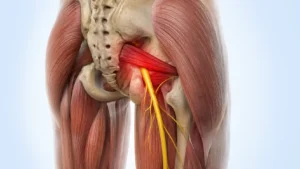
What are piriformis muscles, in simple terms. The piriformis muscle is a small, flat muscle deep in your buttock, running from your lower spine to the top of your thighbone. Piriformis location matters because the sciatic nerve, the biggest nerve in your body, usually runs right underneath it. What does piriformis muscle do. It helps rotate your hip outward and keeps your leg stable when you walk, run, or change direction. Piriformis hip muscle problems happen because this small muscle sits so close to such an important nerve. Piriformis muscle injury of even a small piece of tissue can end up affecting the whole leg.
What Does a Piriformis Injury Feel Like
What does a piriformis injury feel like. Most people describe a piriformis ache deep in one buttock, sometimes spreading into the back of the thigh. Piriformis tightness is common too, a constant pulling feeling that gets worse after sitting. Piriformis injury symptoms and piriformis tightness symptoms often include:
- A deep ache or piriformis hurts feeling in one buttock
- Tightness that gets worse after sitting for a while
- Pain that spreads into the back of the thigh
- Discomfort when climbing stairs or crossing your legs
This kind of piriformis pain is sometimes called deep gluteal pain, and it can include referred leg pain piriformis irritation, meaning the pain seems to travel even though the actual problem sits in the buttock.
What Causes a Piriformis Injury
What causes piriformis injury usually comes down to overuse, sitting too long, or a sudden change in activity. A piriformis strain is one of the more specific causes. This is a small tear or overstretch in the muscle fibres. It’s often linked to a sudden sprint, lunge, or awkward twisting movement. Piriformis causes include running on hard surfaces, sitting on a wallet or in one position for hours, or a sudden increase in training. Piriformis damage can also follow a fall or direct hit to the buttock.
How piriformis syndrome occurs is fairly simple to understand. The muscle sits so close to the sciatic nerve that any swelling or tightness in the piriformis itself can press on that nerve. Piriformis injury causes are rarely one single thing, they’re usually a mix of muscle overuse and poor movement patterns building up over time.
Piriformis Running Injuries, Why Runners Get Hit Hardest
Piriformis running injuries are especially common because running repeatedly loads the hip rotator muscles with every stride. Buttock pain running is often one of the first signs something’s wrong. Piriformis injury after running tends to show up gradually rather than all at once, starting as mild tightness and building into a sharper ache the further you run. A few simple habits can lower your risk:
- Warm up properly before hard sessions
- Build up mileage gradually rather than jumping in too fast
- Add hip and glute strengthening into your regular training, not just running
Piriformis Injury vs Sciatica, How to Tell the Difference
Piriformis injury vs sciatica is a useful comparison to understand, since they’re treated differently. Signs of a piriformis injury vs sciatica usually come down to location. Piriformis pain tends to stay in the buttock and upper thigh and rarely reaches below the knee. Classic sciatica, caused by sciatic nerve compression higher up in the lower back, usually runs the full length of the leg down to the foot. Can piriformis injury cause lower back pain, occasionally, though it’s less typical than with spinal sciatica. Can a piriformis injury cause numbness in leg. Yes, if the sciatic nerve is irritated enough. This is usually milder though than with a spinal cause. Hip rotator muscle pain that gets worse when you sit, cross your legs, or climb stairs points more toward the piriformis than the spine.
How Do You Know If You Have a Piriformis Injury
How do you know if you have a piriformis injury without a scan or specialist visit. Press gently on the centre of one buttock, if that spot feels distinctly tender compared to the other side, that’s a common sign. How do you know if you tore your piriformis muscle specifically. A genuine tear usually causes a sharper, more sudden pain. It often follows one specific movement, rather than the gradual ache more typical of overuse. How is piriformis injury diagnosed properly. It’s largely a clinical diagnosis. A clinician checks your symptoms, movement, and tenderness directly. Sometimes other causes are ruled out with imaging, if the picture isn’t clear. There isn’t one single clear test for piriformis syndrome. That’s part of why it’s commonly missed, or mistaken for a spinal problem.
Why Is Piriformis Syndrome Worse in the Morning
Why is piriformis syndrome worse in the morning is a common complaint. Overnight, the muscle can stiffen up after hours without movement, so the first few steps out of bed often feel the tightest. This usually eases somewhat once you’re up and moving, though it can return later if you sit for long stretches during the day.
When Is Piriformis Syndrome an Emergency
When is piriformis syndrome an emergency. On its own, almost never, but it’s still worth knowing the genuine warning signs of a more serious spinal problem called cauda equina syndrome. These include:
- New difficulty controlling your bladder or bowel
- Numbness around the groin or inner thighs, sometimes called saddle numbness
- Weakness affecting both legs at the same time
These symptoms need emergency care straight away, as explained in NHS guidance on sciatica. Piriformis injury alone doesn’t typically cause these, but if you notice any of them, don’t wait for a routine appointment.
Will Piriformis Heal on Its Own
Will piriformis heal on its own. In many mild cases, yes, especially if the injury came from a temporary spike in activity rather than an ongoing pattern. Is walking bad for piriformis injury, not usually, gentle walking often helps rather than hurts, though pushing through sharp pain isn’t a good idea. Rest alone rarely fixes it completely though, most people need some active stretching and movement alongside rest to fully settle it down.
Piriformis Stretch and Exercise, What Actually Helps
A piriformis stretch is one of the most effective things you can do for mild to moderate symptoms. What are piriformis stretches that actually work. The figure four stretch is one of the most studied and effective options. You lie on your back and cross one ankle over the opposite knee. How often should you do piriformis stretches for real results. Most research points to holding each stretch for around 30 seconds. Repeat it a few times, once or twice a day. Piriformis injury exercises should also include some gentle strengthening, not just stretching, since a weak muscle is more likely to get irritated again. Piriformis injury stretches to avoid are anything sharp, bouncing, or painful, gentle and consistent works better than aggressive and occasional. Real improvement from stretching usually takes several weeks of steady effort, not a single session.
How Long Will Piriformis Syndrome Last
How long will piriformis syndrome last depends heavily on the cause and how consistently you stretch and rest. How long does a piriformis injury take to heal. Mild cases often improve within a few weeks of consistent stretching. More stubborn cases can take a couple of months. If it isn’t improving at all after a few weeks of real effort, that’s usually the point to get it properly assessed. It’s better than continuing to guess.
Piriformis Injury Treatment, When Self Care Isn’t Enough
Piriformis injury treatment beyond stretching and rest becomes worth considering when symptoms haven’t improved after several weeks, or when they’re intense enough to disrupt your training or daily life. Piriformis injury recovery time with treatment varies by person. Many people notice a difference within days rather than weeks, once the muscle spasm is properly addressed.
Intramuscular Injection for Piriformis, How It Works
An intramuscular injection for piriformis combines a local anaesthetic with a small dose of steroid, delivered directly into the muscle. The anaesthetic works within minutes and calms the muscle spasm, while the steroid works over the following days to reduce inflammation. Research on this specific injection is honest rather than perfect. In one published study:
- Around 4 in 10 patients improved a lot
- Close to 2 in 10 improved partially
- The rest didn’t respond to a first injection
We’ll always explain these honest odds clearly before treatment, rather than promising a fixed result. Most patients feel some soreness at the injection site for a day or two afterward. It’s similar to a firm muscle bruise. You can usually return to light activity the same day.

Piriformis Injection London, Pricing at Bilba Clinic
Piriformis injection London options vary. Here at Bilba Clinic, our Intramuscular Injection for the piriformis muscle starts from £720. It’s delivered under our Sports Medicine service. We’re a piriformis syndrome specialist London patients can reach without a lengthy referral process.
We’re also a genuine sports medicine clinic London piriformis athletes and everyday patients both use. We combine the injection with a proper assessment first, rather than treating it as an automatic first step. If you’re looking for private piriformis treatment London wide, we can help. Or piriformis injury physiotherapy London based, to try alongside or instead of injection, we offer both under one roof. For the most current figures, our pricing page has the full breakdown.
Book Your Piriformis Assessment with Us
If stretching and rest haven’t settled things down, the next step is a proper assessment rather than guessing further. We’ll check your movement and confirm whether it really is the piriformis. Then we’ll talk through whether stretching, physiotherapy, or an injection makes the most sense for you. You can book a consultation with us online, or get in touch first if you’d rather ask a few questions. You can also browse our wider medical services, or read about how one Ostenil Plus injection helped ease chronic knee pain, if you’re dealing with joint pain elsewhere too.
Bilba Clinic
57 Great Titchfield Street, Fitzrovia, London W1W 7PN
+44 (0) 7858 848 244
info@bilbaclinic.co.uk
Opening Hours
Monday – Friday: 10:00 – 18:00
Saturday: 12:00 – 17:00
Sunday: Closed
Your Piriformis Injury Questions Answered
Is piriformis syndrome the same as sciatica?
Not exactly. Piriformis syndrome is one specific, less common cause of sciatica type symptoms, caused by the muscle itself rather than a problem in the spine.
Can sitting all day cause a piriformis injury?
Yes, prolonged sitting is one of the most common triggers. This is especially true if you sit with a wallet in your back pocket, or stay in one position for hours without moving.
Should I stop exercising completely with a piriformis injury?
Not usually. Gentle movement and stretching tend to help more than complete rest, though high impact activity is worth pausing until symptoms settle.
How many injections does it usually take?
Many people see improvement after one injection. If symptoms persist, a second injection or a switch to physiotherapy may be recommended at review.
Can a piriformis injury come back after treatment?
It can, especially if the original trigger, like prolonged sitting or a sudden jump in training, isn’t addressed. Keeping up with stretching and strengthening afterward makes a repeat episode less likely.