An ache in your lower legs that builds as the day goes on can feel like nothing more than tired legs. Sometimes that is all it is. But small varicose veins can cause the same ache, and a short check tells you which one you are dealing with. If the ache keeps coming back, a scan is usually worth booking, and an ultrasound vascular Doppler at Bilba Clinic starts from £350. Below we cover where small veins show up, when and why they hurt, what a scan involves, what treatment can do, and the signs that mean you should not wait.
Small Varicose Veins Ankles, What You May See and Feel
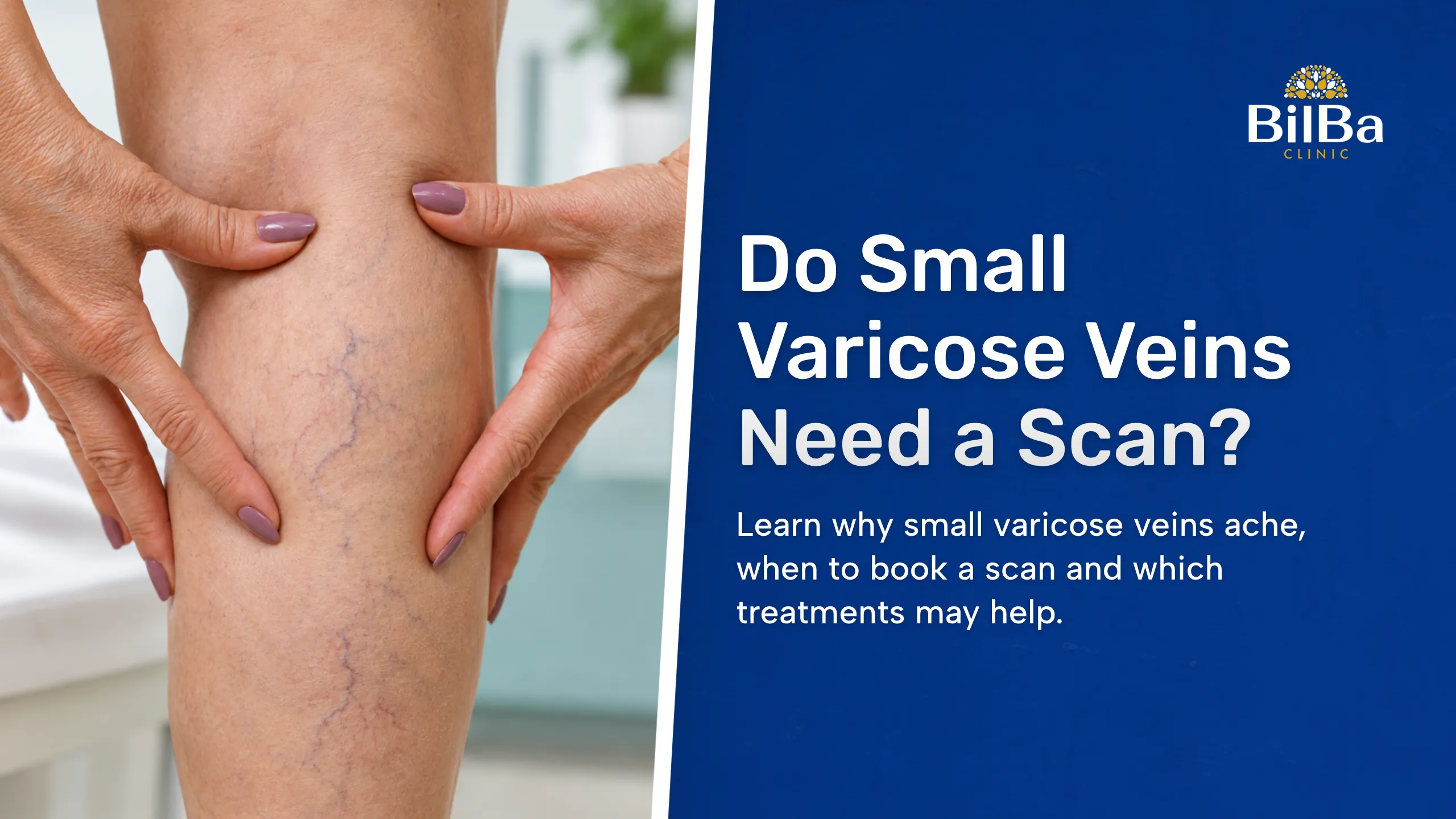
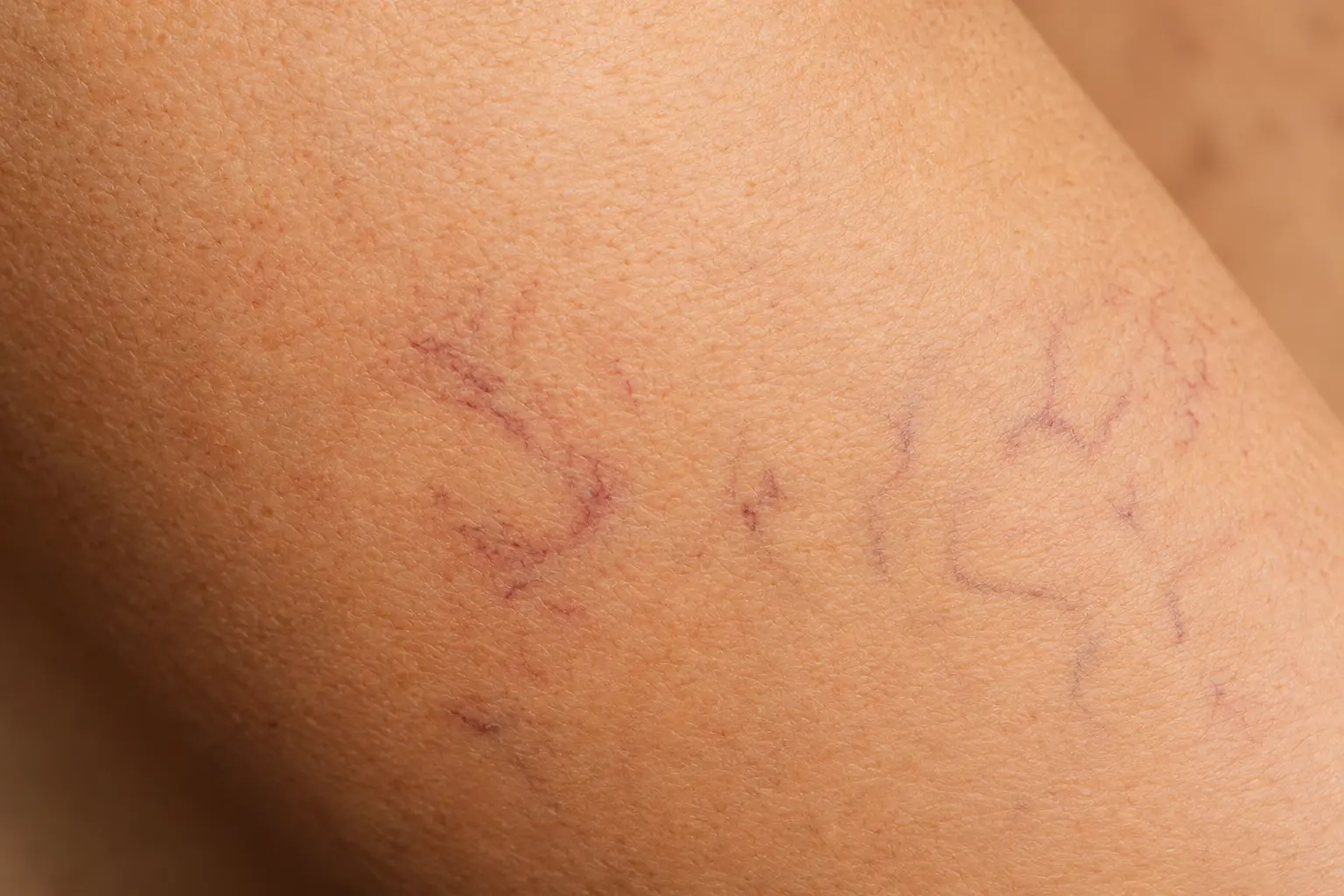
Small varicose veins ankles are where many people spot the first change, because the ankles and lower calves carry the most pressure when you stand. You may see a blue or purple vein that looks twisted, or a cluster of small raised veins. You may notice only how the vein looks, or you may also feel aching, heaviness, itching or a puffy ankle.
Varicose veins form when the small valves inside a vein stop working properly. Blood slips backwards and collects, which stretches the vein. Age, pregnancy, family history, extra weight and long spells of standing or sitting all raise the chance. If ankle swelling is your bigger worry, our swollen ankles guide covers the other causes to rule out.
It helps to know what you are looking at. Spider veins are the finest of the group, thin red, blue or purple lines on the skin. Small varicose veins are larger and often raised or twisted. Both can sit side by side on the same leg, and only an examination can say which you have. The difference matters because it changes what, if anything, to do about them.
When Do Varicose Veins Hurt, and Why Later in the Day?
Varicose veins tend to hurt after long spells of standing or sitting, and the ache is often worse later in the day. Gravity pulls blood down towards the ankles, and leaking valves let it collect there. Raising your legs usually eases it. Many people have no symptoms at all, so a quiet leg does not rule veins out.
By evening, hours on your feet have given blood time to pool. That is why the ache can build slowly, then fade after a night with your legs flat. It may feel like a dull ache, heaviness, throbbing, tightness or itching around the vein. Our early signs guide explains how these early changes are easy to miss.
While you wait for an appointment, a few habits can take the edge off the ache. Raise your legs when you can, walk or move regularly, and try not to stand or sit still for hours at a time. These steps ease symptoms. They do not close a vein that has already stretched, and an ache that keeps returning deserves a proper look.
Varicose Veins Pain Back of Knee and Other Ache Spots
The back of the knee is another place where veins can ache. Veins here may feel tender or full, and the ache can spread into the calf. Other common spots are the inner calf and the inside of the thigh. An ache behind the knee has other causes too, including a joint problem or a clot, so a painful, swollen calf on one side needs urgent medical advice, covered below.
Varicose Veins Ultrasound Price, and Is a Scan Worth It?
A scan helps when you want a clear answer about what is behind the ache. A Bilba ultrasound vascular Doppler starts from £350, and a consultation starts from £250. Costs vary, so your final figure depends on what we find at the visit.
A vein can look small on the surface and still tell you little about how blood moves inside it. Assessment of varicose veins normally includes an examination and an ultrasound scan, and that scan also helps us separate varicose veins from other causes of leg ache. Book one when:
- the ache returns most days, or builds through the day
- the veins look bigger, darker or more twisted than before
- your ankles swell or feel heavy by evening
- the skin around a vein is itchy, dry or changing colour
- you are thinking about treatment and need to know what suits you
If only one of these fits, a check is still reasonable, because mild signs are easy to put down to a long day. A scan will not always find a problem. When it does not, you leave knowing the ache is unlikely to come from the veins, and that is a useful answer too.
What a Vein Scan Involves at Bilba Clinic
We start with your history and an examination of both legs. If a scan will help, our ultrasound vascular Doppler is a painless, non-invasive scan that measures blood flow through your arteries and veins. It can show which veins are involved and whether blood is flowing backwards through leaking valves, which helps us decide what, if anything, will help. It takes place in clinic, often at the same visit as your consultation. You will be seen by our clinical team, and our general and vascular surgery service also covers larger veins and circulation problems. You can read more about our clinic before you book. Afterwards we explain what we saw in plain language, tell you whether the veins need treatment, and set out your options, with no pressure to go ahead on the day.
Treatment for Small Varicose Veins, What Happens After the Scan
Treatment for small varicose veins depends on what the scan shows. Varicose veins do not always need treatment, so some people leave with advice and a clear picture of what is going on. If the veins cause symptoms or bother you, the options include compression stockings, injections and, for larger veins, other procedures.
For smaller veins, one option is sclerotherapy injections. A medicine is placed into the vein, the vein closes, and your body slowly absorbs it. At Bilba each session takes 30 to 45 minutes, and most people need one to three sessions. Light walking is encouraged afterwards, strenuous exercise is best avoided for 24 to 48 hours, and compression stockings are often advised.
Fading usually starts after about three weeks, and the main benefit shows at around three months. Bruising, mild stinging and darker marks on the skin can happen. A blood clot is very rare, which is one reason we check suitability first.
Results differ from person to person. Some veins fade fully, some fade only in part, and larger or more stubborn veins may need another session. We will tell you what is likely for your legs before you decide, so you know what to expect from the cost and the time involved.
Which Small Veins Sclerotherapy Suits, and Which It Does Not
Sclerotherapy suits spider veins and small varicose veins. It is not suitable for large or advanced varicose veins, which may need specialist vascular treatment such as laser ablation. That is why the scan comes first. It shows whether your veins are small enough for injections or need a different plan, and a consultation is always needed to assess vein type and suitability.
When an Ache Cannot Wait for a Booking
Most ache from small varicose veins is slow and uncomfortable but not an emergency. A few changes need quick action. Get urgent medical help straight away if:
- one calf or leg is painful, swollen, hot and red
- you have sudden swelling together with breathlessness or chest pain
- a vein is bleeding and will not stop with firm pressure
Slower warning signs deserve a prompt look too. Ask us for an assessment if a vein feels hard and painful. The same goes for skin that changes colour or turns dry and itchy, and for a sore on the leg that has not healed after two weeks.
Ready to Get Small Varicose Veins Checked in London?
Bilba Clinic is a CQC-registered private clinic in Fitzrovia, London, offering medical, aesthetic and wellbeing care from experienced clinicians. We are recognised by major insurers, including Bupa, Vitality, WPA and AXA, and we welcome self-pay patients too.
Costs vary depending on whether you need a consultation, a scan or treatment, and we would rather give you an accurate figure after a proper look. Our pricing page gives a general starting guide: a consultation starts from £250, an ultrasound vascular Doppler from £350 and sclerotherapy from £499 per session. If your ache has been creeping up for weeks, a short visit can tell you whether small varicose veins are behind it and what, if anything, to do next. You can book online or contact us with questions first.
- Address: 57 Great Titchfield Street, Fitzrovia, London W1W 7PN
- Phone: +44 (0) 7858 848 244
- Email: info@bilbaclinic.co.uk
- Opening hours:
- Monday to Friday: 10:00 to 18:00
- Saturday: 12:00 to 17:00
- Sunday: closed
Frequently Asked Questions About Small Varicose Veins
Is Sclerotherapy Safe for Small Varicose Veins?
Sclerotherapy is an established treatment for small varicose veins and spider veins, and it is done in clinic with little downtime. Typical effects are bruising, a short sting and darker marks on the skin, which usually fade. A blood clot is very rare. We check suitability first, because it is not for large or advanced veins.
How Long Does Sclerotherapy Take to Work?
Treated veins usually start to fade after about three weeks, and the main benefit shows at around three months. Small veins often need one to three sessions at Bilba, so your final result depends on how many you need. Veins can look darker or bruised at first before they fade.
Can Small Varicose Veins Go Away on Their Own?
Raising your legs and keeping active can ease the ache, but this does not repair the weak valves behind varicose veins. Varicose veins do not always need treatment, though. A check shows whether yours do, and whether they are changing.
When Should I Worry About an Ache in My Leg Veins?
Worry straight away if one calf becomes painful, swollen, hot and red, if you are breathless or have chest pain, or if a vein bleeds. Book an assessment if the ache returns most days, a vein turns hard or painful, the skin changes, or a sore has not healed after two weeks.
Does a Vein Scan Hurt?
No. A vein scan is painless. A small probe covered in gel is moved over your skin, and you feel light pressure at most. The scan uses sound waves, not needles. It takes place in clinic, and many people have it alongside their consultation, so one visit can answer the question.