Poor circulation in feet and legs usually comes down to a handful of causes: narrowed arteries, vein problems, blood clots, or conditions that make the small vessels in the toes clamp down in the cold. The signs are easy to brush off as tiredness, a cold room or getting older. Cold feet on their own are rarely a worry, but feet that stay cold, calf pain on walking or a sore that will not heal deserve a proper look. This guide covers each cause, the signs that point to it and the warning signs that cannot wait. A short exam and a scan at Bilba Clinic can show which cause it is.
What Is Poor Circulation a Sign Of?
Poor circulation is most often a sign of narrowed leg arteries. Less often it points to a vein problem, a blood clot, or a condition such as Raynaud’s that limits blood flow to the toes. The cause changes what happens next, so we look at which leg is affected, which signs are present and how quickly they appeared.
Blood travels down to the feet through arteries and back up through veins. A problem on either side of that loop, or in the tiny vessels in the toes, can leave a foot cold, tired or painful. The sections below take each cause in turn, from the most common to the least.
Could Narrowed Arteries Be the Cause?
Narrowed or blocked arteries are the usual cause of poor circulation in the legs. Fatty deposits build up inside the arteries and restrict the blood reaching the leg, a condition called peripheral arterial disease. It is long term and there is no cure, but treatment can ease the symptoms. That can include an exercise programme, medicines and, for some people, surgery to widen or unblock an artery. Smoking makes it worse.
Less common causes include inflamed blood vessels, an injured artery and a blood clot in a vein that blocks blood flow to the leg. The NHS covers the condition in its peripheral arterial disease guidance, and our guide to peripheral vascular disease shows how we assess it.
Could Vein Problems Be Behind It?
Veins carry blood back towards the heart, and small valves inside them stop it slipping backwards. When those valves weaken, blood pools in the lower leg, so the leg can feel heavy, ache and swell. This pattern usually builds with long spells of standing and eases when you raise your legs.
Vein trouble tends to bring swelling and heaviness, while artery trouble tends to bring coldness and pain on walking. The two can overlap, which is why we look at both. Our guide to venous insufficiency treatment covers the vein side in detail.
Could It Be a Blood Clot Instead?
A blood clot in a deep vein, known as deep vein thrombosis, usually affects one leg. It can cause throbbing pain in the calf or thigh, swelling, red, blue or darkened skin and swollen veins. A clot can be dangerous because it can travel to the lungs, so a painful, swollen leg needs medical help as soon as possible. If you are also short of breath or have chest pain, seek emergency medical help straight away.
Could It Be Raynaud’s or Another Cause?
Raynaud’s is a condition where blood stops flowing properly to the fingers and toes, usually when you are cold, anxious or stressed. The skin may turn white, then blue, then red as blood returns, and an attack can last from a few minutes to a few hours. It is common and not usually severe. Symptoms on one side only, or symptoms that start for the first time after the age of 30, are worth having checked. Chilblains are a different problem: a burning, itchy swelling that appears after a very cold spell and gets worse as you warm up.
Diabetes is another cause worth knowing. It can damage the blood vessels in the legs and dull feeling in the feet, so a small sore can go unnoticed and heal slowly. Our guide to diabetic foot pain explains how that happens.
Signs of Poor Circulation in Feet You Can Check at Home
The signs of poor circulation in feet are small at first, which is why they get brushed aside. Compare both feet and both legs side by side in good light, and note anything that differs. The most common signs are:
- Feet or toes that feel cold to the touch, sometimes with numbness or weakness in the leg
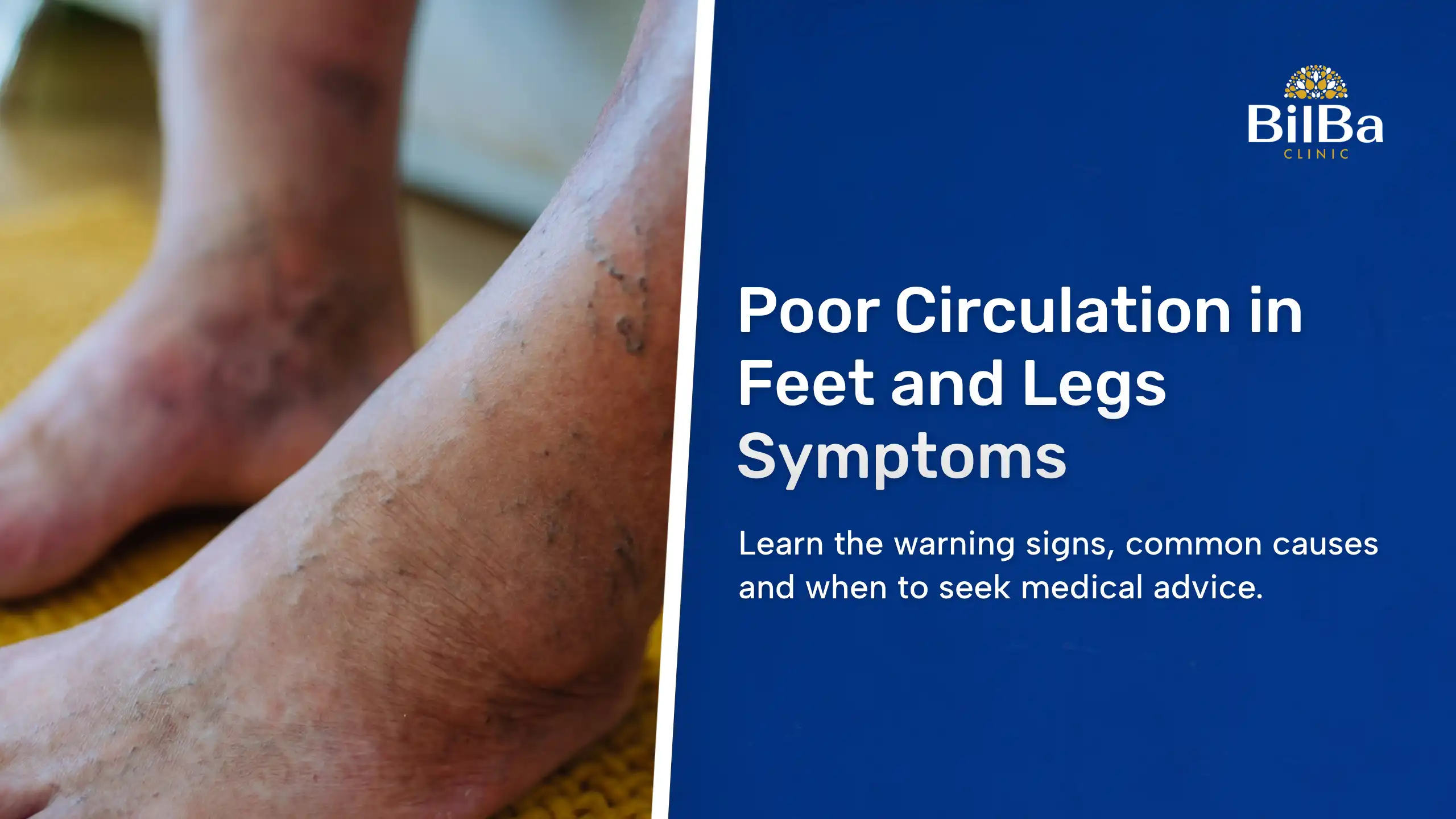
- Shiny or discoloured skin, which may look blue or purple and can be harder to see on brown or black skin
- Hair loss on the legs and toenails that grow slowly or break easily
- Sores or wounds on the legs or feet that do not heal
Some people have no symptoms at all, so risk matters as much as signs. Smoking, diabetes, high blood pressure, high cholesterol and getting older all raise the chance of narrowed arteries. When several signs sit on the same side, our clinical team compares both legs before saying anything about the cause.
Poor Circulation in Feet Symptoms You Can Feel and See
Poor circulation in feet symptoms fall into two groups. What you feel is coldness, numbness, weakness, or a cramp, ache or burn in the calf when you walk. What you see is skin that looks shiny or a different colour, thinning hair, brittle toenails and sores that stay open. If the pain also comes on at rest, or gets worse at night, the condition may be progressing, so book a check sooner rather than later.
Leg Circulation Problems Symptoms and What Each One Points To
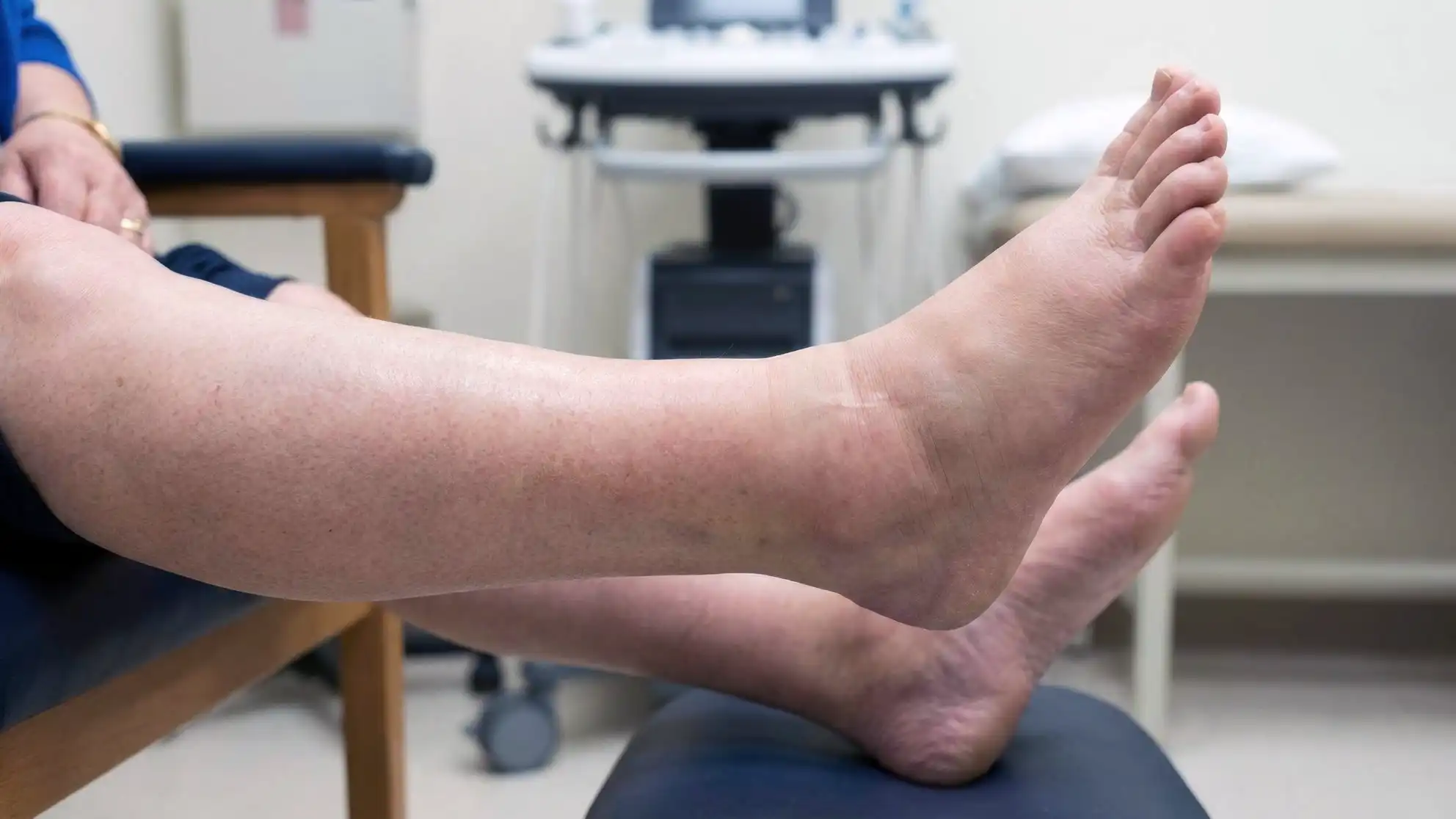
Leg circulation problems symptoms are easier to read when you compare one leg with the other. A calf that tires sooner, a shin with less hair or shinier skin, a sore on one toe or ankle, or a foot that stays cooler all point towards the arteries. Swelling, heaviness and visible twisted veins point more towards the veins. One difference on its own means little, but several on the same side deserve a closer look. Timing is a useful clue too. Pain that follows a set walking distance and settles with rest points to the arteries, while swelling that builds through the day and eases overnight points to the veins.
Leg Circulation Pain When Walking, and Why Rest Eases It
Leg circulation pain that starts when you walk and fades within a few minutes of resting is called intermittent claudication. It usually affects the calves and can feel like cramp, aching or burning. It often affects both legs at once, though it can be worse in one. Your muscles need more blood when you move, and narrowed arteries cannot supply it. Resting lowers the demand, so the pain settles. If your legs feel heavy rather than painful, our guide to heavy legs when walking explains how arteries and veins differ.
One Foot Colder than the Other, When Is It a Warning?
A cold foot on one side is not always a circulation problem. Crossed legs, tight shoes or a cold floor can chill one foot, and it warms up within minutes of moving. A foot that stays colder than the other for days, or looks paler or bluer, needs examining, because narrowed arteries can cause it. Touch both feet and both calves at the same time, and note when the difference appears. If the change comes on suddenly, with pain, numbness or a pale or blue leg, treat it as an emergency.
Poor Circulation in Feet White Spots, Blood Flow or Skin?
People often search for poor circulation in feet white spots when they notice pale patches. We do not treat small white spots as a sign of poor circulation on their own, because they can come from the skin itself. What points to blood flow looks different: a whole toe or area that turns pale and feels cold, colour that goes white, then blue, then red as the foot warms, or pale skin that comes with sores, cracks or slow healing.
The white, blue and red pattern is typical of Raynaud’s. Spots that look the same whether your feet are warm or cold may point to the skin instead. A skin check can confirm it, so please do not guess in either direction.
Is Poor Circulation Dangerous? Signs That Cannot Wait
Poor circulation can be serious if it is left alone. Narrowed leg arteries can lead to ulcers and, in severe cases, gangrene that may mean amputation, and they raise the risk of heart attack and stroke. Getting the right treatment early reduces the chance of these complications. A sudden loss of blood flow to a leg is an emergency, so do not wait to see whether it passes. Long-term, severe pain can limit how far you can walk, and anxiety and low mood are listed complications, so the effect on daily life is part of the picture.
Seek emergency medical help straight away if one leg or foot:
- suddenly turns cold, white, blue or mottled
- becomes numb or weak, or you cannot move it normally
- develops sudden, severe pain
- is swollen and throbbing in the calf or thigh, with red, blue or darkened skin
Slower signs deserve a prompt look too. Ask us for an assessment if you have a sore that is slow to heal, a foot that is always colder than the other, or calf pain that returns every time you walk.
How Poor Circulation in Feet and Legs Is Checked at Bilba Clinic
At Bilba Clinic we start with your history and an examination of both legs, comparing colour, warmth, hair, nails and pulses. We also compare blood pressure at the ankle and the arm, a simple test that shows whether less blood is reaching the leg. Where more detail is needed, we arrange an ultrasound vascular Doppler, a painless scan that shows how blood flows through the arteries and veins of the leg. Blood tests can look at cholesterol and diabetes, which both affect the arteries.
Before your visit, note when the symptoms started, how far you can walk before the pain begins, which leg is worse and what eases it. Bring a list of your medicines and any recent blood pressure, cholesterol or diabetes results. A few dated photos of any skin change or sore help us see how things are moving.
Our general and vascular surgery service covers arteries and veins, so we can look at both sides of the problem. You can read more about our clinic and who will see you. If a cause is found, we explain the options in plain language, from lifestyle changes and medicines to an exercise programme or, for some people, a procedure.

Book a Circulation Check at Bilba Clinic
Bilba Clinic is a CQC-registered private clinic in Fitzrovia, London, offering medical, aesthetic and wellbeing care from experienced clinicians. We are recognised by major insurers, including Bupa, Vitality, WPA and AXA, and we welcome self-pay patients too.
Costs vary depending on whether you need a consultation, a scan or both, and we would rather give you an accurate figure after a proper look. Our pricing page gives a general starting guide: a consultation starts from £250 and an ultrasound vascular Doppler from £350. You can book online or contact us with questions first.
- Address: 57 Great Titchfield Street, Fitzrovia, London W1W 7PN
- Phone: +44 (0) 7858 848 244
- Email: info@bilbaclinic.co.uk
- Opening hours: Monday to Friday 10:00 to 18:00, Saturday 12:00 to 17:00, Sunday closed
Frequently Asked Questions About Poor Circulation in Feet and Legs
Can Poor Circulation in Feet Be Cured?
It depends on the cause. Peripheral arterial disease has no cure, but treatment can ease symptoms and protect your heart and circulation. That includes an exercise programme, medicines and, for some people, surgery to open an artery. Circulation problems from other causes, such as a clot, are treated differently, so the cause needs confirming first.
When Should I Worry About Cold Feet?
Worry straight away if a foot turns cold, white, blue or numb suddenly, or becomes severely painful, because that is an emergency. Book an assessment if one foot stays colder than the other for more than a week or two, or comes with a sore that heals slowly or calf pain on walking.
How Do Doctors Check Poor Circulation in the Legs?
A doctor examines both legs, feels the pulses in the feet and asks about your symptoms and family history. Blood tests and an ankle and arm blood pressure comparison are common first tests. A Doppler ultrasound scan can then show where blood flow is reduced. At Bilba Clinic, we explain each result in plain language.
Can Poor Circulation Affect Only One Leg?
Yes. Narrowed arteries often affect both legs but can be worse in one, and a blood clot in a deep vein usually affects just one leg. If one leg is cold, pale, painful or swollen while the other is normal, have it examined, and seek emergency help if it happens suddenly.
Does Smoking Affect Circulation in the Legs?
Yes. Smoking makes the symptoms of peripheral arterial disease worse, and it also raises the chance of a blood clot in a leg vein. Stopping smoking is one of the most useful steps for your circulation. Diabetes, high blood pressure and high cholesterol also matter, so it helps to have all of them checked.