Heavy legs are very common, and most of the time they are not a sign of anything serious. A long day on your feet, a warm room or hours at a desk can leave anyone feeling weighed down. Sometimes, though, heavy legs point to a vein problem, and a simple scan can tell the two apart. At Bilba Clinic, we look at the pattern first. When the heaviness comes, what eases it and whether one leg is worse than the other all help us decide where to look. This guide covers the usual causes, the signs that need a faster check and what a private vascular review involves. Here is a quick way to sort your own pattern:
- Heaviness that builds after long spells of standing and eases when you raise your legs often fits a vein problem.
- An ache that starts when you walk and settles after a few minutes of rest is a different pattern and needs a different check.
- Heaviness with pain, swelling or redness in one leg only should be looked at quickly.
None of these patterns is a diagnosis, but they give you a useful starting point.
Why Do My Legs Feel Heavy at the End of the Day?
Your legs often feel heavy by evening because gravity pulls blood and fluid towards your feet while you stand or sit for hours. For many people this is ordinary tiredness that fades overnight. If the heaviness returns most days, or builds over several weeks, your veins may not be working as well as they should.
How common is it? A large UK survey of 1,566 adults aged 18 to 64, carried out in the 1990s, asked people about leg symptoms. Heaviness or tension was reported by 28.6% of women and 16.0% of men. What stood out was how often it appeared without obvious vein disease. Among women with no visible main varicose veins, 22.0% still reported heaviness, compared with 36.0% of women with mild varicose veins and 54.7% of those with moderate or severe ones.
The researchers concluded that most leg symptoms probably have a cause other than the veins, even when varicose veins are present. So heavy legs are normal in the sense that they are common. They are not always a vein problem, and they are not always harmless. That is why we ask about timing, triggers and what helps before we suggest a scan. When you see our clinical team, we also look at your skin and check for swelling.
When Your Legs Feel Heavy Because of Your Veins
Inside your leg veins, small valves keep blood moving up towards your heart. When those valves stop closing properly, blood slips backwards and pools in the lower leg. The pressure that builds is what makes varicose veins swell and twist, and it is also why legs can feel full and heavy.
The NHS varicose veins guidance lists pain, aching and a feeling of heaviness among the symptoms. It adds that they may be worse after standing for a long time and may ease when you rest with your legs up. That pattern is the best clue you have at home. Varicose veins are more likely if you are a woman, are older, are overweight, are pregnant, spend long hours standing or sitting, have a family history or have had a deep vein clot before.
Many varicose veins cause few problems and do not always need treatment, and fine red or blue spider veins are usually harmless. Varicose veins can get worse without treatment, but this usually happens very slowly, over several years. UK guidance counts heaviness among the troublesome symptoms that, together with varicose veins, justify referral to a vascular service. A duplex ultrasound is the scan used to confirm which veins are leaking. Our guide to early varicose vein signs covers what to watch for if you already see bulging veins, and our guide to venous insufficiency treatment sets out the options if a scan finds a problem. If this pattern sounds like yours, you can book a vein check without a referral.
Common Heavy Legs Causes Beyond Your Veins
The causes of heavy legs fall into a few groups: everyday habits, changes in your body, medicines and other health conditions. Veins are only one of them. The sections below start with the most ordinary and move towards the ones that need a closer look.
Is That Heavy Legs Feeling Just a Long Day Catching Up?
Often, yes. Long spells of standing or sitting in one position are a common cause of leg swelling, and plenty of people notice heaviness on those same days. Pregnancy, being overweight, thyroid problems and some medicines can also cause swelling. The medicines include certain blood pressure tablets, contraceptive pills, hormone therapy, antidepressants and steroids, so mention them in any review. If you are also seeing puffy ankles, our swollen ankles guide explains which patterns need a wider check. Raising your legs, walking regularly and changing position often are sensible first steps while you decide whether to book.
Heavy Legs and Feeling Tired Together, What Else Could Be Going On?
When heavy legs and feeling tired arrive together, it is tempting to blame one cause. In reality several things can sit behind both, and they are not all in the legs. A low iron level can cause tiredness and a lack of energy. Low vitamin B12 or folate can cause extreme tiredness, a lack of energy, pins and needles and muscle weakness. No UK source we checked lists heavy legs itself as a symptom of a single deficiency, so we do not claim a link. What we can say is that a blood test is how these problems are found, and a result is better evidence than a guess. Our blood tests can sit alongside a vascular review if both look relevant.
Heavy Legs When Walking, Could It Be Your Arteries and Not Your Veins?
Veins carry blood back up to your heart, while arteries carry it down to your legs. In peripheral arterial disease, fatty deposits narrow the arteries and restrict the blood supply to your leg muscles. The best-known sign is a painful ache in the legs when you walk, which usually disappears after a few minutes of rest. Numbness or weakness in the legs can also occur, and many people have no symptoms at all.
Heaviness is not on the list of arterial symptoms, so we do not treat it as a sign. Even so, if your legs feel heavy, weak or achy as you walk and ease when you stop, tell us. That pattern needs checking before anything is put down to your veins. Our vascular assessment looks at both.
Does the Time of Day Change What Heavy Legs Mean?
Timing is a useful clue, though never proof. The one pattern we can describe with confidence is the vein pattern: heaviness that builds with long spells of standing and eases when you rest with your legs raised. A simple two-week diary makes that clue far sharper. Each day, note the time the heaviness starts, what you were doing, which leg is worse and what eased it. Bring the notes to your review, because a clear pattern often tells us more than the first scan does. The two sections below cover the times people ask about most.
Heavy Legs at Night, and Where Restless Legs Fit In
If your main complaint is an urge to move your legs when you lie down, with tingling, throbbing, itching or pain, that sounds more like restless legs syndrome than a vein problem. It is usually worse at night when you are resting, and it can disturb sleep. It is linked with low iron levels, pregnancy, kidney disease and some medicines, so the cause is worth finding. Heavy legs at night that you cannot explain deserve a review.
Why Heavy Legs in the Morning Are Worth a Closer Look
A vein problem usually shows itself after standing for a long time, and it tends to ease when you rest with your legs up. So legs that already feel heavy when you wake do not fit the usual vein pattern. That does not mean something is wrong. It does mean we would rather look than assume. We found no UK source describing morning heaviness as a vein symptom, so this one needs a review of your history and an examination.
When Should Heavy Legs Be Checked Urgently?
Most heavy legs are not an emergency, but a few signs should never wait. These are the ones to know:
- Throbbing pain or swelling in one leg, with red, blue or darkened skin or swollen veins, which can be a sign of a blood clot.
- Breathlessness or chest pain alongside leg pain or swelling, which needs emergency medical help straight away.
- A leg that turns pale, blue, cold or numb, or symptoms that develop quickly or suddenly get worse.
- A sore on your leg that has not healed after two weeks, or skin that is darkening, dry or scaly.
If you notice any of the first three, seek urgent medical advice straight away and do not wait for a routine appointment. The last one is still a good reason to book a review promptly.
How Does a Private Vascular Review at Bilba Clinic Work?
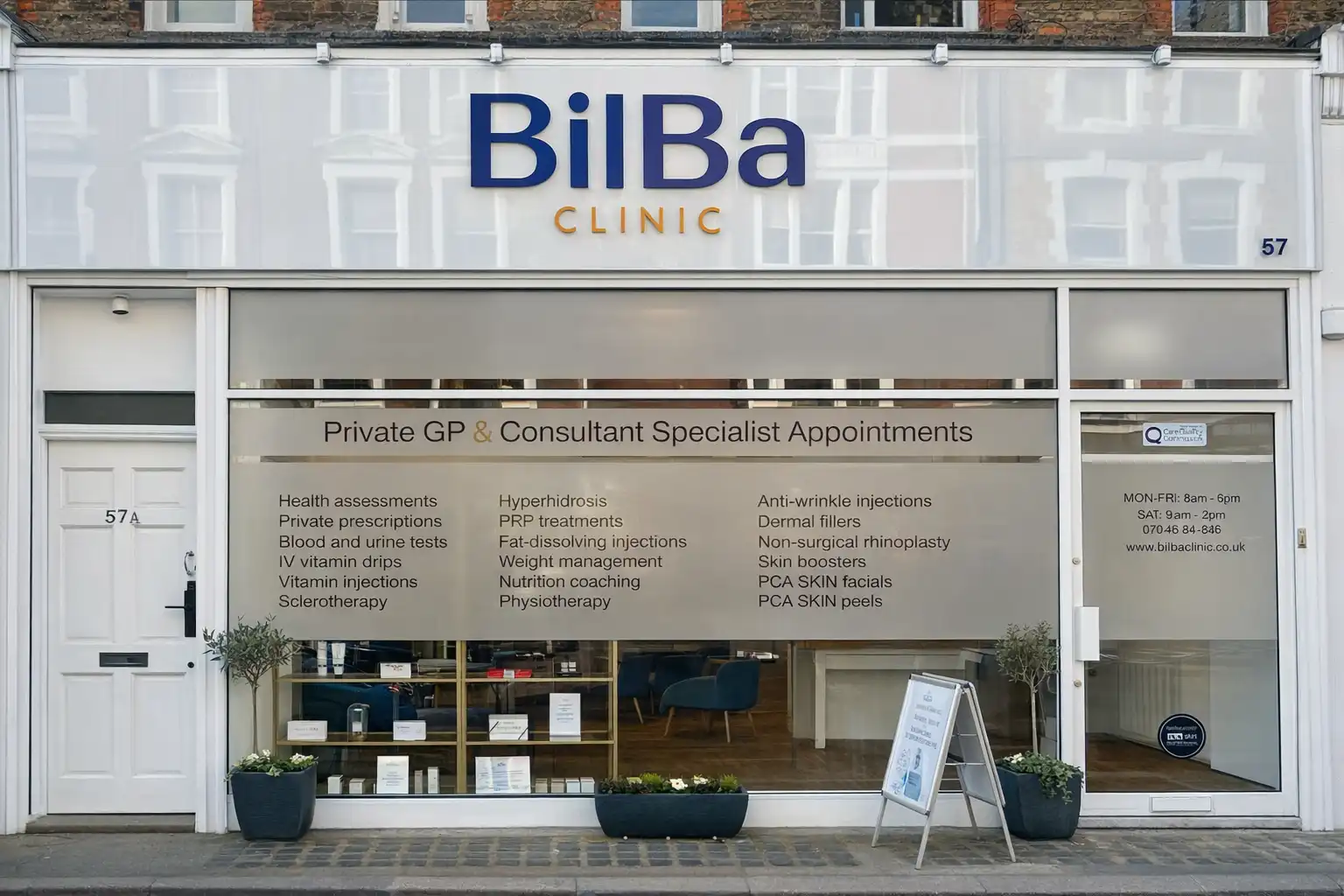
Bilba Clinic is a CQC-registered private clinic in Fitzrovia, London, offering medical, aesthetic and wellbeing care from experienced clinicians. We are recognised by insurers including Bupa, Vitality and WPA, and we welcome self-pay patients too. Please check your cover with your insurer before you book. You can read more about our clinic.
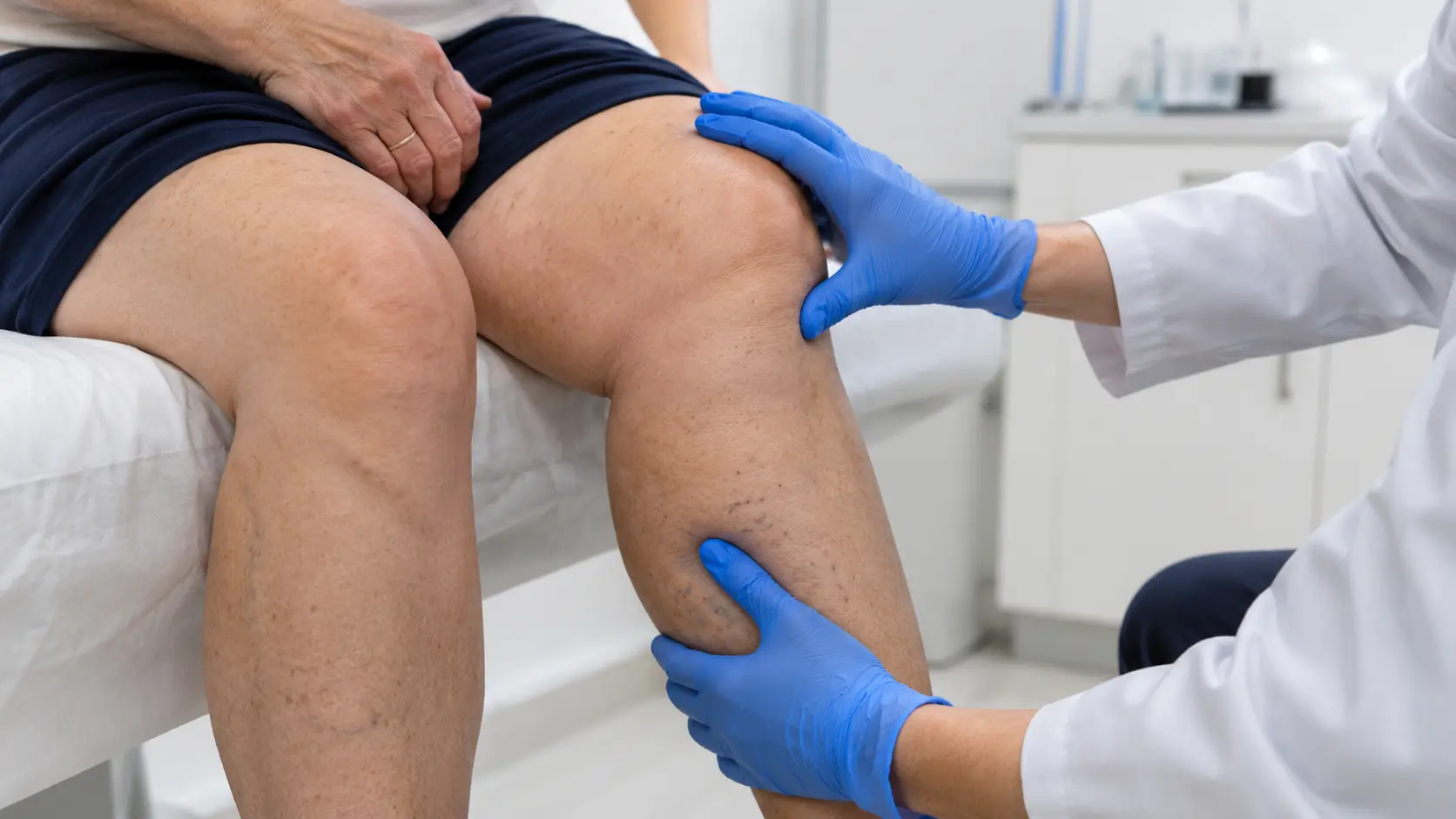
Your review starts with a conversation about when the heaviness comes, what eases it and what else you have noticed, followed by an examination. Where it helps, we add an ultrasound vascular Doppler scan at the same visit, a painless scan that shows how blood is flowing through your legs. Our General and Vascular Surgery team explains the findings in plain words. If your veins look healthy, we say so and point you towards other possible causes, such as a blood test. If a vein problem turns up, we talk through the options and costs before you decide anything. You do not need a referral.
Costs vary depending on what is needed, and we would rather give you an accurate figure after we have examined you. As a starting guide, a vascular consultation starts from £250 and an ultrasound vascular Doppler scan starts from £350. Our pricing page has the current figures. You can book your appointment or contact us with any questions first. We are open Monday to Saturday, so you can often find a time around work.
- Address: 57 Great Titchfield Street, Fitzrovia, London W1W 7PN
- Phone: +44 (0) 7858 848 244
- Email: info@bilbaclinic.co.uk
Opening hours
- Monday to Friday: 10:00 to 18:00
- Saturday: 12:00 to 17:00
- Sunday: closed
Frequently Asked Questions about Heavy Legs
What Causes Heavy Legs?
Heavy legs have many possible causes. The most common are long spells of standing or sitting, varicose veins, pregnancy and some medicines. Less often, arterial disease, restless legs or a low blood count play a part. Because the causes overlap, a clinical review, sometimes with a scan or blood test, is the safest way to tell them apart.
Why Do My Legs Feel Heavy and Tired?
Legs that feel heavy and tired usually reflect a long day on your feet or a spell of sitting, but they can also point to a vein problem or a low blood count. Heaviness that builds after standing and eases with rest suggests the veins. Constant tiredness points more towards a blood test than a scan.
What Are Heavy Legs a Symptom Of?
Heavy legs are a symptom, not a diagnosis. The best-documented cause is varicose veins, where heaviness is a listed symptom. Everyday habits, pregnancy and some medicines may also play a part. Because the same feeling can have different causes, we look at the pattern and, where it helps, scan the veins.
What Deficiency Causes Heavy Legs?
No UK source we checked names a vitamin or mineral deficiency as a cause of heavy legs. Low iron, B12 and folate are linked with tiredness and, for B12, muscle weakness, while low vitamin D can cause bone pain. A blood test is how deficiencies are found, so get tested before assuming.
Can Heavy Legs Go Away on Their Own?
Heavy legs after a long day often clear with rest and raised legs. Heaviness from varicose veins may come and go, and these veins can get worse without treatment, usually very slowly over several years. If the heaviness keeps returning, lasts for weeks or comes with swelling, a review is worth booking.
How Do Doctors Check Heavy Legs?
A doctor asks when the heaviness comes and what eases it, then examines your legs. If veins may be involved, a duplex ultrasound scan shows which veins are leaking. Blood tests can look for causes such as a low blood count. At Bilba Clinic you can book a private GP appointment or a vascular review directly.