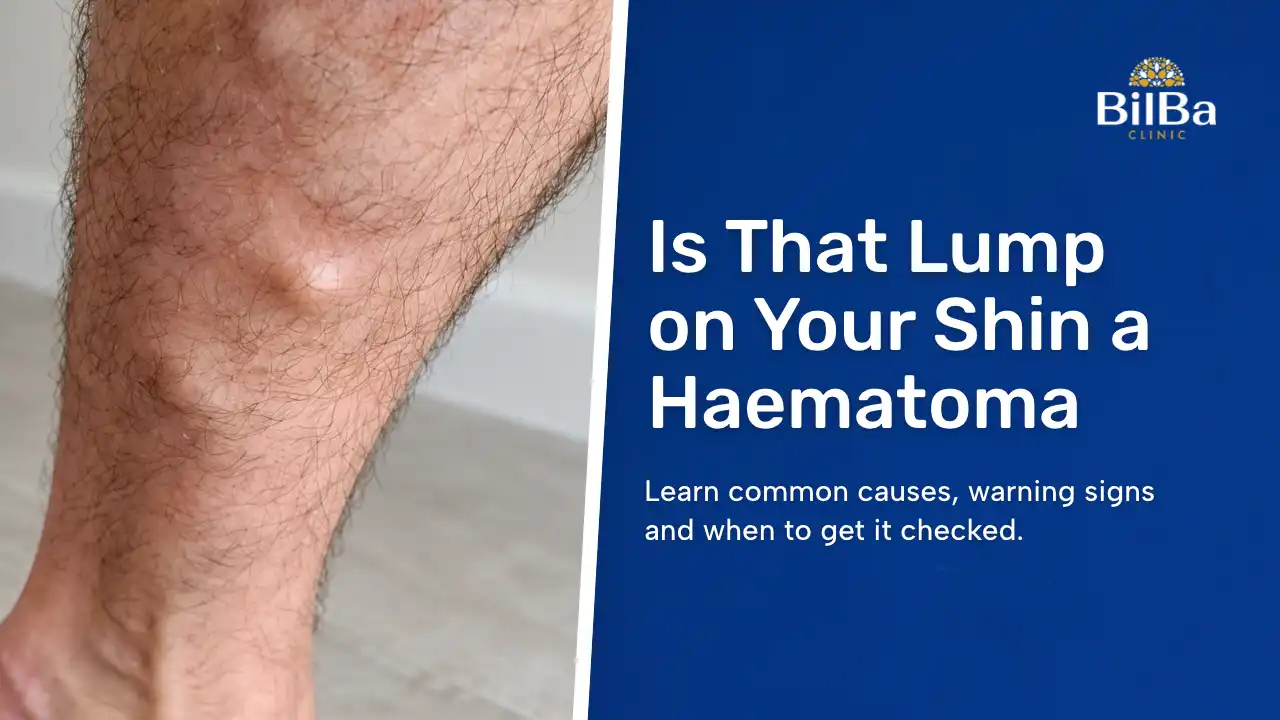
Found a lump under skin on shin after knocking your leg on a table, a step, or in sport? Most of the time it’s simple enough, a bruise that pooled into a firmer bump rather than spreading out flat. But not every shin lump follows that pattern, and the shin is a spot where the skin sits close to the bone, so anything unusual there tends to stand out more than it would elsewhere on the leg. We’d rather you knew the small number of likely explanations than sit and guess, and a proper look settles it either way.
The shin isn’t like the calf or thigh, where a similar knock would usually just bruise and flatten. With so little muscle or fat cushioning the bone, even a fairly minor impact can leave a noticeable, longer-lasting lump behind. That’s normal for this particular part of the leg, and it’s part of why shin lumps get asked about so often, not because they’re unusually dangerous, but because the anatomy there makes an ordinary bruise look more alarming than it would anywhere else.
A quick way to tell things apart by feel:
- Came up within hours of a knock and feels firm or tense: usually a haematoma
- Soft, smooth, and has been there for weeks or longer without an obvious cause: more likely a lipoma or a cyst
- No discrete bump at all, just a sore, tender strip along the shin bone: this points away from a lump entirely and toward shin splints, more on that below
What Is the Hard Lump on My Shin?
If you’re asking what is the hard lump on my shin, the honest answer is that it depends on how it arrived. A shin lump that showed up suddenly after an impact, a fall, a football tackle, catching your leg on a coffee table, is almost always related to that injury. Blood or fluid collects under the skin at the point of contact, and because the shin has very little soft tissue cushioning it against the bone, that collection has nowhere to spread. It sits as a firm, raised area instead.
A shin lump with no injury behind it is a different conversation. It might have grown slowly, or you might simply have noticed it one day without knowing how long it had actually been there. These are usually benign skin or fatty lumps rather than anything related to bruising, but they’re worth a proper look precisely because there’s no obvious explanation attached to them.
Either way, our clinical team would want to know three things before saying anything definite: when it appeared, whether it followed an injury, and whether it’s changed since you first noticed it. Those three answers narrow things down faster than almost anything else.
Size matters too, though less than most people assume. A large bruise-related lump isn’t automatically more serious than a small one, it usually just means the original impact was harder or the blood vessel affected was bigger. What matters more is the trend over time. A lump that’s shrinking week by week is behaving exactly as expected. One that’s staying the same size or growing after the first week or two has stopped following that pattern, and that shift is the detail worth acting on rather than the size on any single day.
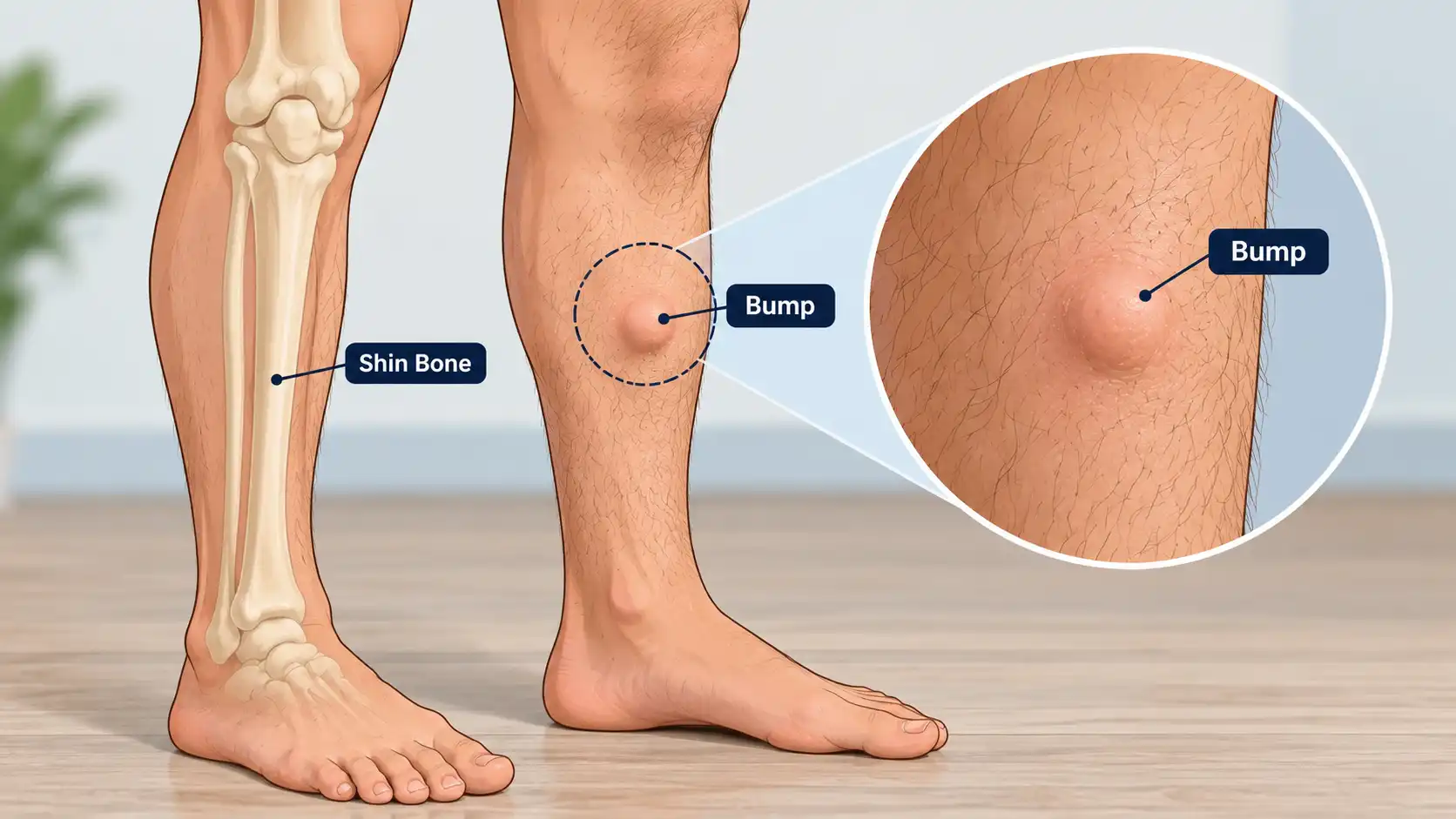
Lump in Shin Under Skin After a Knock, What’s Actually Happening
A lump in shin under skin that turns up soon after a bump is very rarely anything to worry about on its own. The mechanism is simple. A knock damages small blood vessels beneath the skin, blood leaks into the surrounding tissue, and because the shin’s skin sits directly over bone with barely any fat or muscle to absorb the impact, that blood collects locally rather than dispersing. What you feel is that pooled blood, not swelling of the bone itself.
Over the days that follow, the lump usually changes colour, from red or purple through to green and yellow, as the blood is gradually broken down and reabsorbed. The bump itself often takes longer to flatten than the bruising takes to fade, which surprises people. It’s common for the colour to look mostly resolved while the raised lump underneath is still present for another week or two.
What doesn’t fit that pattern deserves more attention: a lump that keeps growing well after the injury, one that’s still expanding rather than settling, or one that turns hot, increasingly red, or starts weeping, since that can point to infection rather than simple bruising.
Hematoma on Shin, Why It Forms and How Long It Lasts
A hematoma on shin is the medical term for exactly the pooled-blood bump described above, a collection of blood trapped in the tissue under the skin rather than a bruise that has spread out flat. It forms whenever a blood vessel is damaged by an impact and the surrounding tissue doesn’t allow the blood to disperse easily, which is precisely the situation on the shin.
So how long do hematomas last on leg tissue like this? Most small to moderate haematomas on the shin settle within two to four weeks, moving through the typical bruise colour changes before the lump itself gradually flattens. Larger ones, or ones over a bony area like the shin, can take longer, sometimes six weeks or more, particularly if the area keeps getting knocked again during that time, which is easily done given where they sit.
A haematoma that hasn’t started shrinking after three to four weeks, or one that feels like it’s developing a harder core rather than softening, has stopped following the expected pattern and deserves a look. Occasionally the body doesn’t reabsorb the blood efficiently and a firmer, more permanent lump forms instead, sometimes called an organised haematoma. It’s easy to treat once identified, usually with a small procedure to drain the trapped fluid, but easy to mistake for something else if left alone for months.
Age and general health also affect the timeline. Older adults, and anyone on blood-thinning medication, tend to bruise more easily and take longer to clear a haematoma than a fit younger adult would. If you’re on medication that affects clotting and you’ve picked up a shin lump from even a fairly light bump, it’s worth mentioning that medication when you get it looked at, since it changes both how long healing takes and how closely it’s worth monitoring.
Are Haematomas Painful?
Usually, yes, at least in the first few days. The area is often tender to press, and the skin over it can feel tight as fluid builds up, which is uncomfortable rather than severely painful in most cases. Pain that’s unusually intense, or pain that’s getting worse rather than easing over the first week, breaks from that usual pattern and is better assessed than assumed away.
Applying a cold pack for the first 24 to 48 hours, keeping the leg elevated where possible, and avoiding further knocks to the same spot all help reduce both the pain and the eventual size of the lump. None of that speeds up the underlying healing process by much, but it does make the first week noticeably more comfortable.
As the haematoma matures and the blood is reabsorbed, tenderness usually fades well before the visible lump disappears completely. If pressing the area is still sharply painful two or three weeks in, or if the leg feels unusually warm around the lump, that combination is worth getting looked at rather than waiting it out.
Shin Lump Pain, What It Might Mean
Shin lump pain almost always tracks back to one of two things: how recent the injury is, or whether something beyond simple bruising is going on. In the first week or two after a knock, tenderness directly over the lump is expected and generally nothing to worry about. Pain that spreads well beyond the lump itself, or pain that’s disproportionate to how minor the original knock was, is a different picture and worth mentioning to a clinician.
Is a Lump in Shin Painful Always Something to Worry About?
Not necessarily. A lump in shin painful to the touch in the days after an injury is the expected pattern for a haematoma, and that kind of pain typically eases steadily as the bruise heals. What’s less typical, and worth flagging, is pain that’s increasing rather than settling, pain that wakes you at night, or a lump that stays painful well beyond the two-to-three week window most simple bruises take to calm down. That combination doesn’t automatically mean anything serious, but it’s exactly the kind of pattern a GP would want to examine rather than have you monitor at home indefinitely.
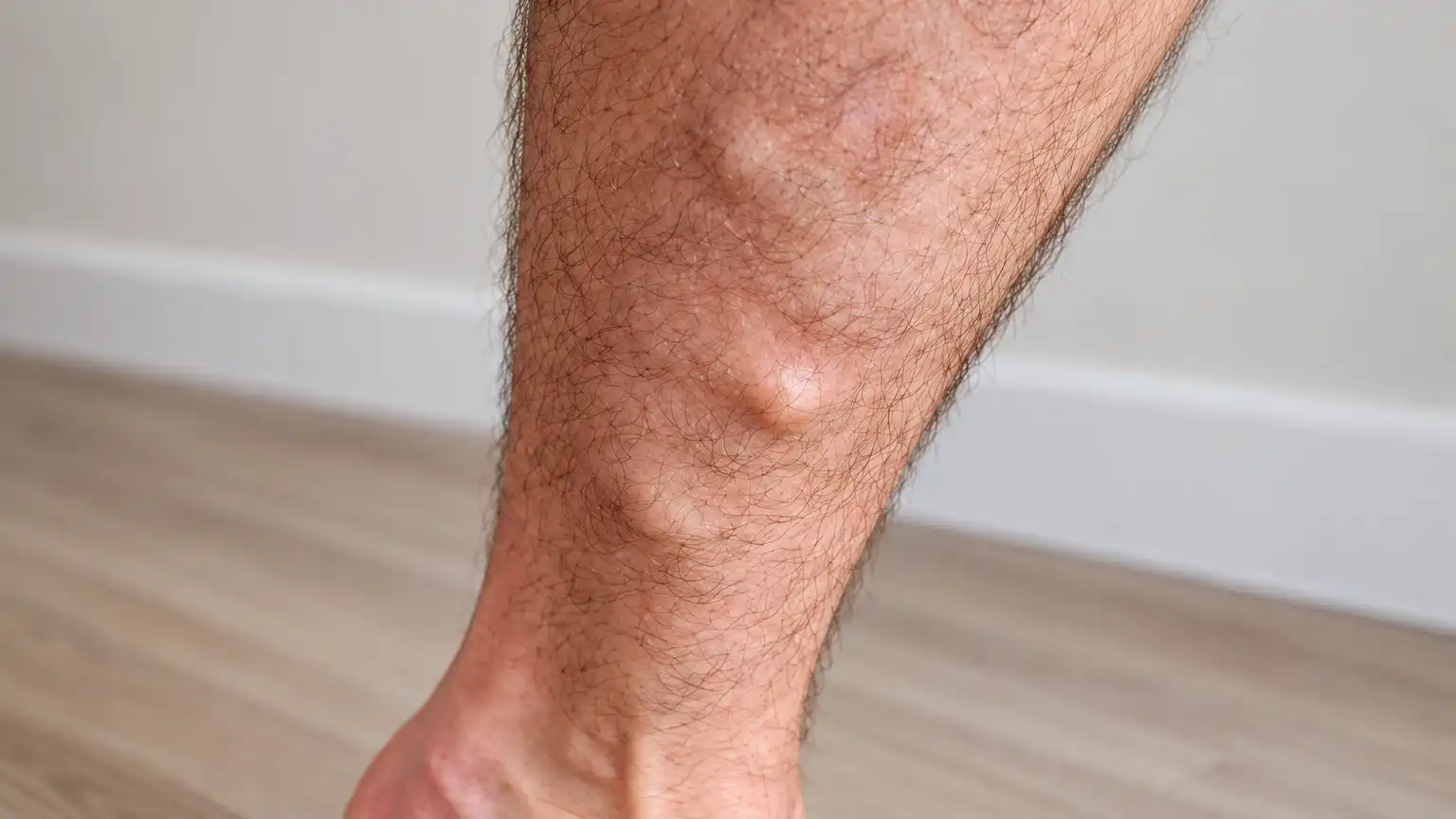
Could It Be a Soft or Moving Lump Instead?
Not every shin lump is firm or fixed in place, and the texture tells you almost as much as the history does. Softness usually points one direction. A soft lump under skin on shin that isn’t linked to any recent injury is more often a lipoma, a benign collection of fatty tissue that sits just under the skin and tends to feel doughy rather than hard. These grow slowly, rarely hurt, and can sit unnoticed for years before someone spots them.
Movement tells a similar story. A moving lump under skin on shin, shifting slightly when you press it rather than staying fixed to the tissue beneath, fits the same picture, since lipomas and some cysts sit loosely enough under the skin to move rather than being tethered to deeper structures. That mobility is reassuring in itself, though it still doesn’t replace an actual look and, where needed, a scan.
A Small Hard Movable Lump Under Skin on Shin, What That Combination Means
Firmness complicates that picture slightly. A small hard movable lump under skin on shin combines two things that don’t usually travel together, real firmness alongside genuine movement under your finger rather than a fixed position. This pairing often points to a small cyst or a firmer type of lipoma rather than a haematoma, since older bruises tend to soften as they resolve rather than staying hard while becoming more mobile. It’s a useful detail to describe accurately at an appointment, since firmness and mobility together narrow the likely cause considerably.
None of these are urgent on their own. Lipomas and simple cysts almost never turn into anything more serious, and plenty of people choose to leave a small one alone once it’s been checked and confirmed as harmless. Others prefer to have it removed, usually for comfort or appearance rather than medical necessity, which is a quick, low-risk minor procedure once the diagnosis is clear. Either choice is reasonable, and it’s really a personal decision once the lump has been properly identified rather than something with a single right answer.
Is It a Lump, or Actually Shin Splints?
It’s worth being clear about this one, because the two get confused often. NHS guidance on shin splints describes pain along a diffuse stretch of the shin bone rather than a single, discrete bump you can point to. A visible shin splints lump isn’t really what shin splints looks like in practice, the condition is soreness and tenderness spread along the inner edge of the shin, usually brought on by running or repetitive impact, not a raised area you can feel with your fingers.
If what you’re noticing is actually a lump, a defined bump with a clear edge, that’s more consistent with a haematoma, a cyst, or a lipoma than with shin splints, and it’s worth describing it that way rather than assuming the two conditions overlap. If instead you’re dealing with generalised tenderness along a longer stretch of bone with no actual bump, that’s the pattern shin splints usually produces, and it’s a separate issue from anything covered above. Either way, telling the two apart accurately is the first step, and it’s exactly the kind of thing worth clarifying at a consultation rather than guessing at home.
Runners and anyone who’s recently increased their training load are the group most likely to actually have shin splints rather than a lump, since the underlying cause there is repetitive stress on the bone and surrounding tissue rather than a single impact. If that description fits better than a one-off knock, easing off training and switching to lower-impact exercise for a couple of weeks is usually the first practical step, alongside getting the diffuse pain properly assessed rather than assuming it’s the same thing as a bruise.
If your situation doesn’t fit an injury at all, and instead looks more like a longer-standing lump with no clear trigger, our wider guide on hard lumps under the skin on the leg covers that broader picture in more depth, including lumps higher up the leg and around the knee. And if you’re still not sure whether any lump anywhere on your body needs checking, our separate piece on when a lump under the skin is worth getting checked walks through the general red flags in more detail.

Lump Under Skin on Shin? Get It Checked at Bilba Clinic in Fitzrovia
Bilba Clinic is a CQC-registered private clinic in Fitzrovia, London, offering medical, aesthetic, and wellbeing care from experienced clinicians. We’re recognised by major insurers including Bupa, Vitality, and WPA, and we also welcome self-pay patients who’d rather book directly without going through an insurer. You can read more about our clinic and the team behind it if you’d like some background before booking.
If you’re still unsure what your shin lump actually is, whether it’s an ordinary haematoma settling down, something that needs draining, or a lump that’s been there longer than you first thought, a short consultation is usually enough to tell you which. Our doctors can examine it directly, ask about the history that matters, and arrange further investigation such as an ultrasound if anything looks like it needs a closer look before a decision is made.
Costs vary depending on what’s actually going on and whether any treatment is needed beyond assessment. As a general guide, a minor skin surgery consultation for lumps and bumps starts from £300, and aspiration of a subcutaneous haematoma, where fluid is drained to speed up healing, starts from £650. Both are one-off appointments rather than ongoing courses of treatment, and most people are in and out within the hour. Our current pricing page has the exact, up-to-date figures, since we’d rather give you an accurate number after a proper look than a rough one upfront.
To book:
- Address: 57 Great Titchfield Street, Fitzrovia, London W1W 7PN
- Phone: +44 (0) 7858 848 244
- Email: info@bilbaclinic.co.uk
- Opening hours: Monday to Friday 10:00 to 18:00, Saturday 12:00 to 17:00, Sunday closed
You can also book online or get in touch with any questions before your visit. According to the NHS, a lump that’s growing, painful, hard and fixed in place, or still there after two weeks is worth having examined, which is a useful rule of thumb whatever you decide to do next.
Frequently Asked Questions
Will the Bump on My Shin Go Away?
In most cases, yes. If the bump followed a knock and behaves like a haematoma, gradually changing colour and softening, it typically resolves within two to four weeks without any treatment. Gentle rest and avoiding further knocks to the same spot speed that along more than any product does. A bump that isn’t shrinking after a month, or one that’s hardening rather than softening, has stepped outside that normal timeline and is the exception worth flagging to a doctor.
Are Shins Meant to Be Bumpy?
To some extent, yes, even without any injury or lump involved. The shin bone itself sits close to the surface with very little soft tissue over it, so normal bony contours, especially where the bone curves or where old, long-healed injuries left a slightly raised patch, can feel more noticeable here than on fleshier parts of the leg. That’s different from a genuine new lump appearing, which is worth examining on its own merits rather than assuming it’s just bone shape.
When Should I Worry About a Lump on My Shin?
Worry less about how it looks and more about how it behaves. Book a GP appointment rather than continuing to watch it at home if the lump:
- Is getting bigger rather than smaller
- Feels hard and doesn’t move at all under the skin
- Is still there well beyond two to three weeks
- Comes with redness, warmth, or fever
Any one of these on its own has moved past what’s reasonable to monitor without a proper look.
How Do Doctors Check a Lump on the Shin?
A doctor will usually start by asking about the history, when it appeared, whether it followed an injury, and how it’s changed, before physically examining the lump for size, texture, mobility, and tenderness. If the cause isn’t obvious from that alone, an ultrasound scan is the most common next step, since it can distinguish fluid-filled collections like haematomas from solid lumps like lipomas or cysts without anything invasive being needed first.
Most appointments for a shin lump end there, with a diagnosis and either reassurance or a simple plan for what happens next. Blood tests or a referral for a biopsy are only needed in the small minority of cases where the appearance or behaviour of the lump doesn’t fit any of the common, harmless patterns, and your clinician will explain clearly if that applies to you rather than leaving you guessing.