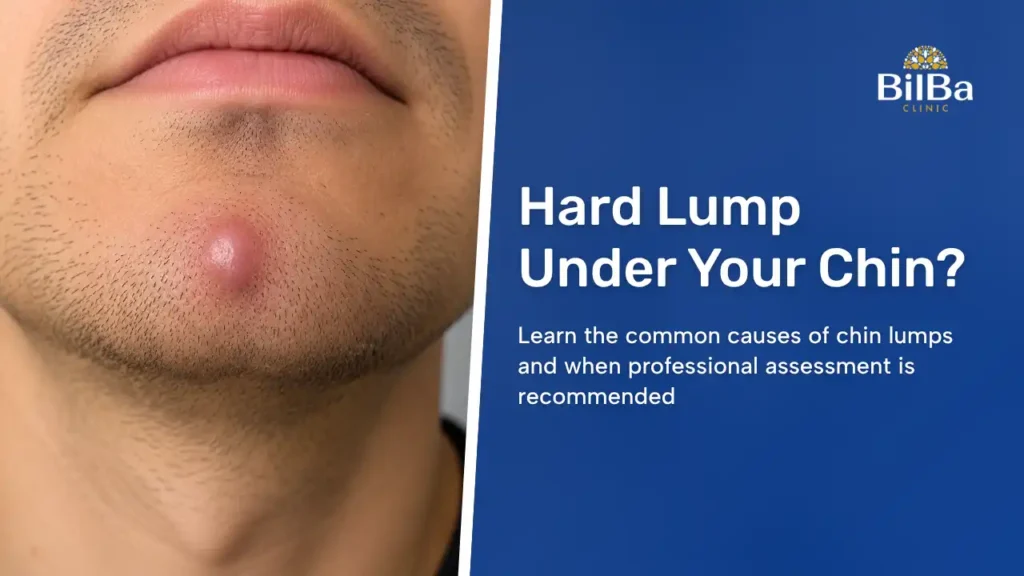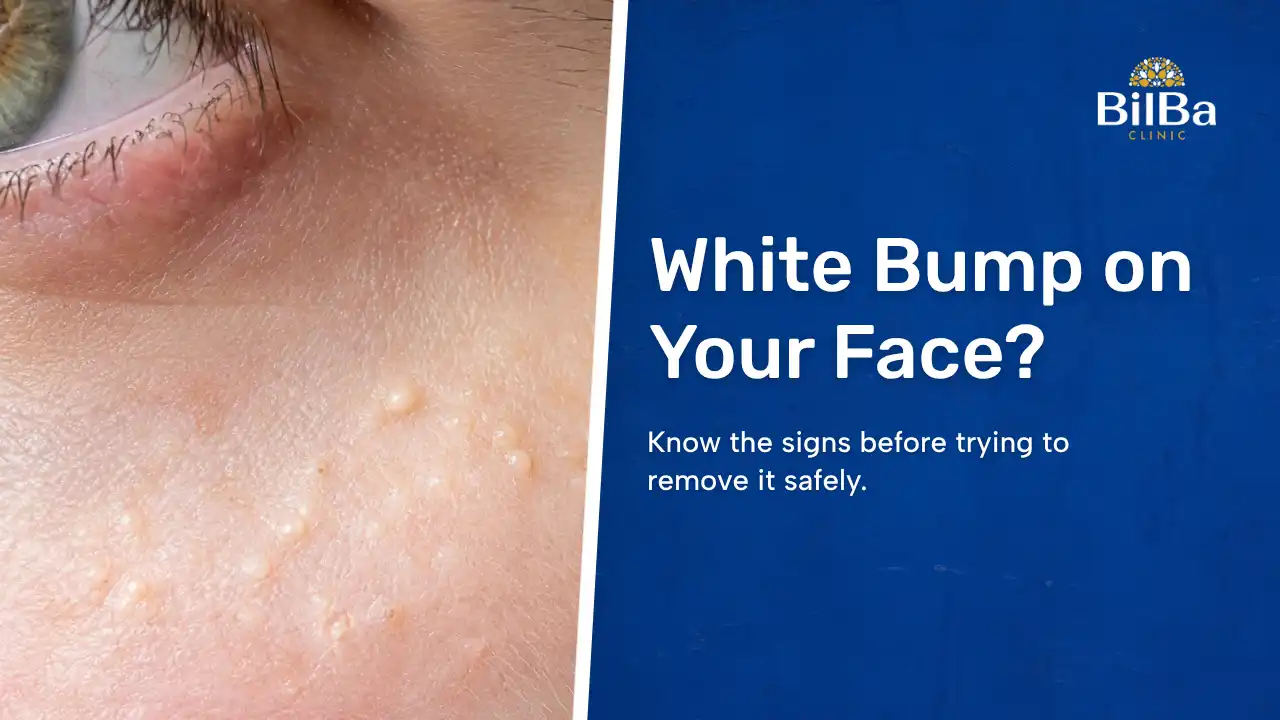
What Causes a White Bump Under Skin on Face
If you’ve spotted a small, firm, white bump under skin on face and tried to squeeze it like a spot, only to have nothing happen, you’re probably not dealing with a normal blemish. Most of the time, this is milia, a type of tiny cyst that forms just under the surface of your skin and behaves completely differently from a whitehead.
Milia are common, painless and rarely a sign of anything serious. But they’re also stubborn, because of how they form, and picking at one is more likely to irritate the skin than remove it. This guide covers what actually causes them, how to tell milia apart from a few other look-alike bumps, what genuinely helps at home, and when professional removal is worth booking.
What Is a White Bump Under Skin on Face
Milia form when keratin, a protein your skin produces naturally, gets trapped just beneath the surface instead of shedding the way it normally would. New skin then grows over the trapped keratin, sealing it into a tiny, hard capsule. This is different from a whitehead, which forms inside a pore that stays open to the surface, so pressure can force the contents out.
That structural difference is the reason milia look and behave the way they do. They usually appear as small, firm, white or pale yellow bumps, often only one to two millimetres across, most commonly around the eyes, cheeks, nose and forehead. They don’t have a visible central pore or opening, which is one of the clearest ways to tell them apart from a spot, and they have nothing to do with poor skin hygiene, despite how often that assumption comes up.
What Causes White Bumps Under Skin on Face
Milia form when skin cells don’t shed properly and become trapped, but what causes white bumps under skin on face varies from person to person. Sun exposure is one common factor, since sun-damaged skin doesn’t renew itself as efficiently. Ongoing friction or rubbing against the skin, from tight headwear or repeated contact, is another. Some people are simply more prone to milia because of their skin type or genetics, which is why you might have them and a family member never does. Whatever the trigger, the reasons for tiny white spots on skin usually come down to skin cells getting blocked in rather than shedding out, which is also why we get milia on the face more than most other areas.
Milia on Cheeks and Around the Eyes
Milia on cheeks causes often trace back to thicker skincare products, sunscreen, or occlusive creams sitting on the skin rather than being fully absorbed. Milia around eyes causes are similar, but the skin there is thinner and more sensitive, which is part of why milia tend to cluster on the eyelids and under-eye area more than anywhere else on the face.
Why Am I Getting Milia All of a Sudden
If milia have shown up out of nowhere as an adult, it’s worth knowing that milia are generally grouped as primary or secondary. Primary milia form on their own, without any obvious trigger. Secondary milia follow some kind of skin trauma, such as a burn, blistering, dermabrasion, a new retinoid or steroid cream, or even radiotherapy. The distinction between primary or secondary milia is often the clearest way to explain sudden-onset milia in adults, since it usually points back to something that happened to the skin in the weeks before.
Small White Ball or Hard White Spots Under Skin on Face
Milia get described in a lot of different ways depending on how they feel and look. Some people notice a small white ball under skin on face, others describe hard white spots under skin on face, and both are usually pointing to the same thing. A hard white bump under skin on face, or a white hard bump under skin on face, tends to feel firm and slightly raised, almost like a tiny grain sitting just under the surface.
Size varies too. Small white bumps under skin on face are typically the most common presentation, while tiny hard white bumps under skin or tiny white bumps under the skin usually describe the very early stage, before they’ve become as noticeable. None of these descriptions point to anything more serious than milia in most cases, but the wording itself doesn’t tell you which of the other look-alike conditions below it might be instead.
Is It Milia or Something Else
Not every white bump under skin on face is milia, and a little white bump under skin on face not a pimple could be one of a few other harmless conditions that get mistaken for it.
Milia vs whiteheads comes down to that pore opening again: whiteheads have one, milia don’t, and milia won’t budge under pressure the way a whitehead will. Milia vs closed comedones is a similar comparison, since a closed comedone is really just a blocked pore covered by a thin layer of skin, whereas milia sit in a fully sealed capsule with no pore involved at all.
A few quick signs to compare:
- Milia: white or pale yellow, firm, no visible pore, releases nothing under pressure
- Syringomas: skin-coloured to pale yellow, cluster around the lower eyelids, linked to sweat gland overgrowth rather than trapped keratin
- Sebaceous hyperplasia: yellow with a small central dimple, mostly on the forehead and cheeks from your 40s onward, releases a little oil if gently pressed
A biopsy is rarely needed to tell these apart. In most cases a clinician can identify which one you’re looking at during a straightforward examination, so if you’re not sure, that’s exactly what a consultation is for.
If Your White Bumps Itch, It’s Probably Not Milia
Small white bumps on skin that itch and tiny white spots on skin that itch are both searched a lot, but itching isn’t something milia typically cause. Milia are firm, painless cysts that sit quietly under the skin without any inflammation involved.
If your bumps are itchy, it’s worth considering other possibilities, such as keratosis pilaris, a mild rash, an allergic reaction, or irritation from a skincare product. These conditions need a different approach entirely, and treating them as milia wouldn’t help. A GP or dermatologist can usually tell the difference quickly during an examination, so if itching is part of the picture, that’s a good reason to get it looked at rather than guessing.
Why Won’t This White Bump Under Skin Pop
If you’ve already tried, you’ll know a milia won’t respond the way a spot does. Can you pop a milia the same way you’d deal with a whitehead? Not really, and understanding why won’t my white bump under skin pop comes down to basic skin structure. A whitehead sits inside a pore, a channel that runs to the surface, so pressure can push the contents out through that opening. Milia have no such channel. The keratin inside is sealed under a layer of skin that grew over it, with nowhere for anything to go.
That’s also the answer to whether you can squeeze out a white bump under skin safely at home. You generally can’t, and trying tends to just bruise or irritate the surrounding skin without shifting the milium itself.
Is It Bad to Pick at Milia
Yes, more often than not. Picking or squeezing repeatedly can inflame the area, increase the chance of scarring, and sometimes push the trapped keratin deeper rather than out, which can make it harder to remove cleanly later.
Can You Get Milia Anywhere on the Body
Can you get milia anywhere, or are they strictly a face thing? They’re most common on the face, especially around the eyes, cheeks and nose, but a white bump under skin can also appear on the chest, arms or other areas, particularly after skin trauma of the kind linked to secondary milia. If you’ve noticed a similar bump somewhere other than your face, the same general rules apply, though it’s still worth having it checked rather than assuming it’s the same thing without a proper look.
How Do You Treat Milia on Face
How do you treat milia on face largely comes down to two choices: leave them be, or have them removed properly.
Gentle exfoliation and a retinoid-based skincare product can help prevent new milia from forming, by encouraging normal skin cell turnover, and this is one of the few home remedies for milia that actually help as prevention. What it won’t reliably do is clear milia that have already formed and sealed over. How to get rid of milia at home with needles, pins or extraction tools isn’t something we’d recommend, since it carries a real risk of scarring, infection, or pushing the keratin deeper rather than out.
When Professional Removal Is Worth Booking
Professional removal is quick and, done properly, carries a much lower risk of scarring than doing it yourself. A clinician typically uses a sterile fine needle or lancet to create a tiny opening directly over the milium, then gently expresses the trapped keratin using light pressure or a comedone extractor. For multiple or stubborn milia, other options such as electrodesiccation or cryotherapy may be considered instead.
Professional removal is worth considering if:
- you have several milia rather than just one or two
- a bump has been there for months without any change
- they bother you cosmetically and you’d rather not wait them out
- you’re not fully sure what you’re looking at
For a broader look at how minor skin lesions are assessed and removed at our clinic, our lump under skin on face guide covers the consultation and removal process in more detail. Milia removal itself is a quick, in-clinic procedure through our Minor Skin Surgery service.

Milia Removal at Bilba Clinic
If you’d like a milia or white bump under skin on face properly assessed rather than guessed at, Bilba Clinic offers milia removal as part of our Minor Skin Surgery service, with pricing listed on our pricing page alongside our other skin lesion treatments. Every appointment starts with a short consultation, where your clinician examines the area, confirms what it actually is, and talks you through whether removal makes sense before anything happens.
We’re based in Fitzrovia, central London, and if you’ve been searching for milia removal near you, same-day appointments are often available without a long wait for a slot. As a CQC-registered clinic, our team follows clinical safety standards for even minor procedures like this one.
When you’re ready, you can book online or get in touch with our team if you have questions first.
- Address: 57 Great Titchfield Street, Fitzrovia, London W1W 7PN
- Phone: +44 (0) 7858 848 244
- Email: info@bilbaclinic.co.uk
- Opening hours: Monday to Friday 10:00 to 18:00, Saturday 12:00 to 17:00, Sunday closed
Frequently Asked Questions
Are White Bumps Under Skin Milia?
Usually, yes, especially if they’re firm, white or pale yellow, and don’t have a visible pore. But not always. Other possibilities include syringomas, sebaceous hyperplasia or closed comedones, so a clinical look is the only way to know for certain.
Is It Safe to Remove Milia at Home?
We wouldn’t recommend it. Home extraction with pins or tools carries a real risk of scarring or infection, and without an opening to work with, it’s easy to damage the surrounding skin without actually removing the milium.
When Should I See a Doctor About Milia?
If milia are widespread, keep coming back, are itchy or painful, or you’re simply not sure what you’re looking at, it’s worth booking a consultation rather than guessing or waiting it out.
How Long Do Milia Last Without Treatment?
This varies. Some milia clear on their own over a few months, particularly in babies, but in adults they can persist for months or years without professional removal, since the trapped keratin has no natural way out.
Do Milia Go Away on Their Own?
Sometimes, especially primary milia in newborns, which often clear within a few weeks. In adults, milia are more likely to stay put until they’re professionally removed, since the sealed capsule doesn’t resolve itself the way a spot does.
Why Can’t I Pop This White Bump Under My Skin?
Because there’s no pore or opening to push the contents through. The keratin is sealed beneath a layer of skin, so pressure just irritates the area rather than releasing anything.